What AI Tools Can Make Videos Like evadelonne? A Split-Face Character Stack (2026)
If you're searching for what AI tools can make videos like evadelonne, the real answer starts earlier than video.
Explore Eva Delonne • Singer • Model ProfileIf you're searching for what AI tools can make videos like evadelonne, the real answer starts earlier than video. This creator's signature is a split-face identity that has to stay perfectly stable across portraits and close-up reels, so the stack has to solve portrait-level symmetry before it solves motion.
Methodology: I analyzed 4 of @evadelonne's published works across close-up reels and portrait images, then matched the observable split-face constraints in those pieces against current AI image, video, and post-audio capability cards. Last updated 2026-05-27.
Build the split-face identity first, then animate it
The strongest production signal in this set is not motion. It is portrait precision. Two of the four assigned pieces are static portraits with unusually explicit instructions for skin-tone split, eye-color assignment, facial symmetry, lighting, and drift control. That makes the stack question simpler: build the character cleanly first, then decide how to animate or perform it.
If you want the editorial formula behind the five performance registers, the G3 methodology guide handles that side. This G4 page stays on the tooling question: what stack can keep the split-face identity believable in both stills and reels?
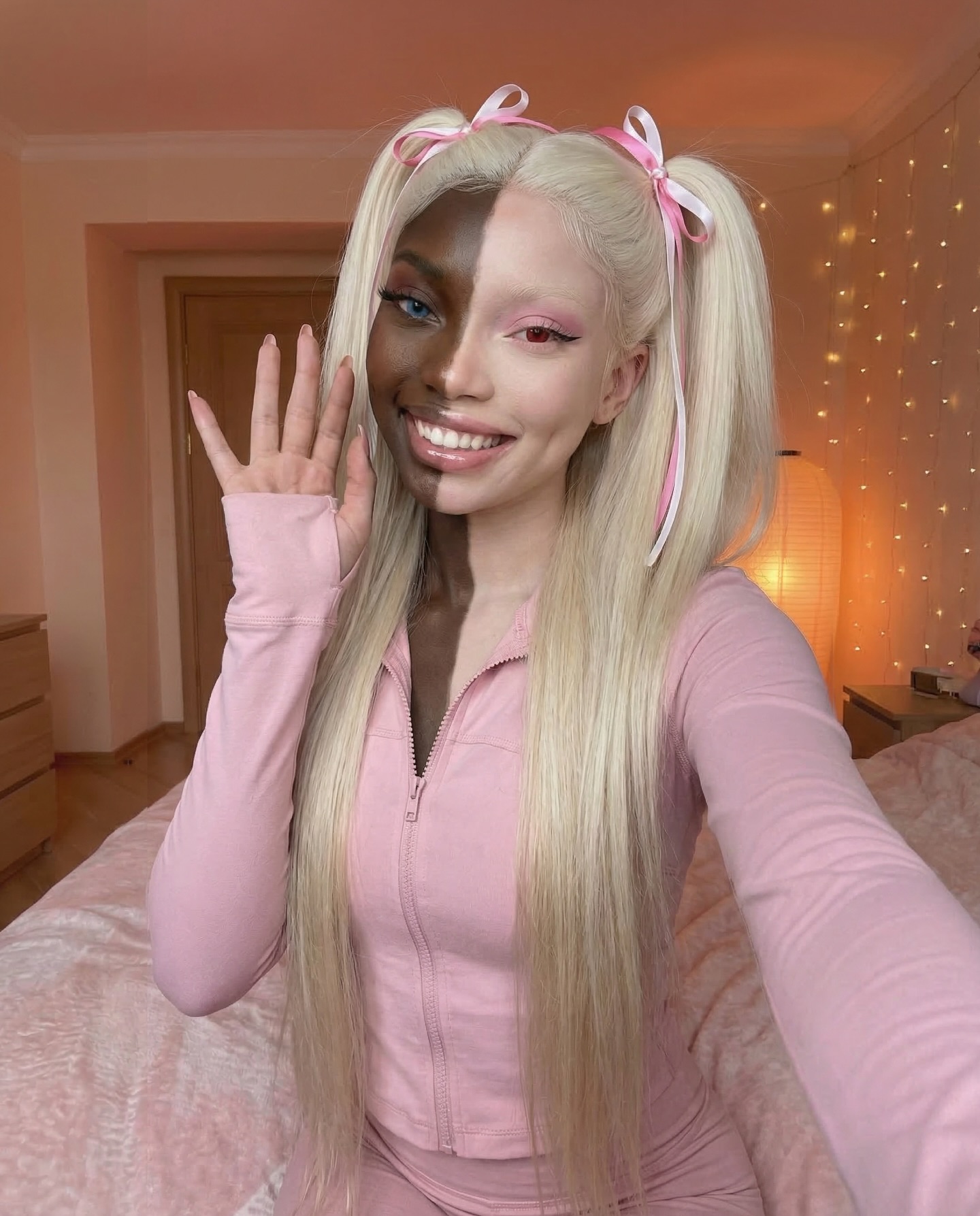
The portrait foundation is clearest in , where the reverse-engineered notes specify left blue eye, right red eye, pink ribbons, split makeup, and bedroom-lighting control in one document.

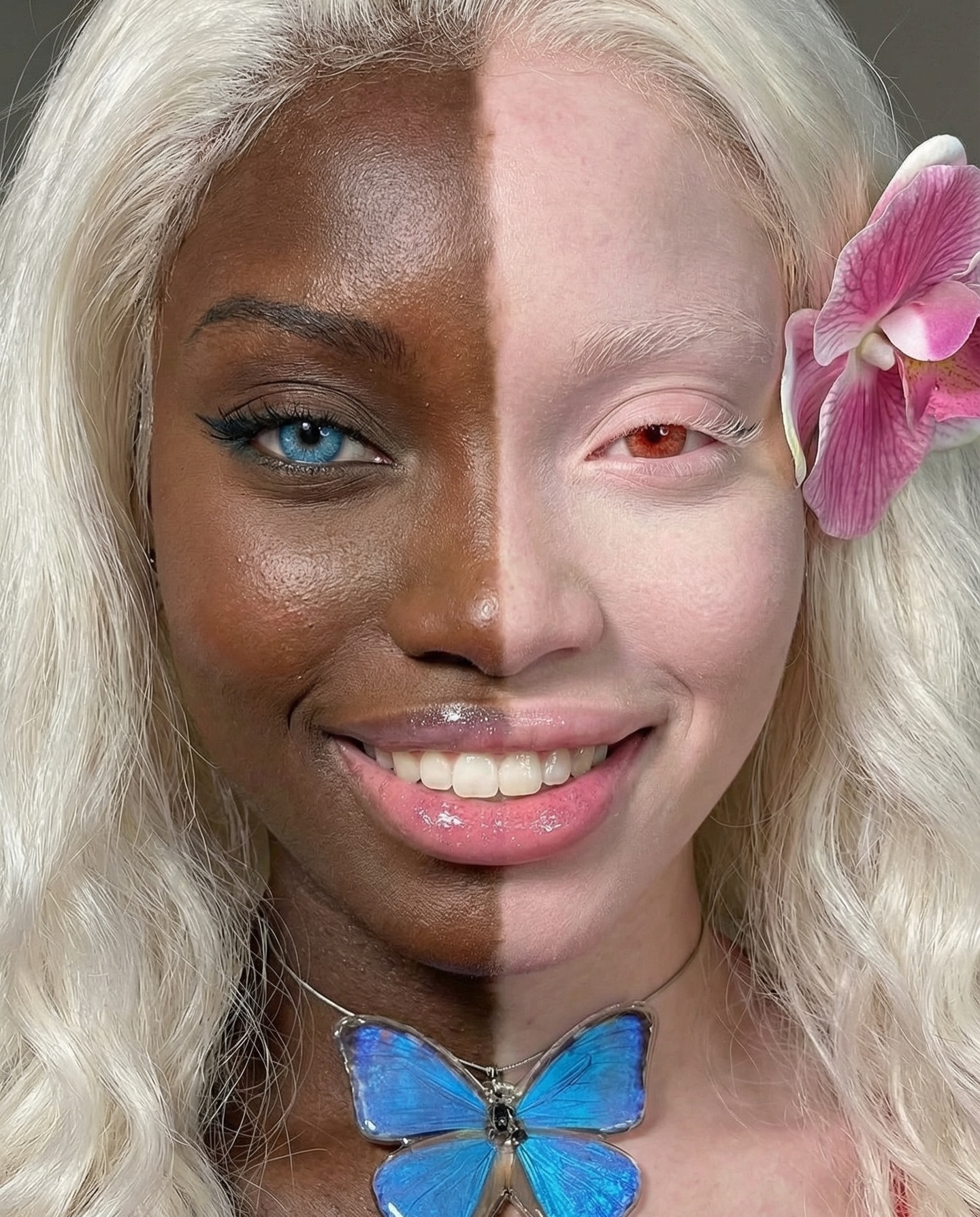
The cleaner beauty benchmark is , which pushes the same idea into extreme close-up symmetry with studio softbox lighting and per-side skin-tone separation.
Key Insight: The signature is a model-control problem before it is a video problem. If the portrait generator cannot hold perfect split-face detail, the reel stack will inherit broken identity from the first frame.
Takeaway: Treat the split-face look like a reference system, not a vibe. Write down the left side, right side, hair accessories, lighting rule, and expression rule before you generate anything.
Bottom Line: 2/2 portrait cases carry the richest identity evidence in the selected set. Build the character foundation in stills first.
For the reels, pick tools that keep the face believable at close range
The video pieces in this set stay close to the face. That changes the tooling priorities. The creator does not need a model that excels at big action or crowd physics. The creator needs a model that can keep mouth shapes, eye focus, split-face symmetry, and hair placement convincing while the subject talks, lip-syncs, or performs in a tight frame.
The anchor reel is , which reached 1,187,924 likes with a static chest-up performance format, warm indoor background, and creator-native talking or lip-sync mouth work.
The more technical motion signal comes from , where the reverse-engineered notes describe a reference-similarity workflow, a 35mm-equivalent MCU, and TAKE_A / TAKE_B / TAKE_C delivery variants.
| Video role | Recommended tools | Why they fit this lane | Watch-outs |
|---|---|---|---|
| Close-up lip-sync or talking-head reels | Veo 3.1 | Strongest fit when the reel needs native synchronized audio, vertical output, and believable close-up mouth work. | Subtitle or in-frame text artifacts can appear. Keep the frame clean and treat any baked-in text as a post-fix problem. |
| Reference-friendly short takes | Kling 3.0 | Strong for short social-format takes where character coherence matters more than elaborate camera movement. | Failures and queue friction are real, so plan for retakes and curation instead of one-shot success. |
| Static-camera image-to-video fallback | Runway Gen-4.5 | Useful when the portrait foundation is already strong and you mainly need camera restraint plus clean framing from a still reference. | No native lip-sync, so it becomes weaker if the mouth performance has to carry the whole clip. |
Key Insight: The best reel tool here is the one that preserves face credibility under a close crop. Motion range is secondary because the format itself is almost static.
Takeaway: Keep these reels short and face-led. The closer the camera gets, the more every drift problem turns into a deal-breaker.
Bottom Line: 2/2 video cases stay in close-up framing and depend on talking, lip-sync, or singer-style performance. Choose video tools for mouth realism and symmetry retention first.
Choose portrait tools for symmetry control, not just realism
The portrait lane is where vague "best beauty AI" advice stops being useful. This creator needs tools that can keep one side dark, one side light, one eye blue, one eye red, and accessories anchored in the right place under shallow depth of field. That is not generic realism. That is precise asymmetry control.
| Portrait role | Recommended tools | Why they fit this lane | Watch-outs |
|---|---|---|---|
| Photoreal split-face hero portraits | Seedream | Best fit when skin texture, portrait lighting, and glossy photoreal beauty rendering matter more than stylization. | Cross-shot likeness is good but not flawless. Use strict references and manual curation when the split must stay exact. |
| Controlled portrait variation sets | GPT Image 2 | Useful for generating several coherent split-face options inside one batch while holding the same overall face logic. | Cross-session drift still happens, so do not expect one loose prompt to stay locked forever. |
| Stylized exploration before final realism | Midjourney v8.1 | Helpful for mood exploration and art-direction framing if you want to prototype the split-face concept before moving into stricter photoreal generation. | On alici, Midjourney does not expose its strongest consistency tooling, so it is not the best final-production choice there. |
The portrait documents explain why this matters. The kawaii bedroom portrait includes a delta-prompt list of ten drift points, which is effectively a production warning label. The butterfly beauty portrait does the same thing more quietly by forcing the whole frame into centered, high-detail symmetry.
Key Insight: The winning portrait tool is not just "the prettiest" one. It is the one that can keep exact side assignments and facial details stable under repeated close-up rendering.
Takeaway: Generate the split-face identity in batches, then choose one clean master portrait as the base for any later motion or variation work.
Bottom Line: 3/4 selected works put the face so close to camera that symmetry drift becomes immediately visible. Portrait precision is the stack's hardest requirement.
Add audio only when it improves the performance, not just because you can
The selected reels prove that vocal feel matters, but they do not prove one exact audio workflow. That means the user-facing recommendation should stay flexible. If the native video model already gives you believable mouth performance and passable vocal timing, keep the workflow simple. If the visual clip works but the voice feels generic or weak, add or replace audio in post.
A practical stack looks like this:
- Use native-audio video generation when the reel is almost entirely face and mouth performance.
- Use a post-audio layer when you need a cleaner or more characterful final vocal track.
- Use a finishing editor to normalize color, contrast, and pacing so the portrait-derived reel still feels intentional.
Key Insight: Audio matters because the camera is so close to the face. But it only becomes a stack priority if the native reel cannot carry the performance on its own.
Takeaway: Judge the first draft with the sound on. If the mouth looks good and the voice is merely acceptable, polish later. If the mouth or timing feels wrong, switch tools before you waste time finishing.
Bottom Line: The source data proves that voice timing is important, but not which exact product handled it. Keep audio as a configurable layer, not a claimed attribution.
Where the Recommendation Is Harder to Verify
- The creator's confirmed stack: the brief explicitly forbids stack identification, and the source set does not contain a public disclosure.
- Exact portrait model attribution: sampler, CFG, and seed notes are reverse-engineered appearance clues, not direct proof of a real creator workflow.
- Video path split: the lip-sync reel strongly suggests a reference-led animation path, but the source data does not prove which tool handled the final audio versus the final motion.
FAQ
What AI tools can make split-face videos like evadelonne?
Start with a portrait generator that can hold exact left-right facial detail, then move into a face-led video model such as Veo 3.1 or Kling 3.0 for the reel itself. The split-face identity has to be stable before the motion matters.
How do you keep one AI character consistent across reels and portraits?
Build a character lock sheet with side-specific instructions: left skin tone, right skin tone, eye-color mapping, hair accessories, makeup rules, and lighting range. Generate the still identity first, then animate from that base.
What tool is best for lip-sync AI beauty reels?
Use a video model with strong native audio when the reel lives on mouth performance and eye contact. If the mouth looks right but the final voice does not, keep the clip and replace or polish the audio in post.
What AI image generator is best for detailed portrait symmetry?
Choose the tool that preserves exact side assignments and high-detail portrait rendering under close crop. For this kind of work, precision beats novelty: the best portrait generator is the one that lets the split-face details survive repeated attempts.