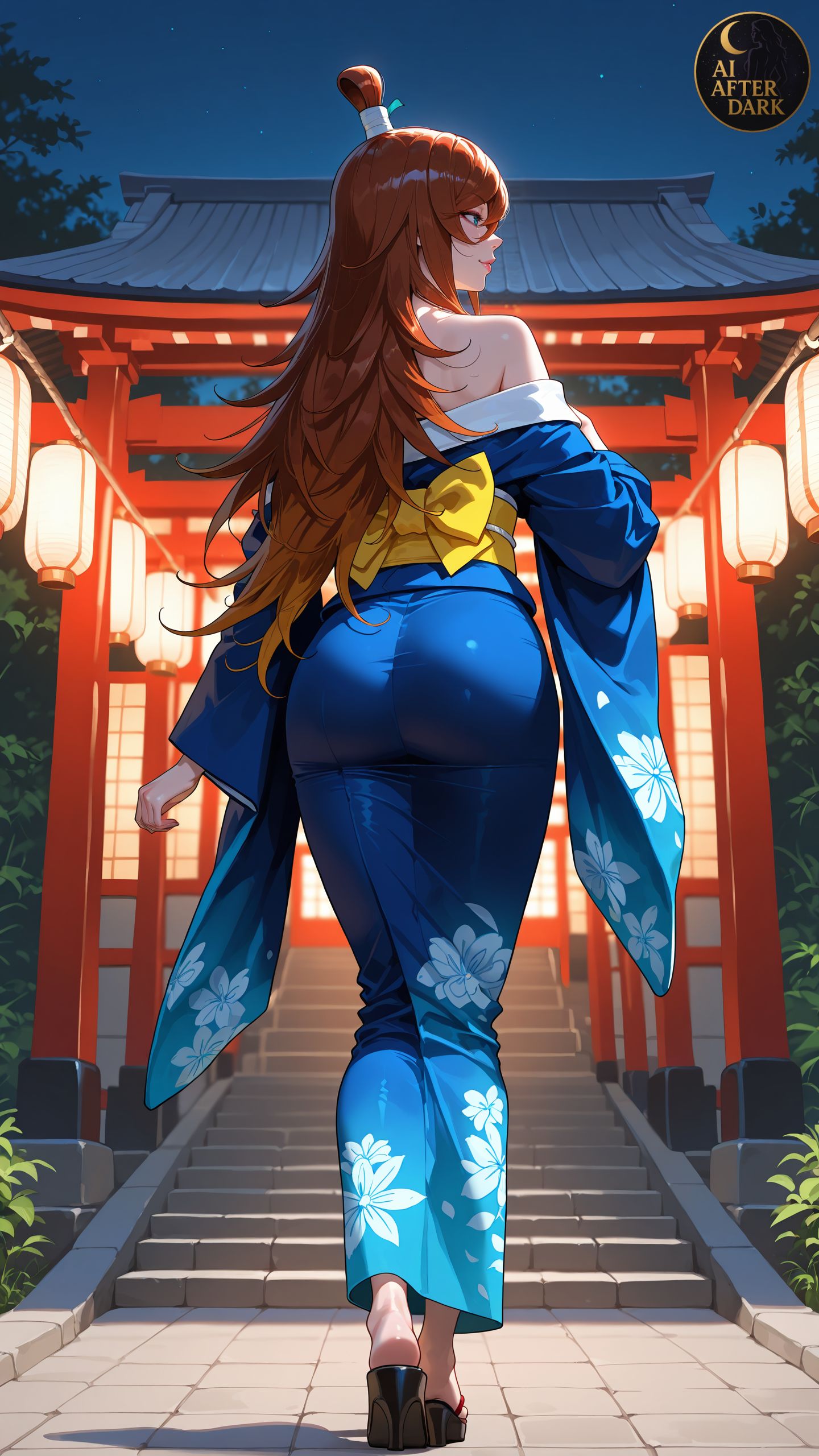
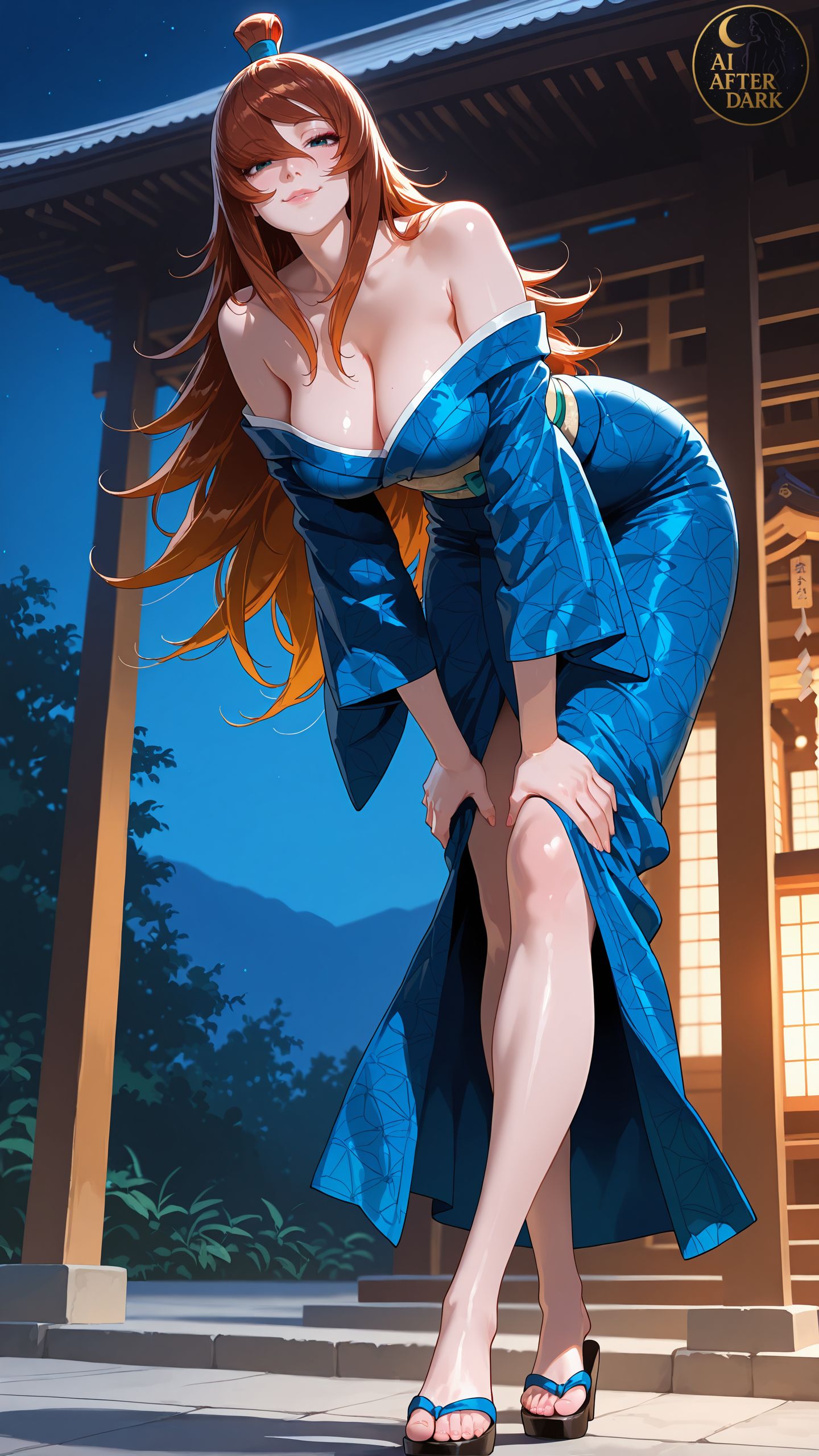
This image works because it combines a classic anime character pose with a setting that already carries strong visual and cultural atmosphere. The figure stands on shrine steps at night, turned partly away from the viewer while glancing back over her shoulder. That pose alone creates instant character appeal, but the red architecture, warm lantern glow, and blue kimono palette elevate it from a generic pinup into something more rooted and cinematic.
The first important element is the composition. The character is centered on the staircase, which naturally directs the eye upward into the shrine framing behind her. The vertical path of steps, pillars, and roofline creates a strong stage-like structure. This is useful because the image is not only about the figure's body line; it is also about how the architecture supports that presence. The subject is placed like a performer in a ceremonial space.
Color contrast is doing a lot of work here. The red shrine structure and warm lantern light create a saturated glowing backdrop, while the kimono lives in rich cool blue. That warm-cool contrast is one of the most reliable ways to make a character pop in anime illustration. It keeps the image vibrant without becoming chaotic. The yellow obi adds a third accent that ties the palette together and gives the costume a clear focal break at the waist.
The pose is another major strength. The over-the-shoulder stance creates confidence and display, while the turn of the face preserves personal connection with the viewer. In character illustration, this is a highly effective combination because it lets the artist show silhouette, outfit, and expression at once. The image feels flattering and dynamic without requiring action or motion blur.
Hair design contributes heavily to the character appeal as well. The long auburn hair creates a flowing vertical line down the back and softens the geometry of the shrine setting. The small hair ornament helps reinforce the traditional styling without overcrowding the design. Details like this matter because they make the image feel like a coherent character build rather than just a pose pasted into a backdrop.
The shrine environment gives the portrait narrative texture. Even without any visible story event, the viewer immediately understands a tonal world: evening, lanterns, tradition, quiet, ceremony, perhaps a festival or a supernatural urban fantasy setting. This is one of the advantages of shrine imagery in anime art: the environment does a lot of storytelling very efficiently.
From a prompt-building perspective, the image depends on a stable set of ingredients: shrine steps, red wooden architecture, lantern glow, night sky, blue kimono, yellow obi, long brown or auburn hair, and a confident backward glance. If you remove too many of those anchors, the result becomes generic. The scene works because the costume, environment, and pose all reinforce one another.
Another reason the image feels polished is that the background is clean. The shrine is detailed enough to create atmosphere, but not so busy that it pulls focus from the figure. This is especially important for character-centered images meant for social posting or posters. The setting should enrich the subject, not compete with it.
If you wanted to build variations from this concept, you could shift the same pose into rain, snowfall, festival fireworks, or moonlit mist while keeping the shrine architecture constant. You could also vary the kimono palette, crimson, ivory, black-and-gold, while preserving the warm lantern contrast. The composition is strong because it has a reusable emotional core: a poised figure at the threshold of a sacred nighttime space.
Overall, this image succeeds because it treats character glamour and environmental storytelling as one integrated system. The shrine gives mood, the kimono gives identity, and the pose gives charisma. None of those elements would be as effective on their own, but together they create a scene that feels immediately attractive and atmospherically complete.