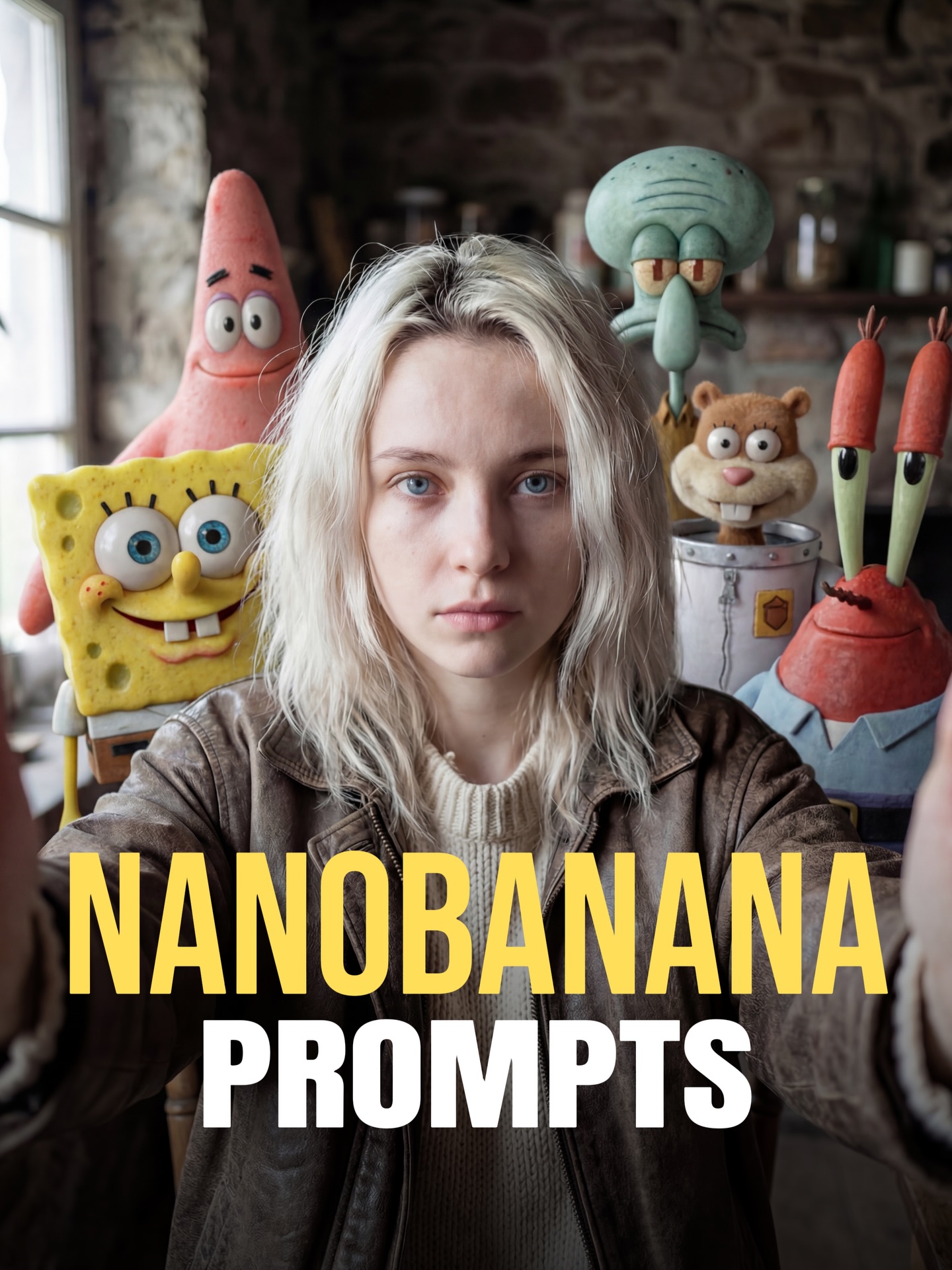
This image works because it turns a familiar cartoon universe into something tactile, uncanny, and immediately clickable. The central idea is not just "a woman with SpongeBob characters behind her." The real hook is the transformation of those characters into strange, realistic puppets or practical-effect creatures, then framing that visual shock as a social cover image with bold text.
The woman in the center acts as the stabilizing element. Her styling is simple, pale hair, leather jacket, neutral face, natural light, which grounds the image in contemporary portrait realism. That is important because it gives the surreal supporting cast something believable to contrast against. If every element were equally exaggerated, the image would lose its tension.
The reimagined SpongeBob characters are the true attention magnet. People instantly recognize them, but their material treatment, plushy, clay-like, slightly eerie, creates dissonance. That tension between nostalgic familiarity and unsettling realism is exactly what makes the image highly clickable. It invites the viewer to look again and ask what tool or prompt created the effect.
Compositionally, the lineup is very efficient. The human subject sits in the center, while the recognizable characters fan out behind her at different heights, creating a layered stage of faces. This makes the image dense with information but still easy to scan. You immediately know the theme, the visual experiment, and the emotional tone.
The large title text is doing commercial work, not decorative work. “NANOBANANA PROMPTS” occupies the lower part of the frame like a thumbnail headline, telling the viewer that the image is not just an art piece, it is also an explanation, tutorial, or prompt-pack style asset. That makes it function well in creator ecosystems where the image has to sell curiosity in under a second.
Another reason it works is the choice of environment. The rustic, dimly textured room behind the subjects gives the image a slightly handmade, cinematic, almost workshop-like feeling. That complements the puppet-like redesign of the characters. A cleaner studio background would have made the image feel flatter and more synthetic.
The emotional tone is controlled very well. The central model is not smiling or reacting dramatically, which keeps the image from becoming too jokey. That restraint is useful because it allows the weirdness of the background characters to land more strongly. The scene feels intentionally designed rather than randomly absurd.
From a prompt-building perspective, the image depends on several strong anchors: centered blonde woman, realistic portrait styling, SpongeBob cast recreated as tactile puppet-like figures, rustic interior background, and oversized thumbnail text. Remove either the uncanny character redesign or the large creator-style text, and the image loses much of its unique utility.
Overall, the image succeeds because it understands social-media visual logic. It combines a known IP, a strange reinterpretation, a human focal point, and loud educational framing. That combination creates instant recognition, curiosity, and click potential, which is why it works so effectively as a prompt-related cover image.