▶
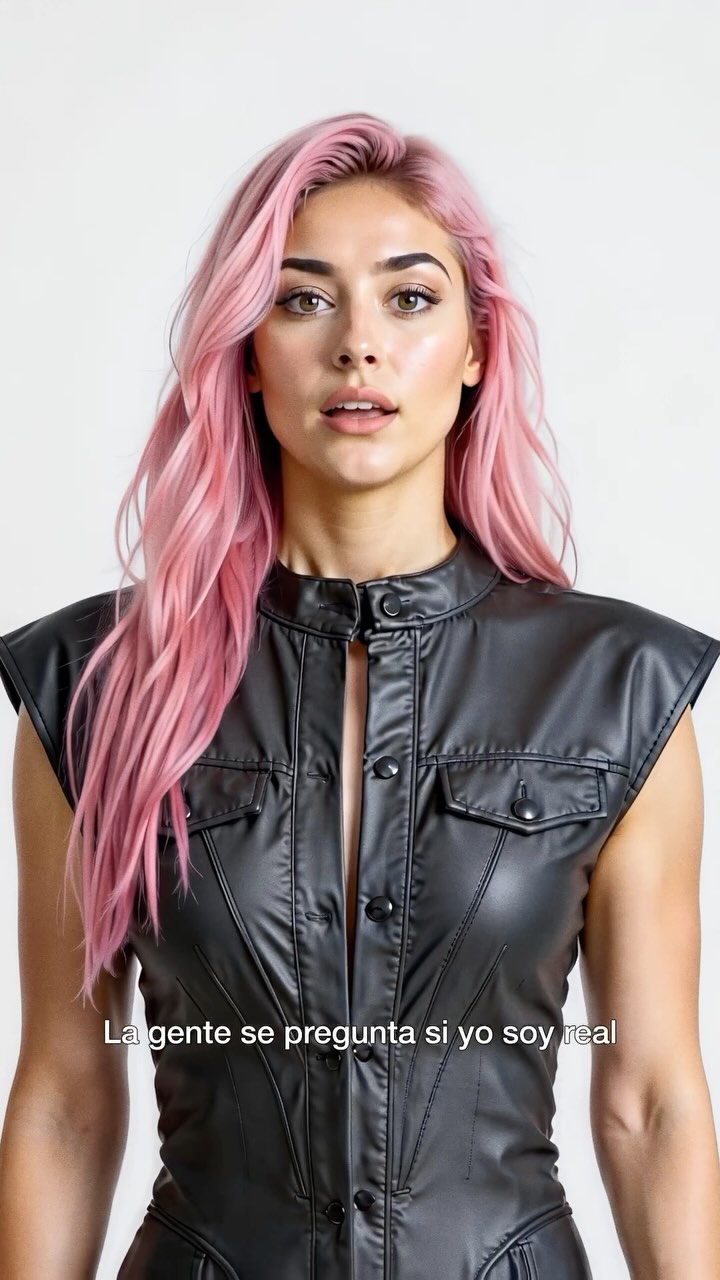
Nada es lo que parece. La belleza ha cambiado para siempre…
Nada es lo que parece. La belleza ha cambiado para siempre…
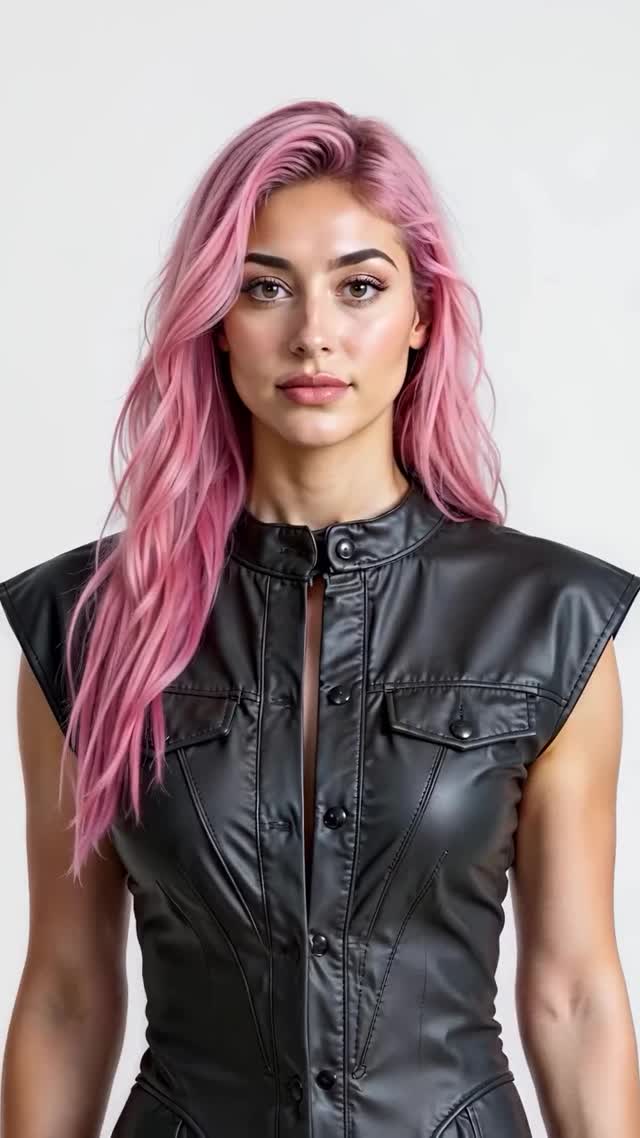
This video features Aitana Lopez, a prominent AI-generated influencer, addressing the controversy surrounding "digital doubles" in the fashion industry. The aesthetic is a clean, cinematic editorial portrait style, characterized by a minimalist white studio background that makes the subject's vibrant bubblegum pink hair and black leather wardrobe pop. The video uses a high-retention editing style, blending direct-to-camera address with rapid-fire news clippings and subtle "glitch" transitions to emphasize the blurred line between reality and artificial intelligence. It’s a masterclass in using AI persona consistency to drive a philosophical and timely narrative about beauty standards.
The video centers on a single subject: a young woman with Mediterranean features, olive skin, and striking pink hair. She wears a structured, sleeveless black leather vest with a high collar and button details, suggesting a high-fashion, "edgy" persona. The setting is a sterile, brightly lit studio with an off-white background, creating a high-contrast look that feels both professional and slightly "uncanny."
The lighting is soft and frontal, minimizing harsh shadows on the face while maintaining clear definition of the leather texture and hair strands. The color palette is strictly controlled: neutral whites and greys, deep blacks, and the singular accent of pink. The editing rhythm is fast; the video doesn't stay on one shot for more than a few seconds, frequently interrupting the "real" footage with screenshots of headlines from The Guardian and The Sun. This creates a sense of urgency and social proof. A notable glitch effect at the 0:23 mark serves as a visual metaphor for the subject's artificial nature.
| Time Range | Visual Content | Shot Language | Lighting & Tone | Viewer Intent |
|---|---|---|---|---|
| 00:00–00:10 | Subject speaking directly to camera about fashion brands. | Medium Close-Up (MCU), static. | Bright, high-key studio light. | Hook: Establish authority and subject identity. |
| 00:10–00:18 | Rapid montage of news headlines about AI models. | Overlays / Fast cuts. | High contrast, documentarian feel. | Social Proof: Validate the topic's importance. |
| 00:18–00:23 | Subject returns, questioning the "falseness" of images. | MCU, slight zoom-in. | Consistent with opening. | Engagement: Pivot to a philosophical question. |
| 00:23–00:24 | Digital pixelation/glitch transition. | Visual effect. | Distorted colors. | Pattern Interrupt: Remind viewer she is AI. |
| 00:24–00:32 | Final address challenging the viewer's own "reality." | MCU, intense eye contact. | Warm skin tones vs. cool background. | Retention: Leave the viewer thinking. |
This video taps into a massive cultural zeitgeist: the fear and fascination surrounding AI replacing human roles. By having an AI model talk about AI models, it creates a meta-narrative that is inherently "shareable." It triggers a biological response—the Uncanny Valley—where the viewer is compelled to look closer to see if they can spot the "fake." The topic of "digital doubles" in fashion is a hot-button issue involving ethics, jobs, and beauty standards, which naturally sparks debate in the comments.
From a platform perspective, the video succeeds through high watch time and controversy-driven engagement. The 0–3 second hook is visual: a beautiful woman with bright pink hair. The pacing is relentless; the news clippings act as "pattern interrupts" that prevent the viewer from scrolling away. The caption "Nada es lo que parece" (Nothing is what it seems) creates a curiosity gap. Because the video asks a polarizing question ("Is your life real?"), it drives a high comment-to-view ratio, signaling to the algorithm that this content is highly engaging.
Choose a niche (e.g., tech, fashion, fitness). Create a character with one "anchor" trait—in this case, the pink hair. This ensures character consistency across multiple videos.
Write a script that addresses a current trend or fear. Use the "Report -> Evidence -> Challenge" structure seen in this video. Keep the language punchy and use rhetorical questions.
Generate high-quality reference images of your character. Use prompts that specify lighting (studio, high-key) and wardrobe (leather, high-collar) to match the "editorial" look.
Use "Image-to-Video" tools. Upload your character reference and use a prompt describing the talking motion. Tip: Keep camera movement minimal to maintain facial stability.
Clone a voice that matches the character's ethnicity and age. For this video, a warm, slightly deep Spanish female voice was used. Ensure the "Stability" setting is high for a professional tone.
Upload your generated video and the audio file to a lip-sync tool. This is crucial for the "realism" factor. Ensure the mouth movements match the Spanish phonemes.
Gather screenshots of relevant news articles. In your editing software (CapCut/Premiere), layer these over the video with "camera shutter" sound effects to create a fast-paced feel.
Add a digital glitch effect at a pivotal moment in the script. This acts as a visual punctuation mark and reinforces the AI theme.
The Debate Starter:
AI models are here. 🤖 Some call it innovation, others call it a lie. What do you think? Is beauty still real if it’s generated? 👇 #AI #FashionFuture
The "Did You Know":
Nothing is what it seems. 📸 Major brands are now using "Digital Doubles" instead of human models. The line between reality and pixels is gone. Thoughts? #AITech #DigitalInfluencer
Use Midjourney for the base image, Runway Gen-3 for motion, and ElevenLabs for the voice.
"Cinematic studio lighting," "Hyper-realistic skin texture," and "Consistent character."
You need to use a consistent "Character Reference" (cref) in Midjourney or a LoRA in Stable Diffusion.
Add "imperfections" like subtle skin pores, stray hairs, and realistic eye reflections.
Instagram favors high-quality "aesthetic" AI, while TikTok favors "uncanny" or storytelling AI.
Use the platform's "AI-generated" tag and mention it in the bio or caption to build trust.