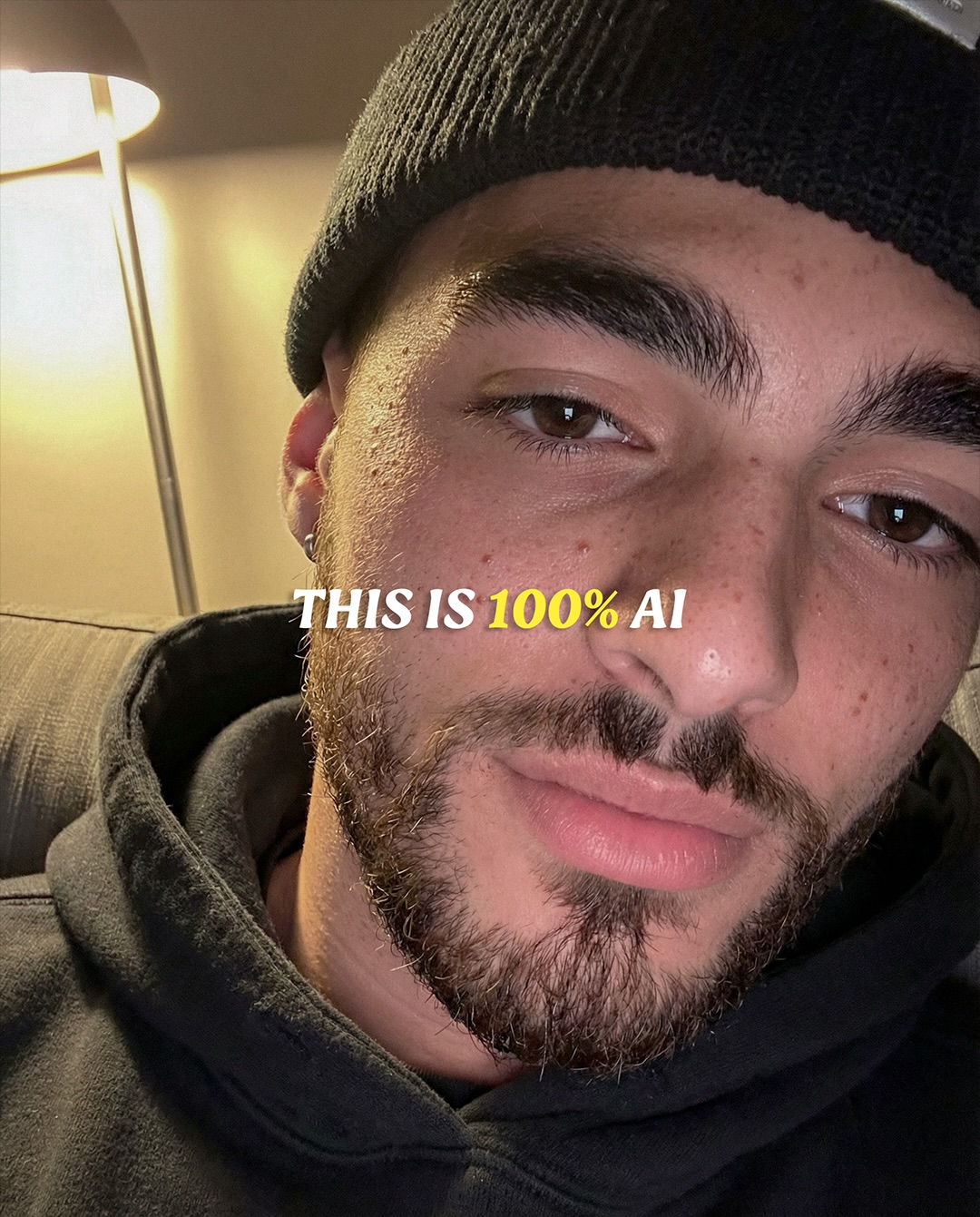
This image works because it uses one of the most ordinary portrait formats possible: the casual indoor selfie. That familiarity is the whole point. The more normal the image feels, the stronger the “100% AI” statement becomes.
The beanie and hoodie are doing important cultural work. They make the portrait feel contemporary, relaxed, and unforced. This is not a styled editorial image. It feels like something someone might actually send to a friend or post casually.
The facial hair is one of the strongest realism cues here. Beard texture is often where synthetic images start to feel fake, but in this image the stubble, mustache, and edge variation feel natural enough to support the illusion.
Skin rendering matters too. You can see pores, slight redness, uneven texture, and natural shading around the nose and cheeks. Those imperfections are what make the image convincing.
The warm lamp light in the background is another effective choice. It gives the image a domestic setting and a believable source of illumination, which helps ground the whole portrait in a real environment rather than a generic blank space.
The crop is also useful. Because the face fills most of the frame, the image puts pressure directly on realism. There is nowhere for the model to hide behind composition tricks or elaborate scenery. That makes the proof stronger.
Typography is handled well. “THIS IS 100% AI” is short, direct, and centered over the face without completely hiding the portrait. The emphasis on “100%” adds extra friction and confidence to the claim.
Another reason the image succeeds is its emotional neutrality. The subject is not overexpressive. The calm, slightly tired or detached look makes the image feel more believable than a forced smile or dramatic pose would.
From a prompt-building perspective, the essential anchors are male indoor close-up selfie, black beanie, dark hoodie, warm lamp-lit room, realistic beard and skin texture, soft casual pose, and centered AI statement text. Those are the details that define the result.
Overall, this image is effective because it proves AI realism through banality. It is not spectacular, and that is exactly why it works. It looks like a normal phone selfie, which makes the statement feel much more convincing.