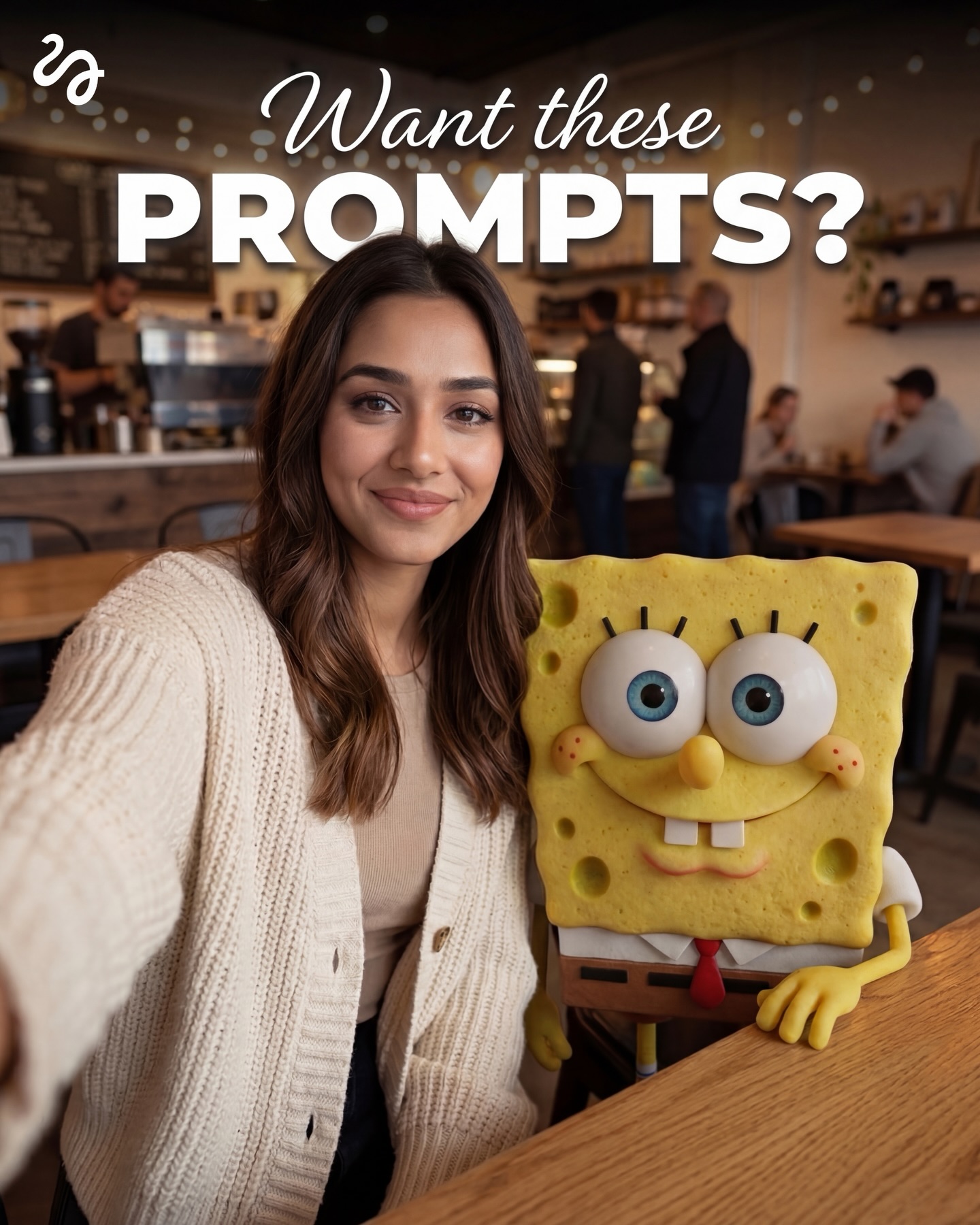
This image works because it understands the grammar of social media hooks. Everything about the composition is optimized to make someone stop scrolling within a second: a direct selfie angle, a familiar public setting, a famous character in an unexpected real-world context, and a large headline that asks a simple question.
The biggest strength is the contrast between ordinary and impossible. A woman sitting in a cafe is visually normal. Sitting beside a convincing SpongeBob character is not. That contrast is what gives the image immediate curiosity value.
The selfie framing matters a lot. Because the woman is close to the lens and slightly angled as if she is taking the picture herself, the image feels native to social platforms rather than staged like a traditional ad. That native feeling increases believability and shareability.
The cafe background is also a smart choice because it signals casual everyday life. The warm lighting, blurred people, and wooden table all make the scene relatable, which makes the surreal character insertion even funnier and more effective.
The headline is pure performance design. Asking Want these PROMPTS? is not subtle, but it is clear. The oversized word PROMPTS tells the viewer exactly what the payoff is, which is critical for educational or prompt-sharing content.
SpongeBob is functioning as more than nostalgia bait here. He is also proof-of-result. His presence implies that the creator knows how to generate or stage impossible character realism, which makes the offer of prompts feel more valuable.
Another reason the image works is facial expression. The woman is calm and friendly rather than exaggerated. That soft expression grounds the absurdity and makes the whole piece feel confident instead of try-hard.
From a prompt-writing perspective, the key ingredients are cafe selfie composition, smiling young woman in cream cardigan, realistic SpongeBob seated beside her, shallow depth of field, warm coffee-shop ambience, and bold white text hook about prompts.
Overall, this is effective because it packages tutorial value inside an instantly understandable visual joke. It feels fun, useful, and algorithmically sharp at the same time.