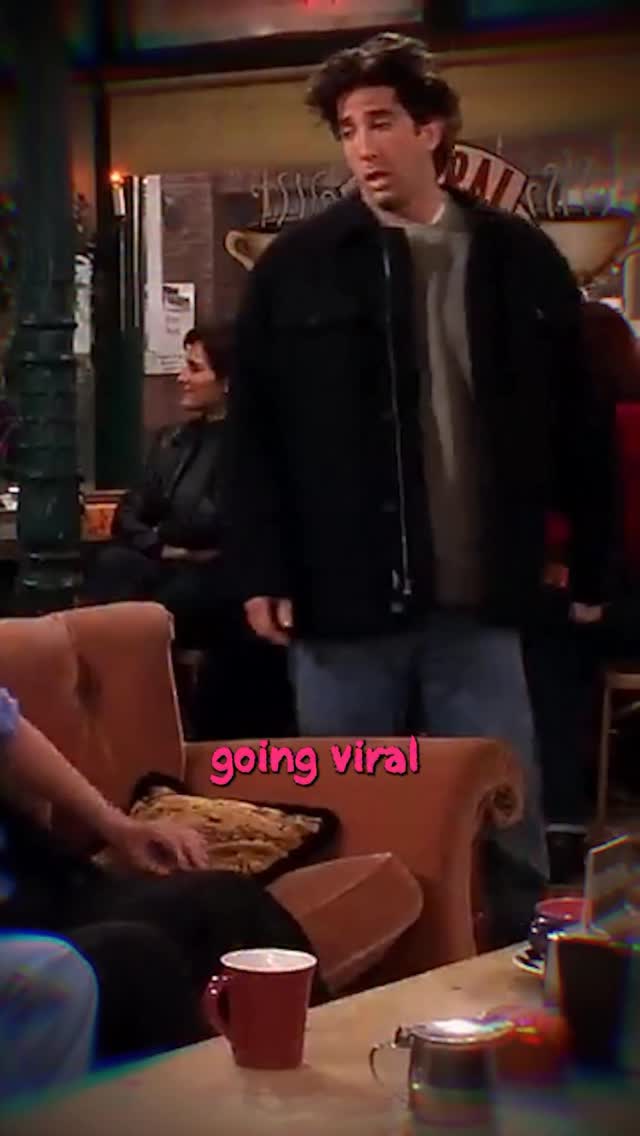
How cyborggirll Made This Sitcom Going Viral Reaction Thumbnail Breakdown — and How to Recreate It
This image works because it borrows something the internet already knows how to use: the sitcom reaction frame. A familiar coffeehouse set, a central character caught mid-expression, and one short caption are enough to turn an old television mood into current social content. The power is not in novelty. The power is in instant recognition plus emotional utility.
The Core Hook
The hook here is emotional shorthand. The standing character looks caught between disbelief, fatigue, and social awkwardness. That kind of expression is highly reusable. The bottom caption then narrows the meaning just enough to guide the meme. Together, they create a template viewers can apply to their own situations in seconds.
This is why nostalgic sitcom frames remain so durable online. They already come with built-in warmth, social context, and readable body language. A creator does not need to build emotional complexity from scratch. The source material provides it.
Signal Table
| Signal | Evidence (from this image) | Mechanism | Replication Action |
|---|---|---|---|
| Nostalgic familiarity | The warm coffeehouse set instantly reads as classic ensemble sitcom territory | Recognition lowers friction and increases share-readiness | Use environments that audiences can decode immediately from cultural memory |
| Reaction readability | The central figure’s posture and face convey a clear “what is happening?” mood | Reaction-based expressions are highly reusable in meme culture | Choose stills where the emotional state is visible before the caption is read |
| Caption compression | The short phrase at the bottom frames the image as commentary | Minimal text turns a scene into a social punchline | Keep caption language short, portable, and emotionally broad |
| Set-based warmth | Armchairs, mugs, and warm lighting create comfort around the awkward moment | Comfortable environments make reactions feel more human and replayable | Use cozy communal settings instead of sterile spaces when building meme covers |
| Screen-native nostalgia | Soft TV-era texture and slight fringing preserve the reposted-screen feel | That texture tells viewers this belongs to pop culture memory, not just content design | Keep a hint of broadcast softness instead of over-restoring the frame |
Aesthetic Read
The visual charm here comes from the collision of two time systems. The source frame belongs to a pre-social-media TV world built around ensemble comfort and repeated characters. The caption logic belongs to current internet culture, where everything becomes a reaction format. When those systems meet, the result feels both familiar and freshly usable.
The coffeehouse environment matters more than many creators realize. Without the armchairs, mugs, and social background, this would just be a random man standing indoors. The set provides emotional context. It says this is a relationship scene, a friend-group scene, a social misfire scene. That is exactly why the still is adaptable.
Where This Format Transfers Well
This logic works for sitcom stills, reality-TV closeups, movie reaction frames, K-drama pauses, sports-broadcast faces, and creator-shot reenactments of the same mood. The transferable principle is simple: one familiar emotional frame plus one precise but flexible caption.
It also works well for commentary brands that rely on cultural references. Instead of inventing a metaphor, they borrow one that audiences already understand.
Prompt Technique Breakdown
| Prompt chunk | What it controls | Swap ideas (EN, 2–3 options) |
|---|---|---|
| central sitcom reaction figure in a coffeehouse | Creates the emotional anchor and nostalgic setting | awkward office worker in a break room; teen reaction in a school hallway; reality-show contestant in a lounge |
| warm 1990s broadcast-TV lighting | Preserves the sitcom tone and memory texture | soft reality-TV interior lighting; 2000s rom-com apartment warmth; talk-show backstage glow |
| caption-ready bottom area | Turns the still into a meme vehicle | top reaction caption; side subtitle strip; center punchline label |
| upholstered chairs and mugs | Builds the cozy social context | diner booths and milkshakes; office couch and paper cups; backstage chairs and water bottles |
| retro repost softness | Anchors the frame in internet remix culture | light VHS fringing; CRT softness; old-screen compression feel |
Remix Playbook
Lock four elements first: one readable reaction face, one culturally legible set, one warm nostalgic lighting treatment, and one short caption zone. Those are the structural components that make reaction frames work online. If you lose any of them, the frame stops functioning as a meme-ready cover.
Use a one-change rule for iteration. Change only the caption tone, or the era texture, or the source environment, or the emotional expression. For example, keep the coffeehouse and body posture, but swap the caption from “going viral” to a more ironic or niche-specific phrase. Or keep the emotional logic, but move from a sitcom café to a fluorescent office break room. Controlled variation makes a reaction series feel coherent.
If a version feels too generic, strengthen the expression before changing the set. If it feels too busy, reduce foreground objects and let the main reaction carry the post. The best result should feel like a cultural memory repurposed into a very current social emotion.