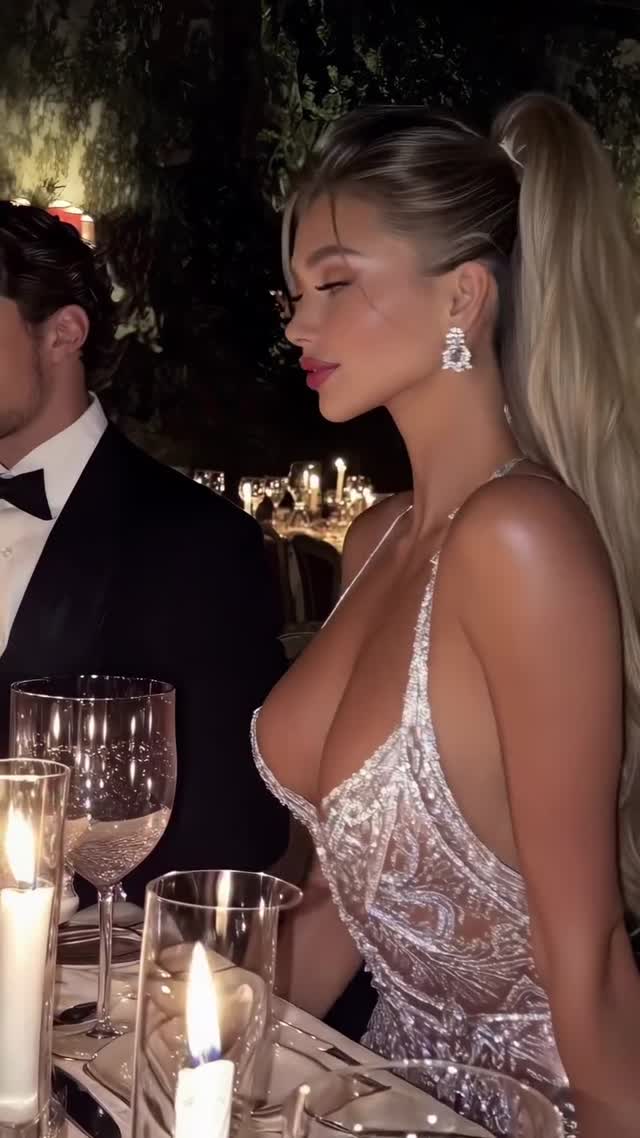
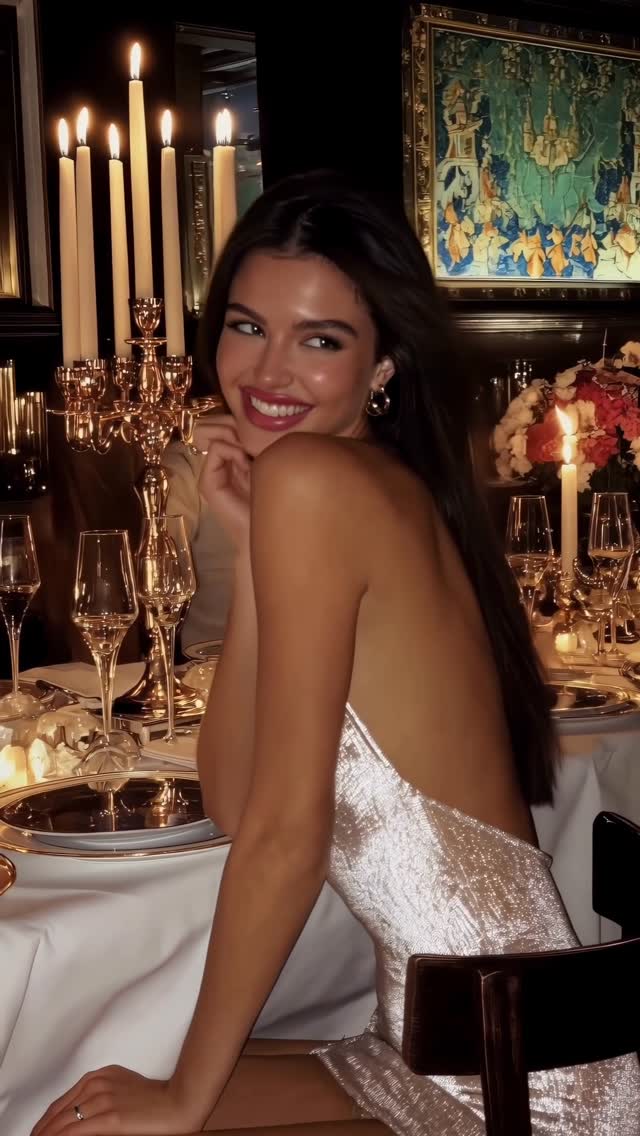
Dinner Party 🍽️
Animated with @klingai_official
Are you serious about learning how to create AI visuals at a professional level? In my course, I teach everything I use in my own process:
• How I build concepts and visual storytelling
• The exact tools, prompts, and workflows I use
• How to refine, edit, and create a portfolio that gets noticed
This is the full system I used to grow Dreamfall Art and work with brands.
• Personal feedback, guidance, and access to my private community
If you want access —
Comment “COURSE” below and I’ll send you the link directly.
#midjourney #aiart #aiartcommunity #ai #aiartwork
Why dreamfall.art's Dinner Party AI Video Went Viral — and the Formula Behind It
This page turns one short vertical video into a creator-ready replication guide: what to copy, what to vary,
and how to publish it so it performs as a “save-worthy aesthetic reference” instead of thin prompt spam.
Case Snapshot
A fast, luxurious dinner-party montage: candle flames, crystal chandeliers, gilded mirrors, and a sequence of
editorial close-ups—models in shimmering lace evening dresses, slow head turns, direct eye contact, and a clean
food beat (lobster bite) to punctuate the vibe. The visual thesis is simple: “expensive night out” in 18 seconds,
with warm amber lighting, deep blacks, creamy bokeh, and a steady, premium camera language (slow push-ins, micro-sway).
Why creators save this: it’s an instantly recognizable “luxury aesthetic template” that can be remixed with different
wardrobe, location, or food, while keeping the same core signals (candlelight, jewelry sparkle, shallow depth of field,
elegant movement). Keywords you can reuse: candlelit dinner party, cinematic editorial portrait,
luxury restaurant aesthetic, shallow depth of field, chandelier bokeh,
AI fashion montage, Kling-style animation.
What you’re seeing
1) The environment (what sells “luxury”)
The setting is doing half the work: tall taper candles in clustered candelabras, reflective glassware, white plates,
ornate wall decor, greenery/floral dressing, and chandelier crystals. These objects create repeating highlights and
depth layers, so the background feels “expensive” even when it’s blurred.
2) The lighting recipe (warm key + dark room)
The light reads like candle/chandelier motivation: warm highlights on cheekbones and shoulders, soft rolloff, and
deep shadows that preserve contrast. The trick is not blasting brightness—it’s keeping the room dark so the candles
pop and the dress sparkles feel premium.
3) The wardrobe and props (easy-to-copy anchors)
The recurring anchor is a shimmering lace/satin evening dress with thin straps and statement earrings. Then the table props
(wine glasses, menu card, plate) create believable “dinner behavior” without needing plot or dialogue.
4) The camera language (slow push-ins, no chaos)
The framing stays close: profile close-ups, three-quarter glamour angles, and over-the-shoulder turns. Movement is controlled:
slow push-in plus micro-sway (gimbal/handheld feel). That makes the video feel “cinematic editorial” instead of “random handheld.”
5) The motion choreography (micro-movements win)
Most shots are built on tiny actions: blink → chin tilt → slow head turn → soft smile. That’s important for AI video because
micro-movements reduce artifact risk while still feeling alive.
Shot-by-shot breakdown (estimated)
Estimated timeline based on visible cuts and repeated framing patterns. Use this table as your storyboard and timecoded prompt skeleton.
Time range
Visual content
Shot language
Lighting & color tone
Viewer intent
00:00–00:03
Profile close-up at table, candle bokeh, tux guest blurred
CU, slow push-in, 50–85mm feel, shallow DOF
Warm amber highlights, deep blacks, soft bloom
0–3s hook: instant “luxury dinner” signal
00:03–00:06
Three-quarter glamour near window with city lights
CU/MCU, dolly-in + slight drift, direct eye contact
Over-the-shoulder pose, mirrors and candle repeats
MCU, push-in, elegant head turn timed to cut
Golden reflections, highlight repetition
Premium “editorial” signature moment
00:11–00:14
Menu card glance, soft smile
MCU, candles foreground, shallow DOF
Warm rim on hair, soft facial fill
Humanize: believable dinner behavior
00:14–00:17
Lobster bite close-up (food beat)
CU, minimal movement, stable hands/plate
Warm key, clean texture on food
Pattern break: memorable “taste” moment
00:17–00:18
Smiling reaction / end beat for loop
CU, tiny push-in, hold a fraction
Same amber grade, chandelier bokeh
Loop-friendly finish + emotional lift
Why it went viral
1) The topic is “high-status fantasy” (low explanation cost)
The viewer understands it in one glance: luxury dinner, glamour portraits, candlelight. No plot to decode, no text required.
That reduces friction and improves the chance of a 3-second hold—especially on Instagram where aesthetics can outperform narrative.
2) The hook is visual, not verbal
The opening profile close-up + candle bokeh is a pure scroll-stopper: face + sparkle + warm flames. If you copy only one thing,
copy the first frame’s “expensive” lighting and depth.
3) The edit rhythm feels premium (but simple)
Cuts land on micro-movements (blink, head turn, chin tilt). This creates perceived intention—like a fashion film—without the risk
of complex action that can break AI motion.
4) The food beat creates contrast
The lobster bite is a smart pattern break: it shifts from “pose” to “behavior.” That makes the montage feel more real, and it gives
viewers a reason to rewatch to catch the moment again.
5) Platform signal view (Instagram)
This format likely performs on saves and shares: it’s reference-able (lighting, wardrobe, vibe), remix-able (swap restaurant, swap dress),
and short enough to loop. The caption CTA (comment a keyword) also converts attention into comments without requiring controversy.
Five testable viral hypotheses
Observed evidence: candle flames + chandelier bokeh dominate the frame.
Mechanism: high “luxury signal density” increases scroll-stop.
Replicate: add 3+ practical light sources and keep the room dark.
Observed evidence: close-ups and direct gaze in early seconds.
Mechanism: eye contact increases retention.
Replicate: put a gaze shot inside 00:03–00:06.
Observed evidence: slow micro-movements, no chaotic action.
Mechanism: fewer AI artifacts improves “looks real” perception.
Replicate: choreograph only blink/turn/smile beats per shot.
Observed evidence: a single “food action” moment near the end.
Mechanism: pattern break boosts rewatch and completion rate.
Replicate: add one safe action: sip wine, read menu, take a bite.
How to recreate (Replication tutorial: from 0 to 1)
Step checklist
Pick a series concept: “Luxury dinner portraits” or “Old-money night out” (make it a repeatable weekly format).
Generate keyframes: produce one strong keyframe per shot first; only then animate.
Animate with micro-movement rules: blink, chin tilt, slow head turn; avoid fast hand choreography.
Audit for artifacts: check hands/teeth/food texture; if one shot breaks, replace it—don’t “fix it in edit” forever.
Edit for rhythm: cut on micro-actions; keep each shot 2–3 seconds; add one contrast beat (food bite) near the end.
Cover & title: choose the sharpest candle-bokeh close-up as cover; title with an outcome: “How to get this luxury look in AI video.”
Publish + iterate: keep the environment and lighting constant for 5 posts, change only one knob each post (dress color, restaurant, food beat).
Growth Playbook (Distribution & scaling strategy)
3 opening hook lines (copy-ready)
“This is the exact prompt structure I use for candlelight ‘luxury dinner’ AI videos.”
“If your AI video looks cheap, your lighting anchors are missing—watch this.”
“One environment, seven shots, zero dialogue: here’s the loop that keeps people watching.”
4 caption templates (hook → value → question → CTA)
Template 1: Hook: “Candlelight makes everything look expensive.” Value: “Here are the 5 invariants I locked to keep it consistent.” Q: “Which shot is your favorite?” CTA: “Comment ‘PROMPT’ and I’ll drop the structure.”
Template 2: Hook: “This is an AI fashion film in 18 seconds.” Value: “Storyboard + micro-movements = fewer artifacts.” Q: “Do you want the shot list?” CTA: “Save this for your next remix.”
Template 3: Hook: “The lobster bite is the secret.” Value: “Pattern breaks increase rewatch.” Q: “Sip wine or bite food—what’s safer for AI motion?” CTA: “Follow for weekly breakdowns.”
Template 4: Hook: “Stop writing vague prompts.” Value: “Timecode your shots and lock the lighting logic.” Q: “Do you want a full timecoded master prompt?” CTA: “Comment a keyword and I’ll DM it.”
Hashtag strategy (3 groups)
Use three tiers so you can rank in niche long-tail while still signaling broad category relevance.
Why this works: broad tags help discovery, mid-tier tags help you reach the right creator cluster, and niche long-tail tags match what
people actually search when they want to recreate a specific aesthetic (“candlelit”, “bokeh”, “luxury dinner”).
FAQ
What tools make it look the most similar?
Use a video model that preserves face and lighting across cuts, and animate from shot keyframes rather than one long take.
What are the 3 most important words in the prompt?
“candlelit”, “shallow depth of field”, and “ornate dining room” (they lock the luxury signal fast).
Why does the generated face look inconsistent?
You changed too many variables at once; lock a character sheet and keep micro-movements only.
How can I avoid making it look like AI?
Reduce motion complexity, keep the room dark, and prioritize consistent practical lights and real textures.
Is it easier to go viral on Instagram or TikTok with this type of content?
Instagram tends to reward save-able aesthetics; TikTok can reward narrative—this format usually fits Instagram slightly better.
How should I properly disclose AI use for this type of content?
Add a simple disclosure in the caption (for example “AI-assisted”) and keep the focus on the creative process.