Can’t wait to see you again @emilypellegrini 🤍
Can’t wait to see you again @emilypellegrini 🤍
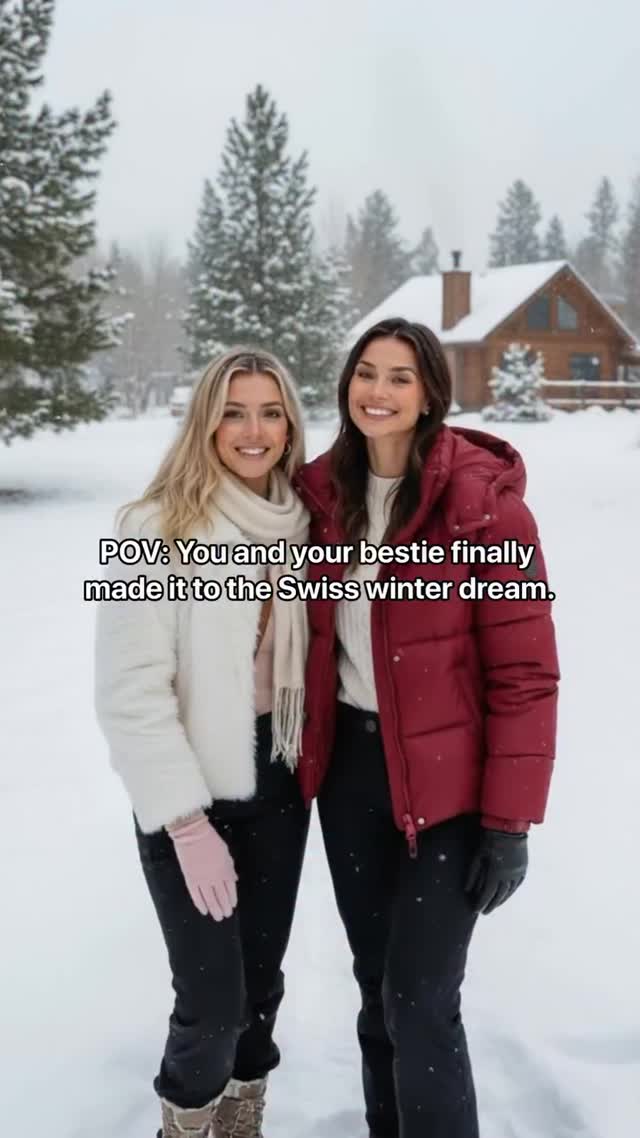
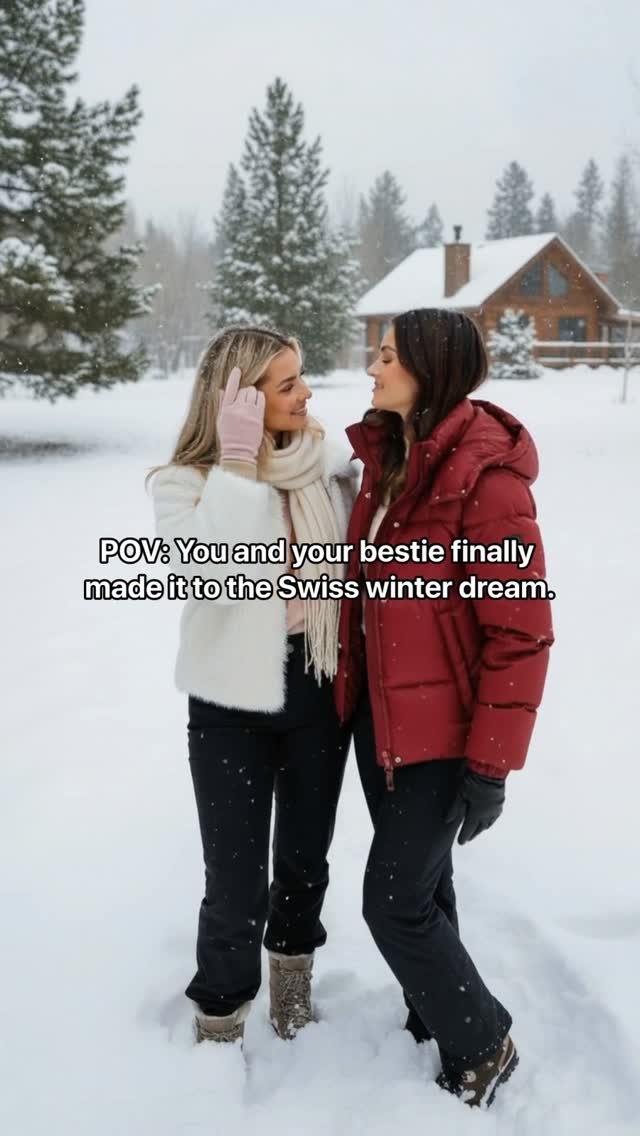
This image performs because it combines destination fantasy with friendship intimacy. The snowy chalet setting gives aspirational travel context, while the two-subject eye contact creates emotional warmth. Audiences are not just looking at a place; they are seeing a relationship inside that place.
The text overlay is doing strong narrative work. “POV” language places the viewer directly into the scene and turns the image into a micro-story instead of a static postcard. This framing is highly effective for short-form platforms where users respond to participatory narratives.
Visual balance is also excellent. One subject in white and one in red creates immediate contrast against the snow-dominant background, making both figures readable at thumbnail size. For creators, this is a reliable template for travel + relationship content that feels both aspirational and personal.
| Signal | Evidence (from this image) | Mechanism | Replication Action |
|---|---|---|---|
| Relational focal point | Two friends looking at each other, not at camera. | Interpersonal interaction adds authenticity and emotional pull. | Direct subjects to interact naturally rather than pose front-facing. |
| POV narrative framing | Overlay text starts with “POV” and addresses viewer directly. | Invites audience self-insertion into the moment. | Use short POV hooks tied to a specific emotional scenario. |
| Destination cue clarity | Snow-covered chalet and pine trees establish alpine setting. | Strong location readability increases share-worthy travel appeal. | Include one unmistakable location anchor in every travel frame. |
| Color contrast in wardrobe | White jacket and red puffer stand out against snow. | Separates subjects from background and improves mobile legibility. | Assign contrasting outerwear colors for multi-person winter shots. |
{destination_scene} {two_friends_interacting} {pov_caption} {clear_location_anchor}{cabin_landscape} {friend_pair_pose} {seasonal_wardrobe_contrast} {short_text_hook}{urban_weekend_scene} {duo_lifestyle_moment} {pov_line} {natural_light}The visual strength comes from emotional geometry: two subjects turned toward each other form a closed relational loop that keeps attention in-frame. The snow field and soft sky create negative space that makes this loop even more visible. The chalet acts as a contextual anchor without overpowering the human story.
For creators, this setup is easy to reproduce with high consistency. Once wardrobe contrast and interaction direction are set, you can capture many usable variants quickly by changing only text and micro-poses.
| Observed | Recreate | Why it matters |
|---|---|---|
| Two-subject face-to-face interaction | Position subjects close and direct gaze toward each other | Creates authentic social warmth |
| Snowy chalet backdrop | Include one clear alpine architecture cue | Builds instant destination recognition |
| Red/white jacket contrast | Assign contrasting outerwear tones to each subject | Improves separation in white environments |
| POV text overlay | Add short scene-specific viewer-address line | Increases narrative engagement and shares |
| Prompt chunk | What it controls | Swap ideas (EN, 2–3 options) |
|---|---|---|
| two friends in candid winter interaction | Relationship narrative | “couple embrace”; “family duo laugh”; “group of three friends” |
| snowy alpine chalet setting | Location identity | “mountain lodge”; “frozen lake cabin”; “ski village lane” |
| contrasting outerwear colors | Subject separation | “red + cream”; “navy + mustard”; “black + white” |
| pov caption overlay | Story framing and viewer insertion | “You made it.”; “First day in ___”; “Best trip ever” |
| soft overcast winter light | Mood realism and skin rendering | “golden-hour snow”; “blue-hour dusk”; “snowfall storm light” |
Baseline Lock: lock two-subject interaction, lock destination anchor, lock simple POV overlay style.
Review quickly in feed preview. If location is not instantly legible, widen slightly to include more environmental cues.