🧸
🧸
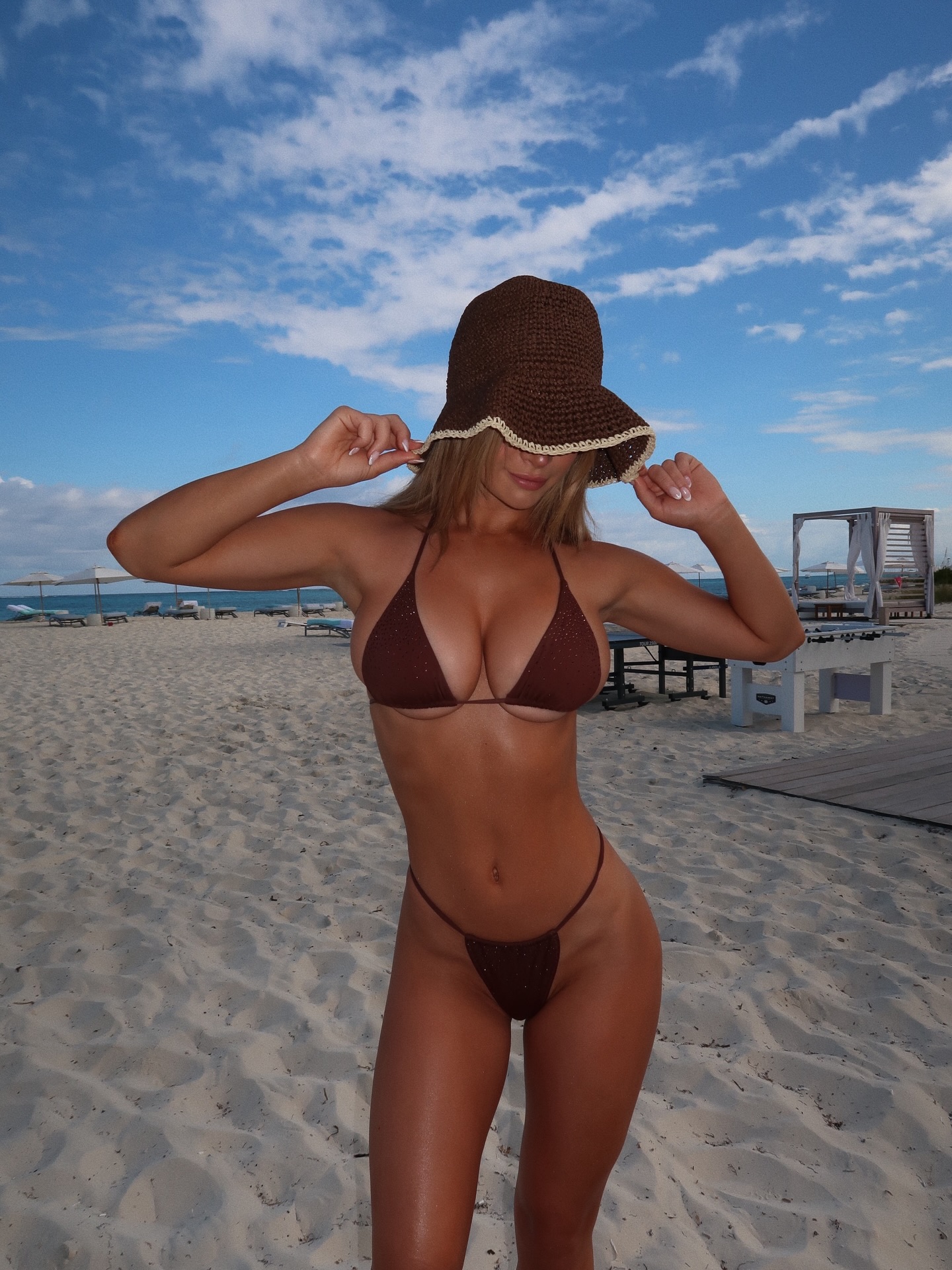
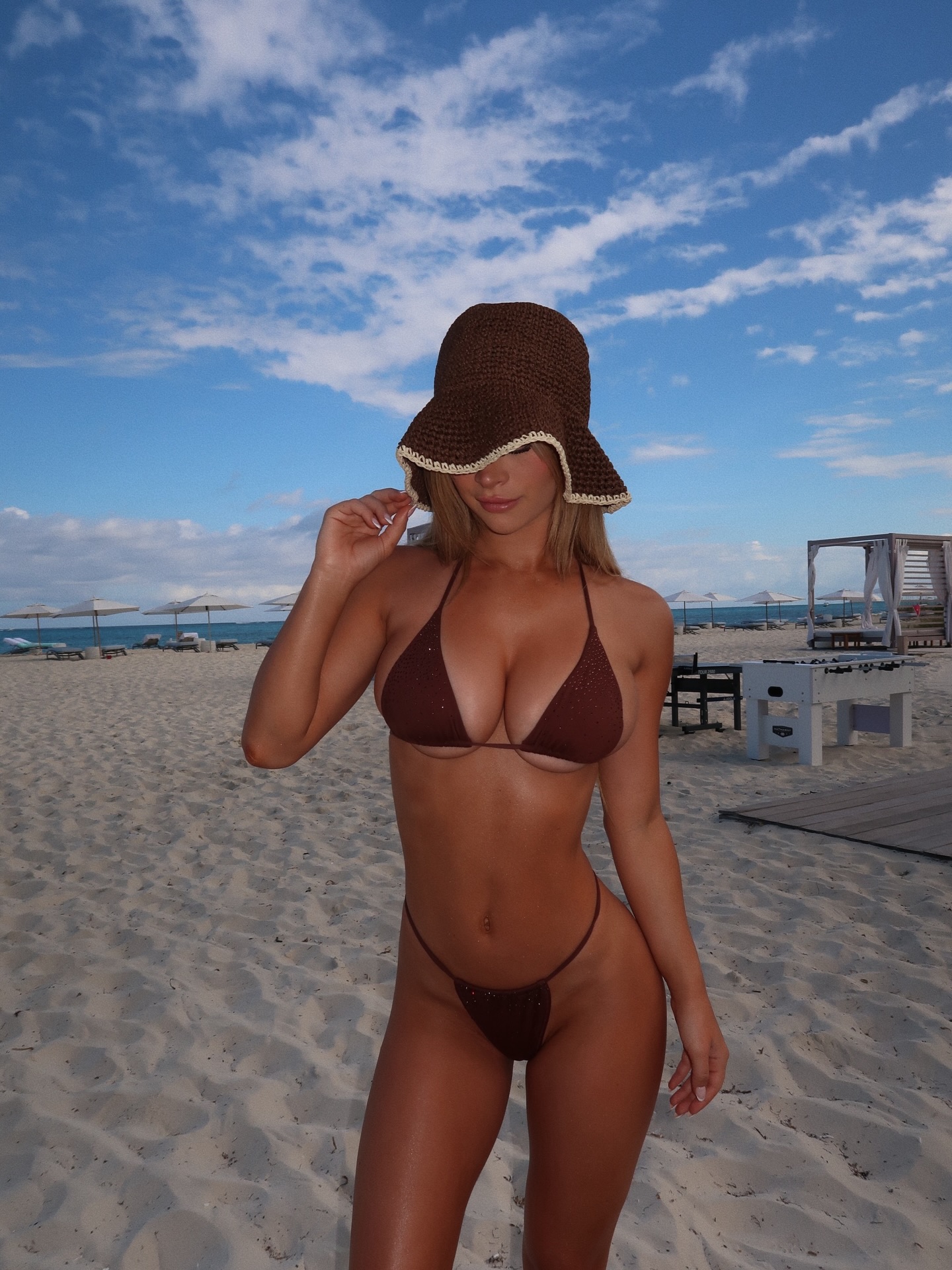
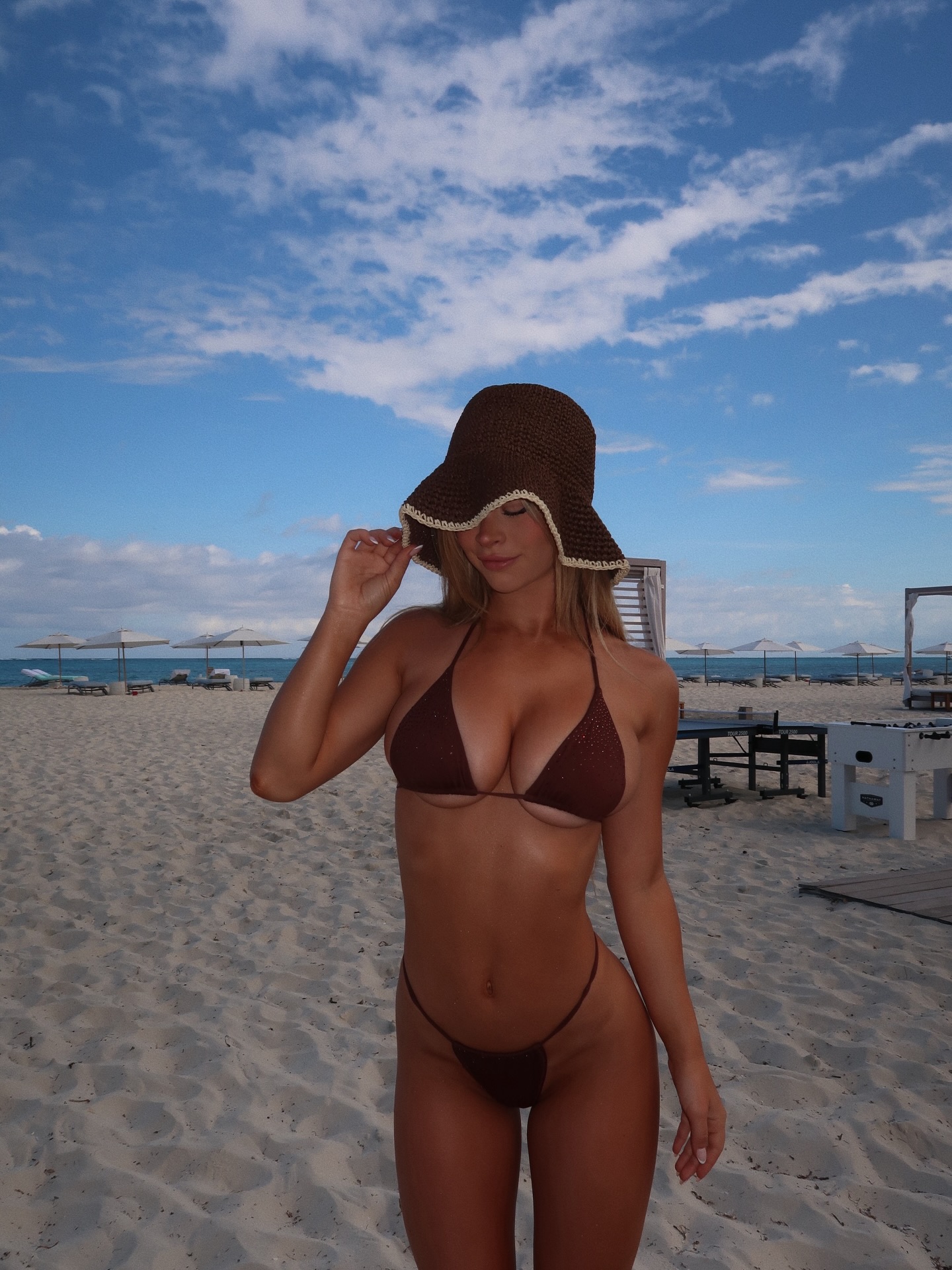
This image works because it understands restraint. There is no overloaded resort set, no pile of props, no aggressive color noise. Instead, the frame leans on a simple but effective stack: sculpted body line, wide sand field, soft blue sky, and one strong styling device in the oversized brown sun hat. For creators, that hat matters more than it may seem at first glance. It partially hides the face, which shifts the image away from “selfie glamour” and into something closer to editorial anonymity. That instantly raises the perceived polish.
The second strength is tonal discipline. Brown swimwear is much quieter than the usual hot pink or bright red beach palette, so the image reads as more controlled and expensive. The subject still stands out, but she does not clash against the environment. The photo also benefits from not chasing intensity in every direction at once. The sky has texture, the sand has texture, and the body has shape, but none of those elements are fighting for dominance. That is a useful prompt lesson: when the subject already carries a strong silhouette, your background should support depth, not steal attention.
One of the most repeatable parts of this image is the way it combines body visibility with face privacy. That creates intrigue without turning the shot into a mystery concept. The viewer understands the scene immediately, but there is still a reason to look twice. It also helps that the composition stays almost symmetrical while the hands on the hat introduce just enough gesture to stop the frame from feeling static.
| Signal | Evidence (from this image) | Mechanism | Replication Action |
|---|---|---|---|
| Editorial concealment | The large floppy hat covers most of the upper face. | Partial concealment creates intrigue and makes the image feel styled instead of merely posed. | Introduce one obstruction element such as a hat brim, veil, shadow line, or turned-away gaze. |
| Muted luxury palette | Brown swimwear, cream sand, blue sky, and pale sea carry the whole frame. | Fewer competing hues make the image feel calmer and more expensive. | Limit the prompt to 3-4 major tones and choose wardrobe colors that blend with the environment. |
| Centered subject with open space | The figure stands in the middle with lots of sky and sand around her. | Open negative space gives the subject presence and makes the feed thumbnail easier to read. | Keep the frame clean and resist adding too many foreground props or nearby people. |
| Recognizable but uncluttered beach cues | Distant loungers, horizon water, and a small cabana define the location. | The scene feels believable because the environment is specific, but still visually clean. | Use a few location anchors at mid or far distance instead of packing the foreground with set dressing. |
This type of image fits swimwear campaigns, beach vacation storytelling, sun-care branding, and creator portfolios that want to look polished without becoming overly glossy. It also works well for AI image studies where the goal is “tasteful beach editorial” rather than maximal fantasy. The calm color palette makes it especially useful for brands that want sensuality without looking loud.
This approach is less ideal for sporty beach narratives, playful family travel scenes, or product-heavy ecommerce needs. The image is about mood, line, and styling control. If you need action, visible expression, or detailed merchandising, a different setup will work better.
The most useful aesthetic feature here is the decision to let silhouette lead the image. Because the hat is oversized and the bikini is minimal, the viewer first reads shape, then texture, then environment. That order matters. In many weak AI beach images, the generator overbuilds the background and the subject loses clarity. Here, the sky and sand are intentionally broad and low-information, which keeps the figure dominant.
I also like how the brown tones change the emotional temperature of the image. Brown reads warmer and more grounded than bright tropical colors, so the photo feels less like party content and more like editorial vacation content. The subtle cloud cover helps too. It softens the beach light just enough to keep the skin sheen believable rather than harsh. This is a strong reminder that “beach glam” does not need extreme sunset drama to feel expensive.
| Observed | Why it matters | How to recreate |
|---|---|---|
| Oversized hat hides the eyes | Adds intrigue and creates a styled editorial tone | Prompt a brim shadow or accessory that partially obscures the face |
| Brown-on-sand palette | Makes the image feel cohesive instead of loud | Use earthy wardrobe tones that sit close to the environment |
| Subject occupies roughly 60% of frame | Keeps the body shape readable while preserving scene context | Use a full-body or three-quarter crop with generous sky and sand space |
| Distant beach furniture only | Signals location without cluttering the hero area | Push props and secondary structures into midground or background |
| Prompt chunk | What it controls | Swap ideas (EN, 2-3 options) |
|---|---|---|
| "woman holding the brim of a floppy sun hat" | Gesture, intrigue, and face visibility | "adjusting sunglasses", "holding a silk scarf", "looking down under a cap" |
| "dark brown string bikini" | Wardrobe tone and overall emotional temperature | "olive green halter bikini", "cream crochet set", "black minimal one-piece" |
| "empty sandy beach with distant loungers and cabana" | Location clarity without foreground clutter | "dune-backed coastline", "private beach club", "quiet Mediterranean shore" |
| "bright coastal daylight with soft cloud diffusion" | Skin rendering and shadow behavior | "hard noon sun", "warm late-afternoon light", "overcast beach softness" |
| "vertical full-body editorial portrait" | Feed readability and silhouette emphasis | "tight torso crop", "wider environmental frame", "low-angle standing portrait" |
The easiest way to ruin this kind of image is to over-describe luxury. Avoid generic words like “stunning”, “gorgeous”, or “dreamy” as your main control system. Anchor the image with physical evidence instead: hat shape, sky coverage, beach furniture distance, bikini color, and exactly how the hands interact with the brim.
Lock three things first: the face-obscuring accessory, the centered standing composition, and the muted beach palette. Those create the editorial identity. After that, change only one or two variables at a time.
Baseline Lock:
- composition: centered standing beach portrait
- styling: oversized floppy hat obscuring eyes
- palette: brown wardrobe with sand-and-sky neutrals

One-change rule:
Change environment first, wardrobe second, crop third.
Do not swap all three in a single pass.