Turks is always a good idea 🐚🏝️
Turks is always a good idea 🐚🏝️
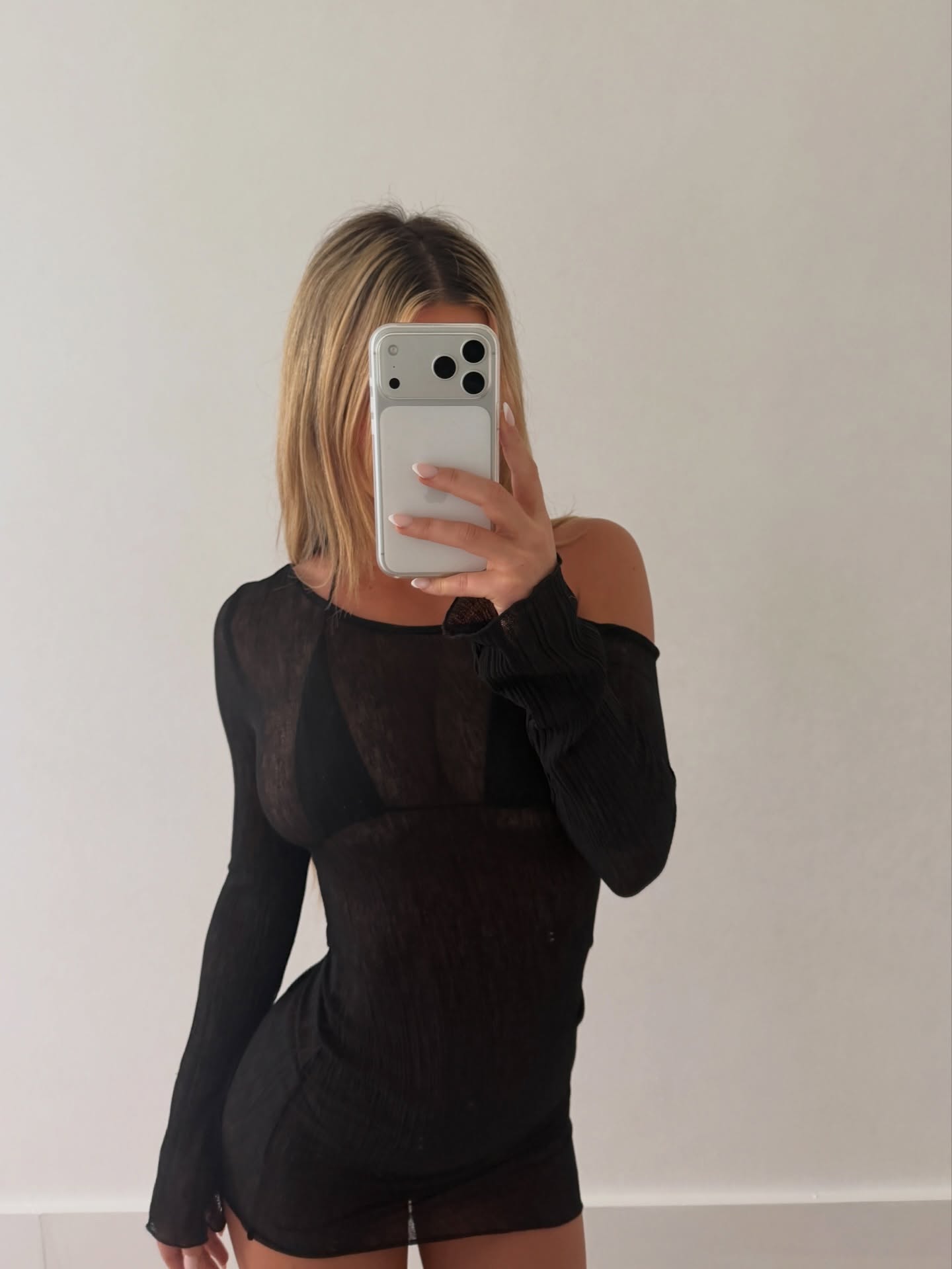
This image works because it uses very little and still lands clearly. There is no styled room, no obvious luxury cue, and no dramatic lighting setup. Instead, the power comes from reduction: one garment, one phone, one wall, one pose. That level of visual restraint gives the selfie a contemporary fashion feel rather than a casual throwaway snapshot.
The strongest choice is the balance between concealment and reveal. The phone covers the face entirely, which introduces anonymity and makes the image feel more like a mood piece than a standard portrait. At the same time, the sheer black fabric and off-shoulder neckline create softness and vulnerability. Those opposing signals make the frame more interesting than a typical mirror selfie.
The plain wall is also important. Because the background contains almost no visual information, the silhouette becomes the entire story. That means the texture of the garment, the body line, and the proportion of the phone all carry more weight. The image becomes graphic and intentional rather than busy.
The muted light helps preserve that intention. Brighter flash would make the photo feel louder and more performative. Here, the soft indoor lighting keeps the tones subdued and supports a quieter, more fashion-led mood.
This prompt is ideal for fashion-selfie concepts, quiet luxury social content, minimalist apartment portraits, mood-driven mirror photography, sheer-garment styling ideas, and editorial reference imagery for creator branding. It also works well for lookbook inserts, personal-style moodboards, and intimate indoor content that needs a modern understated tone.
Visually, the frame sits between a private phone selfie and a stripped-back fashion editorial. It feels personal because of the mirror format and face-obscuring phone, but it also feels curated because of the sparse setting and controlled styling. That overlap is what makes it feel especially current.
To generate this kind of image well, the prompt has to be very specific about what not to include. A plain wall, minimal room detail, soft indoor light, and no decorative clutter are all essential. Then the clothing needs precise language: sheer black long sleeves, body-skimming fit, slight off-shoulder drop, and visible underlayer. Those details make the image fashion-specific rather than generic.
The selfie structure matters too. Mention the large silver smartphone covering the face and the relaxed centered stance. Without those cues, the model may drift into a normal portrait instead of maintaining the intimate mirror-selfie identity.
You can push this concept in several directions while keeping the same minimalist core. Replace the plain wall with a softly lit hotel mirror, a concrete corner, or a dim bedroom for a different mood. Swap the sheer black piece for ribbed white knit, gray jersey, or lace mesh depending on whether you want cleaner, cooler, or more romantic styling. Shift the lighting to warm lamp light for a cozier image, or use harder window light for a more editorial contrast.
The reason this prompt stays useful is that it understands the power of absence. By removing nearly everything except silhouette, texture, and mood, it creates a selfie that feels deliberate instead of disposable.