
▶
How it feels when we’re together ✨💧 . Performance by @_g_e_o_pur . #aiart #generativeart #ai #nature #artificialintelligence
How it feels when we’re together ✨💧 . Performance by @_g_e_o_pur . #aiart #generativeart #ai #nature #artificialintelligence
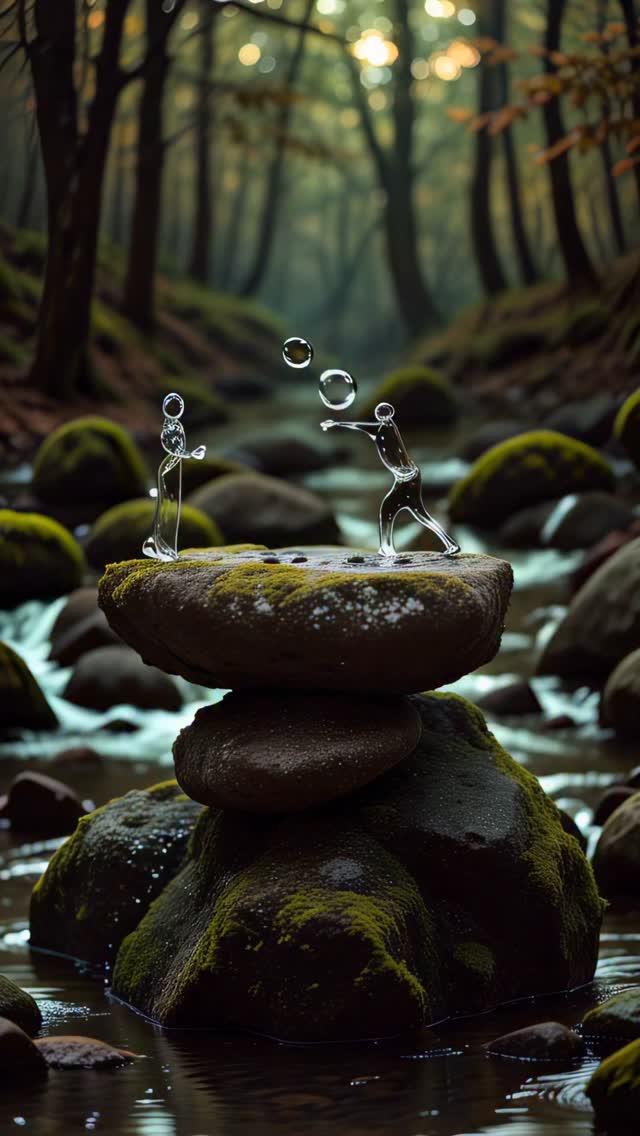
This viral masterpiece by @gerdegotit is a prime example of "Zen Surrealism." It features two humanoid figures composed entirely of clear, refractive water, performing a fluid, interpretive dance atop a mossy stone pedestal. Set against the backdrop of a lush, bokeh-heavy forest stream, the video leverages the "oddly satisfying" nature of fluid simulations combined with the emotional resonance of human connection. With over 84,000 likes, it taps into the Nature Aesthetic and AI Surrealism niches, proving that high-concept, calming visuals are a powerhouse for engagement on Instagram.
The video is a single, continuous medium shot that feels like a living photograph. The subjects are two gender-neutral figures made of liquid, their surfaces shimmering with light as they move. They occupy a central "stage"—a large, flat rock covered in deep green moss, which itself sits on a stack of darker, wet river stones. A single, perfectly spherical bubble floats between them, acting as a focal point for their interaction.
The environment is a temperate forest during the "golden hour" or late afternoon, indicated by the soft, diffused light filtering through the canopy. The background is heavily blurred (shallow depth of field), which pushes the viewer's focus entirely onto the water figures. The color palette is dominated by earthy tones: mossy greens, dark browns, and the cool, transparent blues of the water. The movement is slow and rhythmic, mimicking the flow of the stream behind them, creating a seamless integration between the "magical" subjects and the "real" environment.
| Time Range | Visual Content | Shot Language | Lighting & Tone | Viewer Intent |
|---|---|---|---|---|
| 00:00 – 00:03 | Figures begin a slow, upward reaching motion. Bubble is low. | Static Medium Shot; eye-level. | Soft, dappled sunlight; Zen calm. | Hook: Immediate visual intrigue of "water people." |
| 00:03 – 00:08 | Figures lean toward each other; bubble rises to eye level. | Static; focus on fluid refraction. | High contrast on water edges. | Reinforce persona: Establishing a "magical nature" vibe. |
| 00:08 – 00:15 | Complex arm movements; water "splashes" internally. | Static; emphasis on internal motion. | Warm highlights on moss. | Engagement: "How is this moving so realistically?" |
| 00:15 – 00:20 | Figures return to a neutral pose; bubble stays centered. | Static; seamless loop potential. | Consistent soft glow. | Retention: Encouraging a second watch or loop. |
The success of this video lies in its Psychological Appeal. In a fast-paced, high-stress scrolling environment, this video acts as a "digital palette cleanser." The combination of flowing water, forest sounds (implied or actual), and slow movement triggers a parasympathetic nervous system response, similar to ASMR. It captures the "Biophilia" effect—our innate tendency to seek connections with nature and other forms of life.
From a Platform Perspective, Instagram’s algorithm prioritizes "Watch Time" and "Saves." This video is highly re-watchable because the fluid dynamics are too complex to grasp in a single five-second glance. Users often pause or re-watch to see how the water "breaks" or "merges," which signals to the algorithm that the content is high-quality. Furthermore, the caption "How it feels when we’re together" adds a layer of Relatability, turning a technical AI showcase into an emotional statement about harmony and connection, which drives shares to partners and friends.
humanoid figures made of liquid transparent water, refractive index, dancing, fluid motion --ar 9:16.Option 1 (Emotional): How it feels when two souls finally align. ✨ Which element represents your energy today? (Water/Earth/Fire/Air) 👇 #aiart #zen
Option 2 (Technical/Curiosity): Can you believe this was made with AI? 🤖 The fluid physics are getting insane. Save this for your next wallpaper inspo! #generativeart #nature
Luma Dream Machine or Kling AI are currently the best for fluid, liquid-like simulations.
"Refractive," "Fluid-dynamics," and "Bokeh."
This usually happens if the "Motion" setting is too high; try lowering the motion strength in your AI video tool.
Use a high-quality, real-world photographic base image and keep the camera movement static.
Instagram, as its audience currently favors "Aesthetic/Zen" content over TikTok's "Fast/Chaos" content.