How gerdegotit Built This Spaghetti Dance AI Art
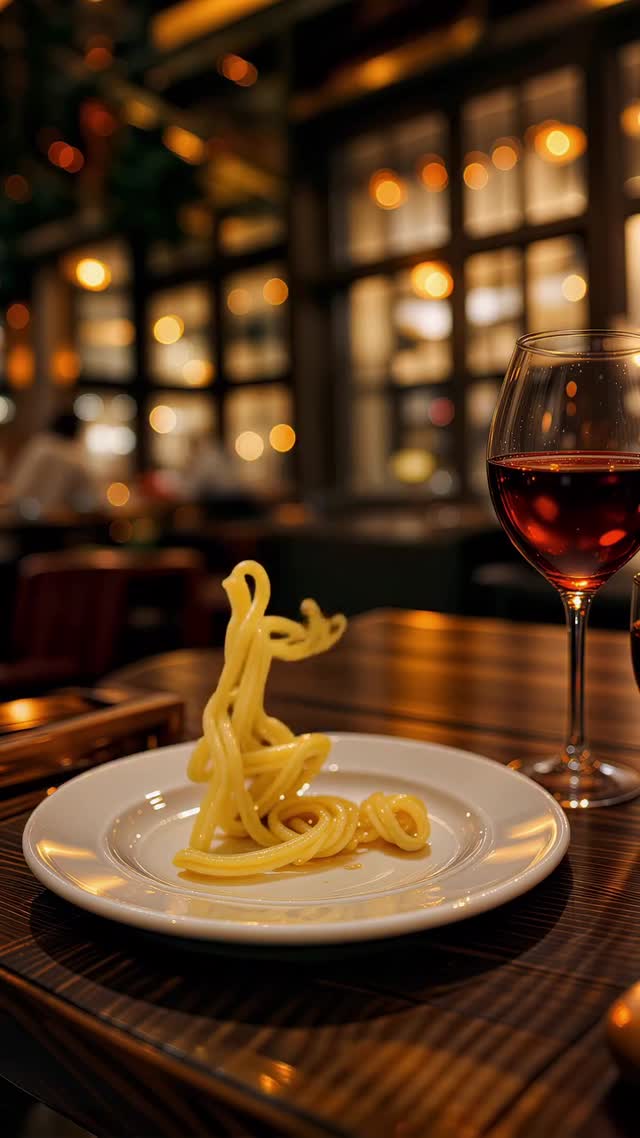
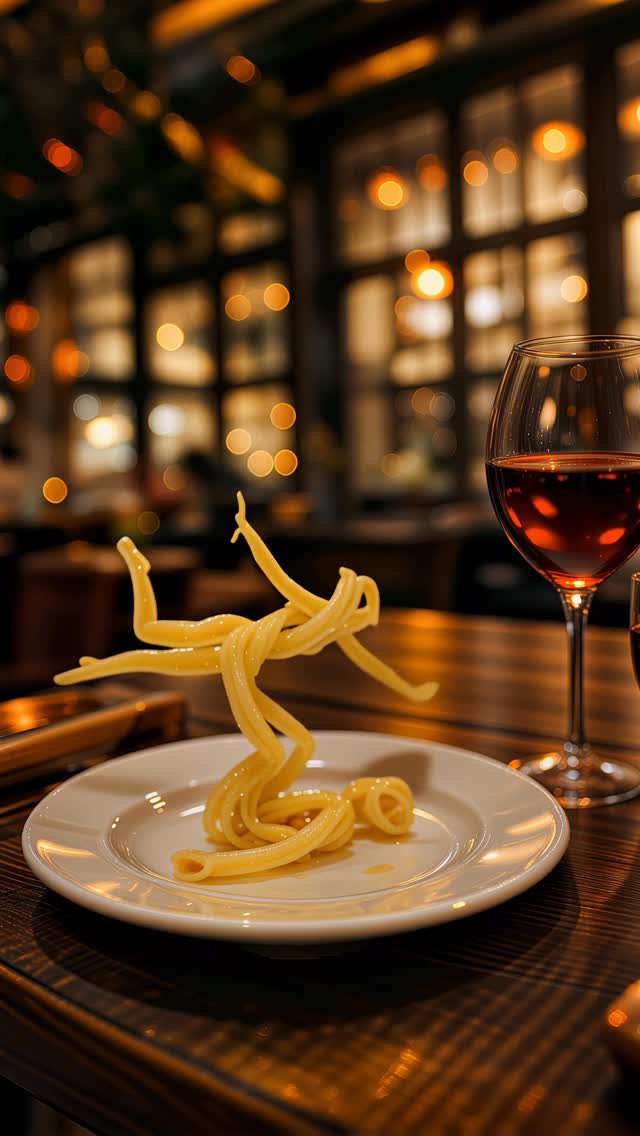
This image proves that food virality is not always about abundance. Here, the plate is intentionally sparse, almost sculptural. The emotional weight comes from atmosphere: warm restaurant glow, deep bokeh, polished wood reflections, and a red wine counterpoint.
For creators, this is a strong strategy when you want to signal taste, curation, and restraint. The frame tells a lifestyle story, not a menu catalog story.
Why It Works in Social Feed Context
The first mechanism is negative-space luxury. A small pasta portion on a clean white plate reads as deliberate design, not accidental emptiness. In a feed crowded with overloaded food shots, restraint becomes the hook.
The second mechanism is sensory layering. You can almost infer temperature and sound: warm room, low conversation, glass clink, evening pace. That sensory suggestion increases save behavior because users treat the frame as mood inspiration.
The third mechanism is color structure. Gold/amber lights, deep red wine, and neutral white plate form a balanced triad that feels elegant and memorable.
| Signal | Evidence (from this image) | Mechanism | Replication Action |
|---|
| Intentional minimalism | Tiny spaghetti presentation centered on a clean plate | Signals curation and premium taste | Reduce plate complexity and emphasize form over quantity |
| Mood-first lighting | Warm restaurant bokeh and dark ambient shadows | Builds emotional atmosphere | Shoot in low warm practical light and protect highlight glow |
| Lifestyle anchor | Red wine glass beside dish | Adds narrative (date night, evening dining) | Include one complementary prop that defines occasion |
| Texture contrast | Glossy glass, smooth plate, matte pasta, wood grain table | Creates depth and tactile richness | Pair at least three distinct material textures in one frame |
Use Cases and Transferability
- Restaurant branding: Best for premium dining positioning. Why fit: communicates taste and ambiance quickly. What to change: rotate one hero dish while preserving lighting system.
- Lifestyle influencer posts: Great for evening routine narratives. Why fit: mood-driven imagery encourages saves. What to change: switch prop (wine, tea, cocktail) based on audience tone.
- Hospitality campaigns: Works for boutique hotels and lounge concepts. Why fit: shows atmosphere as product. What to change: maintain table mood, vary cuisine style.
- Minimalist food pages: Strong fit for curation-first content. What to change: keep sparse plating but experiment with geometry.
Not ideal: recipe tutorials, value-focused menu promotions, and nutritional explainer posts that require ingredient visibility.
Transfer Recipe 1
Keep: sparse plating + warm low light + one drink anchor. Change: cuisine type. Slot template (EN): {minimal_dish_form} + {single_drink_prop} + {dark_wood_surface} + {amber_bokeh_restaurant}.
Transfer Recipe 2
Keep: shallow depth and negative space. Change: plate color/material. Slot template (EN): {clean_plate_geometry} + {small_food_centerpiece} + {cinematic_lowlight} + {soft_background_grid}.
Transfer Recipe 3
Keep: mood-over-volume storytelling. Change: occasion context (solo dinner, date night, tasting menu). Slot template (EN): {occasion_prop} + {minimal_food_silhouette} + {ambient_glow} + {quiet_evening_vibe}.
Aesthetic Read: Observed Design Decisions
The strongest decision is proportion control. Most of the frame is environment, not food. That choice reframes the post from “what to eat” to “how this evening feels.” It is a branding move, not a documentation move.
The wine glass placement is also precise. On the right, it balances the plate mass and introduces a vertical shape that stabilizes composition. Without it, the lower center would feel too isolated.
Depth-of-field is tuned well: foreground objects are sharp enough for texture recognition, while background lights stay abstract. This gives cinematic polish without losing realism.
| Observed | Why it matters | How to recreate |
|---|
| Small food footprint in frame | Turns image into mood statement | Keep food volume low and center it on clean plate |
| Warm practical bokeh | Adds premium evening atmosphere | Shoot with visible amber light sources in deep background |
| Prop asymmetry (wine right side) | Improves balance and narrative cue | Place one tall transparent object opposite plate center |
| Dark wood reflection | Enhances tactile realism | Use polished table surface and control specular highlights |
Prompt Technique Breakdown
| Prompt chunk | What it controls | Swap ideas (EN, 2-3 options) |
|---|
| Plating chunk | Visual philosophy (abundance vs minimal) | “tiny spaghetti nest”; “single sushi piece”; “small dessert sculpture” |
| Prop chunk | Occasion signal | “red wine glass”; “espresso cup”; “sparkling cocktail flute” |
| Lighting chunk | Mood intensity | “warm tungsten low-key”; “candlelit soft shadows”; “neutral fine-dining ambient” |
| Surface chunk | Tactile context | “dark polished wood”; “black stone tabletop”; “linen-covered table” |
| Depth chunk | Cinematic separation | “strong bokeh background”; “medium depth for menu clarity”; “ultra shallow artistic blur” |
| Background architecture chunk | Brand atmosphere | “window grid restaurant”; “industrial bistro”; “classic lounge interior” |
Remix Steps (Iteration Playbook)
Baseline lock: lock minimal plating, lock warm low-light palette, lock one drink anchor.
- Render baseline with spaghetti + wine + bokeh restaurant grid.
- Change only food shape (nest, spiral, ribbon) and compare saves.
- Change only drink type while preserving same lighting and camera height.
- Change only background architecture style and track brand-fit comments.
Do one change at a time. Mood-driven food visuals lose coherence quickly when lighting, props, and plating are all modified in one pass.