Bir günlüğüne …
Bir günlüğüne …
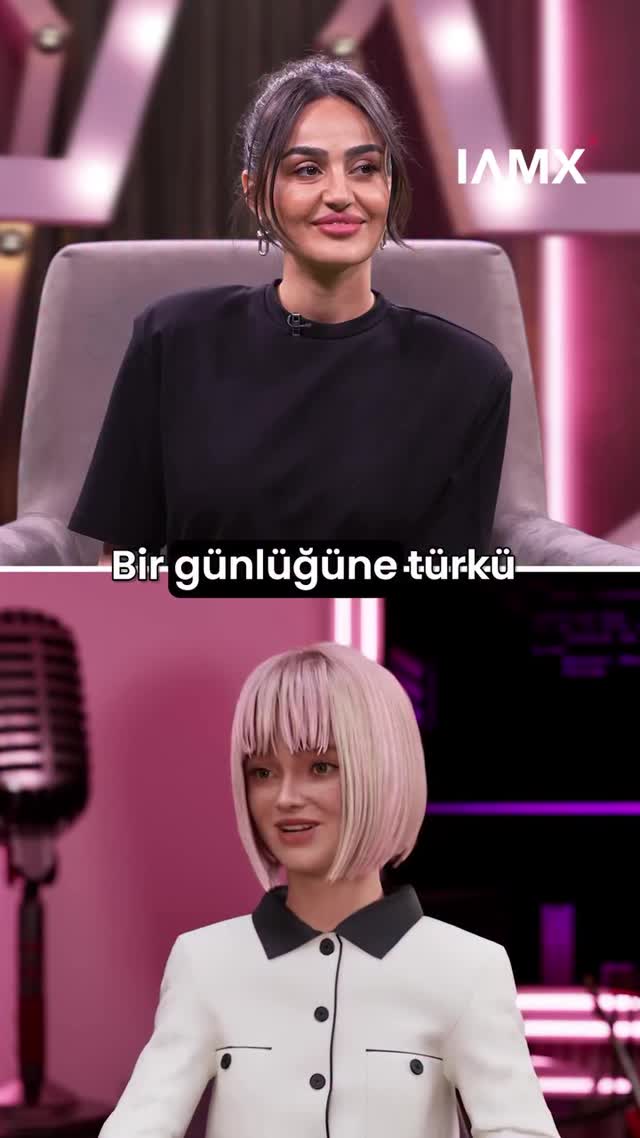
This frame is effective because it flips expectation. Instead of placing the AI face first, the top panel opens with a human guest and the virtual host appears below. That order subtly increases credibility: viewers process the conversation as human-led first, then become curious about the digital host layer.
The composition still preserves the same growth advantages of split interviews: clear role separation, easy subtitle placement, and strong silent-feed readability. But by reversing the panel hierarchy, the post gains novelty without abandoning structure.
For creators running episodic interview formats, this is a smart tactic: keep the same visual system, rotate panel priority by episode theme, and maintain brand consistency while avoiding template fatigue.
| Signal | Evidence (from this image) | Mechanism | Replication Action |
|---|---|---|---|
| Panel-priority inversion | Human guest on top, virtual host below | Creates novelty while retaining format familiarity | Alternate top-panel role every 2-3 episodes |
| Divider subtitle bridge | Turkish caption placed on split line | Connects both speakers into one coherent dialogue | Anchor short subtitles at panel boundary for continuity |
| Brand continuity cues | IAMX logo and pink studio treatment | Maintains recognizability across clips | Lock one logo zone and one core color signature per series |
| Mixed-reality contrast | Real guest panel vs virtual host panel | Generates discussion and replay curiosity | Pair one human reaction with one digital identity every clip |
top: {speaker_A}, bottom: {speaker_B}, center subtitle {line}{brand_palette} interview panels, human in {style_A}, avatar in {style_B}dual-panel talk show, real + virtual speakers, {tone_mode} caption pacingThe visual rhythm comes from controlled contrast between textures and identity types. The top panel is soft and grounded, with neutral black wardrobe and warm skin tones. The bottom panel is cleaner and more stylized, with a sharp monochrome jacket and synthetic precision. This contrast avoids monotony while staying inside one brand universe. The subtitle line functions as a visual hinge: it does not only translate speech, it also stitches the two realities together into one narrative unit.
| Observed | Creative Effect | Recreate Decision |
|---|---|---|
| Human-first top panel | Immediate trust entry point | Open with real-person presence in selected episodes |
| Avatar panel below | Novelty and conceptual layering | Keep digital character visible but context-anchored |
| Center subtitle strip | Dialogue continuity | Place concise captions exactly at panel junction |
| Pink-magenta studio wash | Series cohesion | Maintain one consistent lighting palette across posts |
| Prompt chunk | What it controls | Swap ideas (EN, 2-3 options) |
|---|---|---|
| Panel role order | Narrative framing | "human top / avatar bottom" / "avatar top / human bottom" / "guest top / host bottom" |
| Subtitle strategy | Silent comprehension | "center divider subtitle" / "keyword highlight strip" / "bilingual short caption" |
| Wardrobe coding | Role distinction | "human in black minimal" / "avatar in white tailored" / "color-coded speaker styles" |
| Brand marker | Recall and consistency | "top-corner logo" / "small watermark identity" / "series title slug" |
| Lighting system | Mood control | "pink-magenta studio" / "cool neon blue" / "warm broadcast amber" |
| Prop cue | Context validation | "vintage mic silhouette" / "boom arm mic" / "monitor glow" |
Use one-change iterations. The strength of this format is repeatable structure with controlled variation, not full redesign every post.