Bugün sizlerle çok özel bir konuğu ağırlıyoruz… O, müziğiyle 🎶 sınırları aşan, sahne enerjisiyle 🔥 herkesi büyüleyen, tarzı ve güçlü duruşuyla ilham veren biri. Pop ve elektronik müziğin en özgün isimlerinden, karşınızda Atiye 💖🌸
Bugün sizlerle çok özel bir konuğu ağırlıyoruz… O, müziğiyle 🎶 sınırları aşan, sahne enerjisiyle 🔥 herkesi büyüleyen, tarzı ve güçlü duruşuyla ilham veren biri. Pop ve elektronik müziğin en özgün isimlerinden, karşınızda Atiye 💖🌸
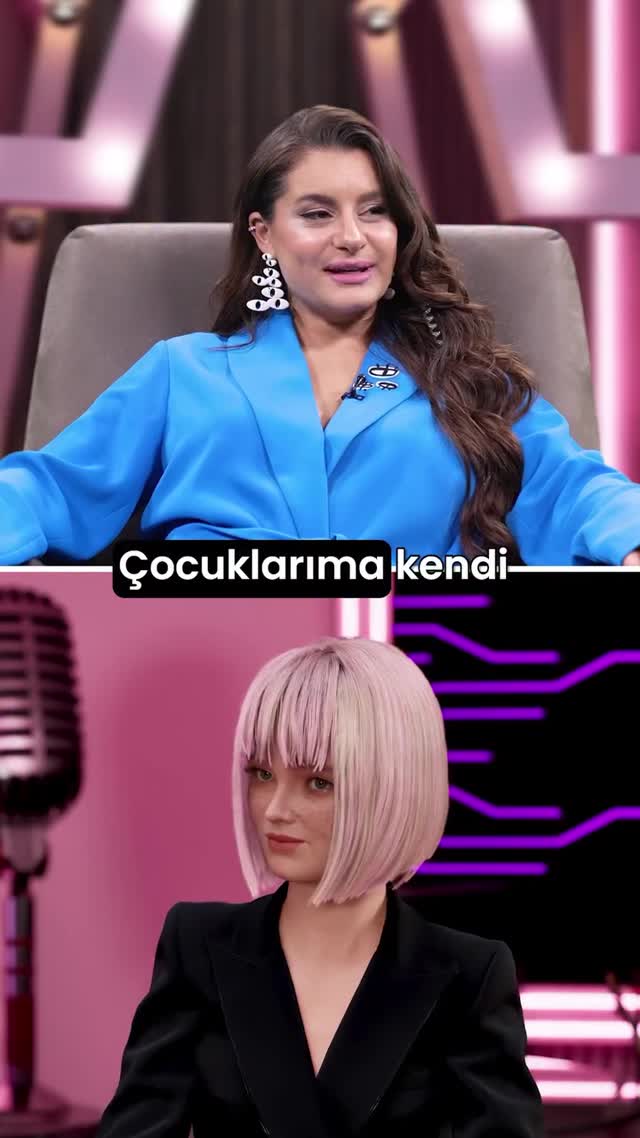
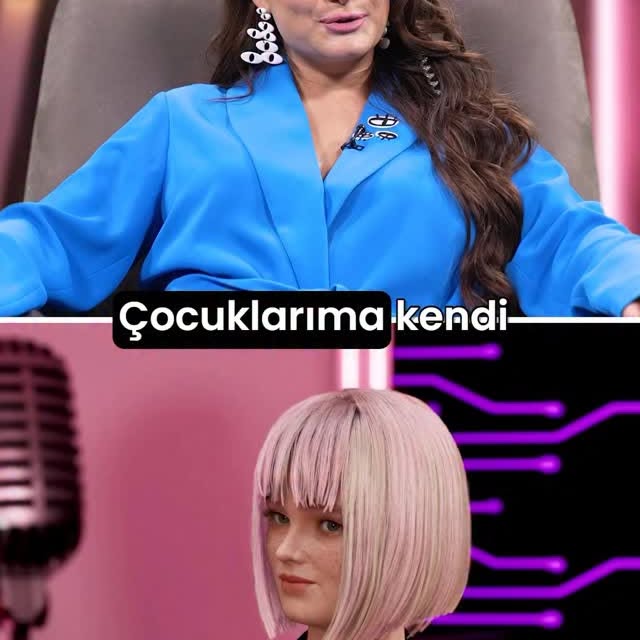
This image uses one of the strongest short-form structures: visual dialogue. Instead of one talking head, it places two distinct personas in a single vertical frame, creating instant tension and curiosity. Even before audio, viewers understand that a point and a counterpoint are happening.
For creators, this is a scalable format because it combines emotion, contrast, and context in one glance. You can apply it to interviews, reactions, debates, podcast snippets, or cross-generational commentary without complex editing.
The first viral mechanism is cognitive pairing. Humans naturally compare. When two faces, outfits, and moods appear in one frame, the audience immediately starts reading relationships: agreement, disagreement, mentorship, conflict, or transformation.
The second mechanism is visual contrast. The top panel uses a bright blue blazer and warm studio tone; the bottom panel uses black styling with pink-neon accents. This contrast helps viewers parse roles fast, which reduces drop-off in the first seconds.
The third mechanism is subtitle anchoring. A single subtitle strip signals “this is a quote moment,” which increases replay and share behavior because viewers feel they are catching an important line.
| Signal | Evidence (from this image) | Mechanism | Replication Action |
|---|---|---|---|
| Dual-persona framing | Two speakers in stacked panels with different styling | Triggers comparison and interpretation | Pair two distinct visual identities in one frame (color, age, tone) |
| Color-coded roles | Top blue wardrobe vs bottom black/pink palette | Fast role differentiation improves comprehension | Assign each speaker a stable color system |
| Quote cue | Subtitle strip crossing panel divider | Signals high-value statement moment | Add one concise subtitle line at transition point |
| Studio credibility | Professional lighting and set depth in both panels | Perceived authority boosts watch trust | Use controlled soft key + practical accent lights |
Not ideal: product close-up demos, choreography-focused clips, or cinematic B-roll edits where split-screen divides attention too aggressively.
Keep: top/bottom split and subtitle anchor. Change: speaker combination (expert + creator, beginner + mentor). Slot template (EN): {speaker_A_panel} + {speaker_B_panel} + {single_quote_subtitle} + {contrasting_color_roles}.
Keep: portrait crops and clean studio lighting. Change: emotional temperature (calm, heated, reflective). Slot template (EN): {tone_direction} + {panel_color_map} + {reaction_moment} + {topic_hook}.
Keep: one key line in subtitle strip. Change: platform language/localization. Slot template (EN): {localized_caption_line} + {two_person_dialogue_frame} + {brand_consistent_set_design}.
The split is clean and intentional, not noisy. Each panel has enough breathing room around the face, so the frame remains readable even on small screens. This is essential for vertical platforms where many users watch without full attention.
Color assignment is strategic. Bright blue creates authority and energy in the upper frame, while black and pink create modern editorial contrast in the lower frame. This gives each speaker a distinct visual voice without extra labels.
Lighting is balanced rather than dramatic. Both faces are evenly visible, which supports fairness in conversation formats. When one speaker is over-lit and the other under-lit, audiences often infer bias. This frame avoids that problem.
| Observed | Why it matters | How to recreate |
|---|---|---|
| Hard horizontal split | Creates immediate “dialogue” signal | Stack two medium close-up shots vertically with consistent margins |
| Distinct wardrobe palettes | Supports role clarity | Assign each speaker a separate dominant color family |
| Subtitle at panel boundary | Bridges two viewpoints | Place one concise caption on divider for maximum attention |
| Controlled studio light | Keeps tone credible and premium | Use soft key/fill with accent practicals in background only |
| Prompt chunk | What it controls | Swap ideas (EN, 2-3 options) |
|---|---|---|
| Panel structure block | Format identity | “vertical top-bottom split”; “left-right split”; “main speaker + reaction inset” |
| Speaker styling block | Role differentiation | “bold blazer vs minimal black”; “casual hoodie vs formal suit”; “warm vs cool wardrobe” |
| Subtitle block | Information focus | “single quote line”; “question headline”; “key claim highlight” |
| Set design block | Context and authority | “talk-show stage”; “podcast neon backdrop”; “conference interview booth” |
| Lighting block | Emotional bias and clarity | “balanced soft studio”; “dramatic side key”; “neutral newsroom lighting” |
| Crop consistency block | Readability on mobile | “medium close-up both panels”; “tight headshot top + medium bottom”; “equal eye-line framing” |
Baseline lock: lock split format, lock subtitle position, lock one color identity per speaker.
Track watch-through and replay rate. Split-screen dialogue formats often win when the first subtitle line creates a clear emotional question.