▶
There’s no place like Space✨👠🌌 . . #APOKI #아뽀키 #アポキ
There’s no place like Space✨👠🌌 . . #APOKI #아뽀키 #アポキ
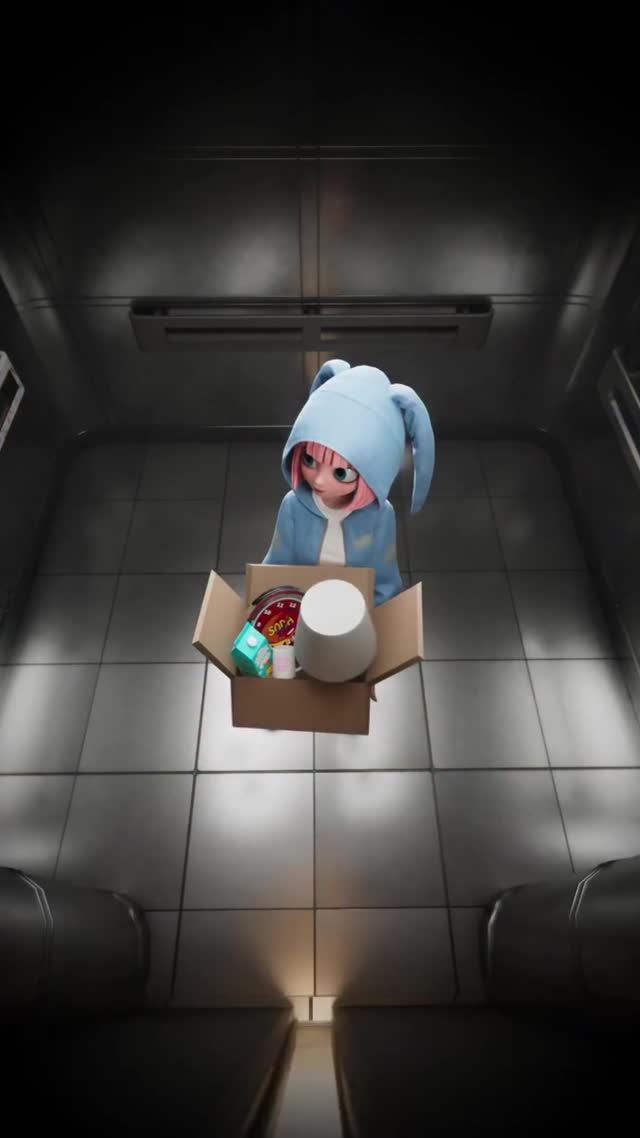
This animated short works because it mixes cute character design with a surprisingly cinematic environment shift. The pink-haired bunny-hood protagonist starts in a cramped service elevator carrying an ordinary cardboard box, but the box is surrounded by subtle sci-fi hints and eventually connects to a glowing purple cargo object that feels important, mysterious, and ceremonial. The contrast is the hook. A tiny plush-like courier character operating inside an industrial station would already be charming, but the sudden reveal of a grand gold hall and cosmic-looking crate gives the video a sense of scale and wonder that exceeds the simple setup.
The pink bob hair, oversized eyes, and blue rabbit-ear hoodie make the protagonist instantly legible and toy-like. She feels gentle, small, and curious before the environment even matters.
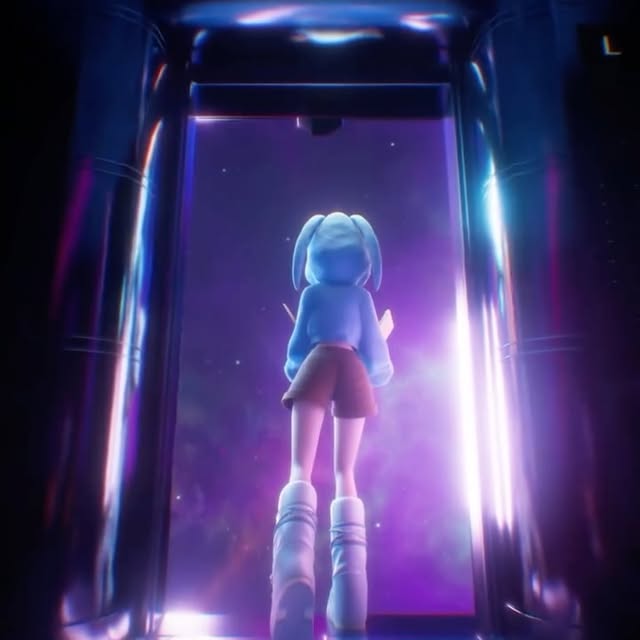
The video moves from metallic service-elevator realism into something much grander: glowing purple cargo, ceremonial gold architecture, and neon-lit sci-fi mystery. That escalation keeps the short from feeling repetitive.
The luminous box is not just a prop. It is the object that changes the emotional tone of the short, turning a delivery errand into a magical or important mission.
Several shots look up from the floor or from crate level, which makes the characters feel small and the station architecture feel imposing. That is a smart choice for a cute-scale protagonist.
| Time range | Visual content | Shot role | Why it matters |
|---|---|---|---|
| 00:00-00:08 | Pink-haired bunny-hood girl alone in elevator holding a box of supplies. | Character and mood setup. | Establishes scale, loneliness, and curiosity. |
| 00:08-00:16 | Elevator opens to reveal taller rabbit-hatted utility workers. | World expansion. | Shows this is a larger station ecosystem. |
| 00:16-00:28 | Group gathers around a glowing purple crate. | Mystery-object reveal. | Introduces the story driver. |
| 00:28-00:40 | Crate is seen in a grand gold hall. | Scale and fantasy payoff. | Turns service work into a ceremonial moment. |
| 00:40-00:52 | Closer teamwork and inspection around the crate. | Character-object interaction. | Keeps the scene emotionally grounded. |
| 00:52-01:07.67 | Purple-blue neon closing section with the protagonist near the elevator. | Dreamy unresolved ending. | Leaves the mystery open and atmospheric. |
The short does not rely only on cuteness. It uses scale, lighting, and environmental contrast to create actual cinematic curiosity around the characters.
The glowing crate gives the audience something to track emotionally. Without it, the elevator and corridor scenes would feel more like random worldbuilding than a narrative vignette.
The main character feels smaller and more endearing when placed inside oversized station corridors, industrial doors, and grand halls.
People can save this for character design inspiration, environment mood, sci-fi lighting references, or storyboarding ideas. It reaches beyond one fandom niche.
The rabbit-ear hoodie and pink bob hair make the main character recognizable even in tiny frames.
An elevator is effective because it establishes isolation and gives the audience time to study the character before the world expands.
The glowing crate gives the short purpose. Even abstract worldbuilding benefits from a clear object of attention.
Moving from a service corridor to a gold hall creates a satisfying scale and mood escalation.
Neutral, gold, and purple-blue sections make the short feel like a journey even when dialogue is absent.
Leaving the mystery open helps preserve atmosphere and encourages rewatching.
Broad: #animation, #3danimation, #scifi, #characterdesign.
Mid-tier: #spaceanimation, #stylized3d, #worldbuilding, #cinematicanimation.
Niche long-tail: #rabbithoodgirl, #spaceelevatorshort, #glowingcrate, #cutecyberstation.
The main appeal is the contrast between a cute stylized protagonist and the larger mysterious sci-fi world around her.
It gives the short a clear focal object and transforms the scene from a routine delivery into a mysterious event.
They make the station architecture feel bigger and the protagonist feel smaller, which strengthens both scale and charm.
Use a highly readable stylized character, place them in oversized sci-fi interiors, add one luminous story object, and let lighting progression do much of the narrative work.
An open ending preserves mystery, atmosphere, and replay value better than over-explaining the world.