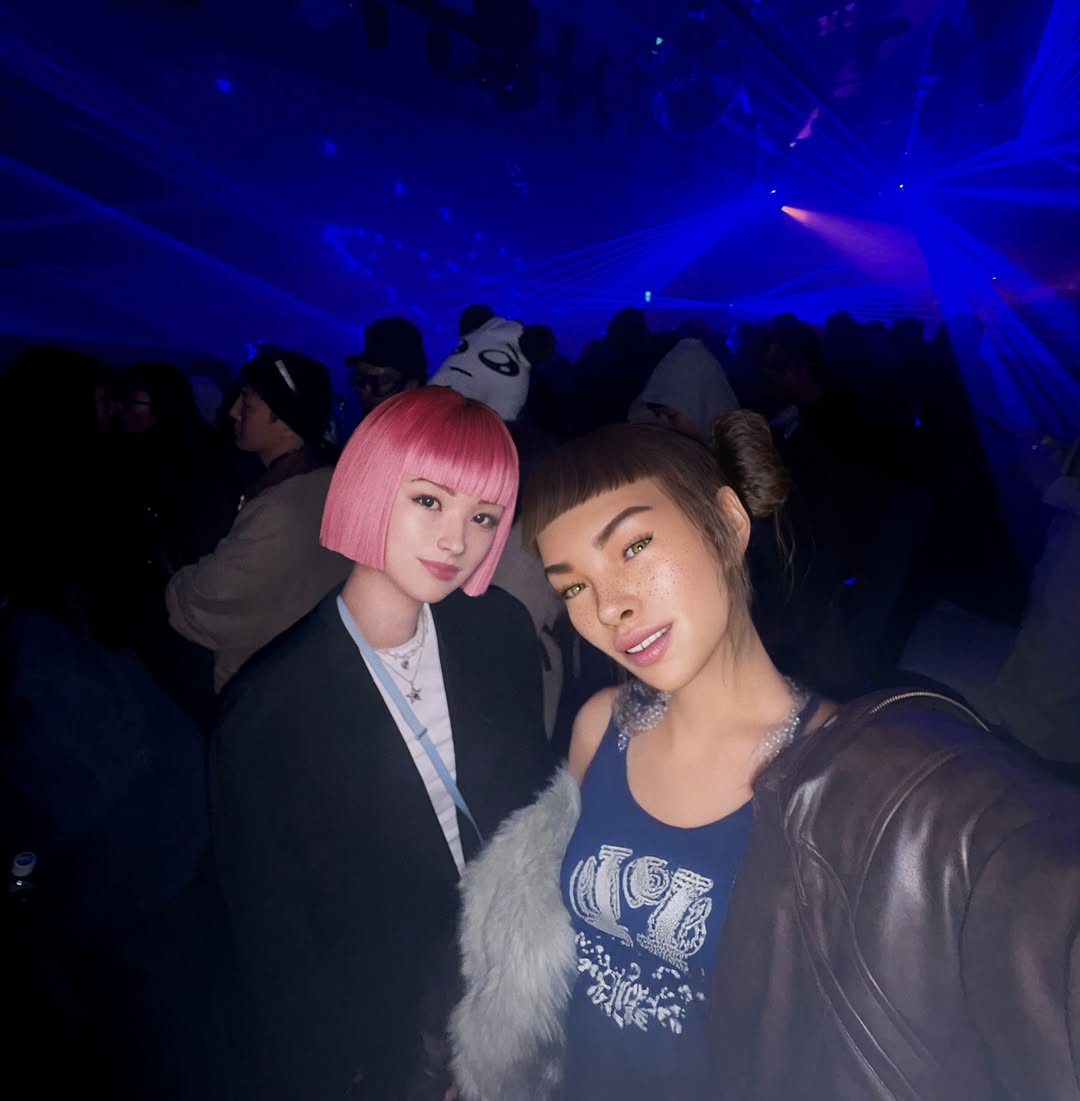
last night @imma.gram surprised me and played my new song at a club in tokyo. swipe for a sneak peak… 🪩🔥
last night @imma.gram surprised me and played my new song at a club in tokyo. swipe for a sneak peak… 🪩🔥
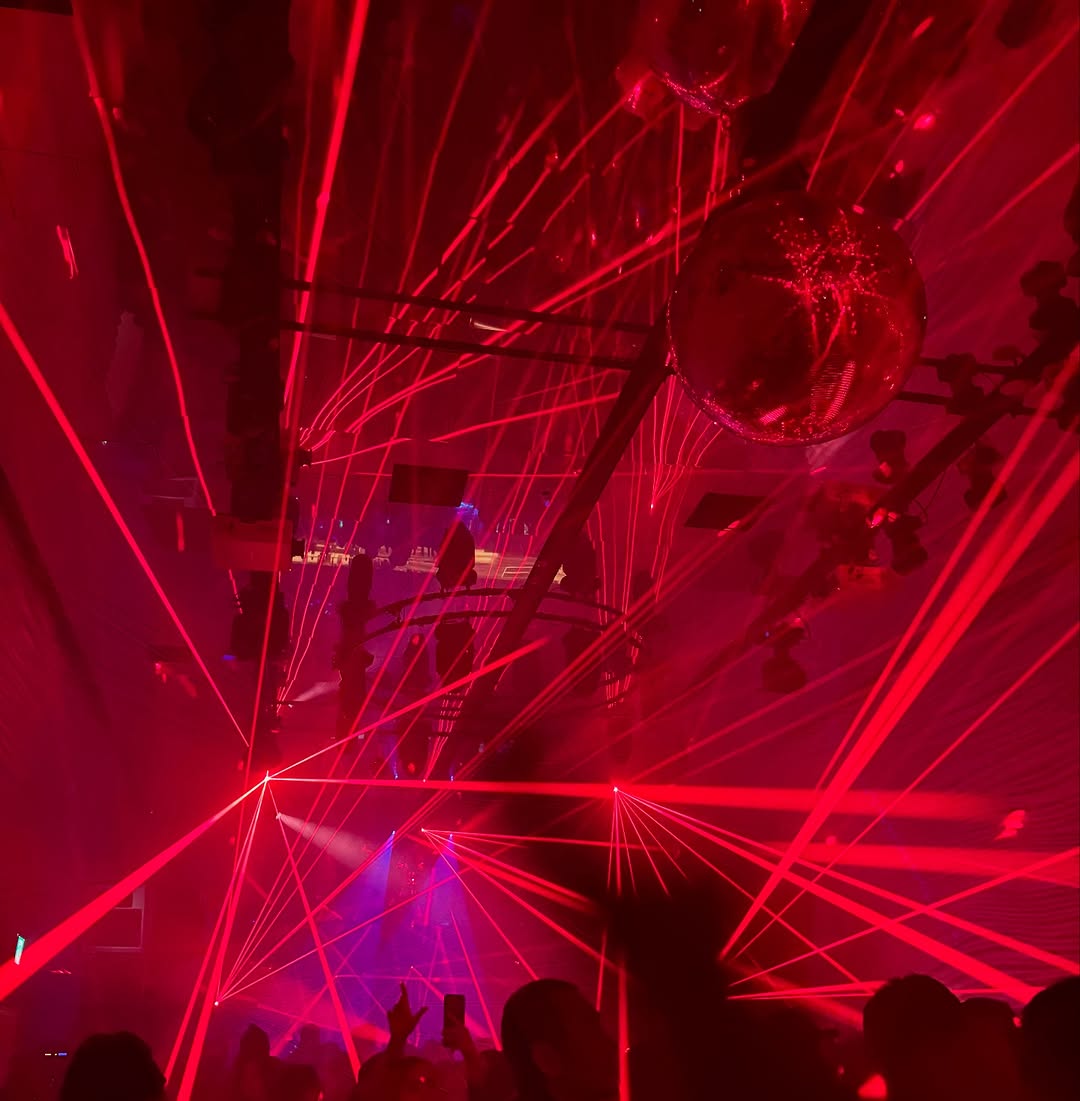
This image performs because it translates sound energy into visible structure. Even without audio, the viewer can feel intensity through the crossing laser lines and crowd silhouettes.
The first mechanism is geometric overload. The red beam network creates movement in every direction, which increases visual momentum in static posts. It feels alive.
The second mechanism is human context. Silhouettes at the bottom prove this is a shared live moment, not a lighting test. Social proof matters even in abstract event visuals.
| Signal | Evidence (from this image) | Mechanism | Replication Action |
|---|---|---|---|
| Light-structure dominance | Red beams intersect across full frame | Creates immediate motion sensation | Capture when lasers fill at least 60% of the scene |
| Crowd validation | Visible heads, raised arms, phone silhouette | Confirms live-event relevance | Include foreground audience strip in club recaps |
| Atmosphere density | Haze reveals beam volume clearly | Enhances depth and spectacle | Shoot during haze-heavy moments for readable laser paths |
| Iconic club cues | Disco balls and ceiling rig visible | Strengthens nightlife context recognition | Frame at least one overhead cue (mirror ball/truss) for place identity |
Not ideal: artist portrait campaigns, sponsor product placement shots, or tutorials requiring clear subject visibility.
{dense volumetric laser grid} {crowd silhouette baseline} {ceiling rig cues} {live-club haze atmosphere}{high-intensity light architecture} {shared audience context} {dark venue depth} {event-identity highlights}{laser-sculpture room} {mirror reflections} {atmospheric haze} {immersive geometry-first capture}The image's power comes from hierarchy: lasers first, silhouettes second, fixtures third. If you expose for people, you lose beam impact. If you expose only for beams, you lose social context. The best balance keeps audience dark but recognizable, with one or two gesture cues to confirm crowd energy.
| Prompt chunk | What it controls | Swap ideas (EN, 2-3 options) |
|---|---|---|
| "dense red laser web" | Core energy visual | "crisscross beam lattice", "volumetric laser net", "high-density light geometry" |
| "bottom crowd silhouettes" | Live social proof | "audience shadow layer", "raised-hand silhouettes", "concert crowd baseline" |
| "haze-filled dark venue" | Beam readability | "smoke-enhanced light paths", "atmospheric club interior", "fog-assisted laser visibility" |
| "mirror disco spheres overhead" | Nightlife identity cue | "hanging mirrored balls", "ceiling reflection accents", "club icon objects" |
| "audience-level perspective" | Immersion | "inside-the-crowd viewpoint", "floor-level event angle", "spectator-eye framing" |
Baseline lock: lock beam density, lock haze level, lock silhouette strip.
For nightlife content, light architecture is often more shareable than performer close-ups.