
▶
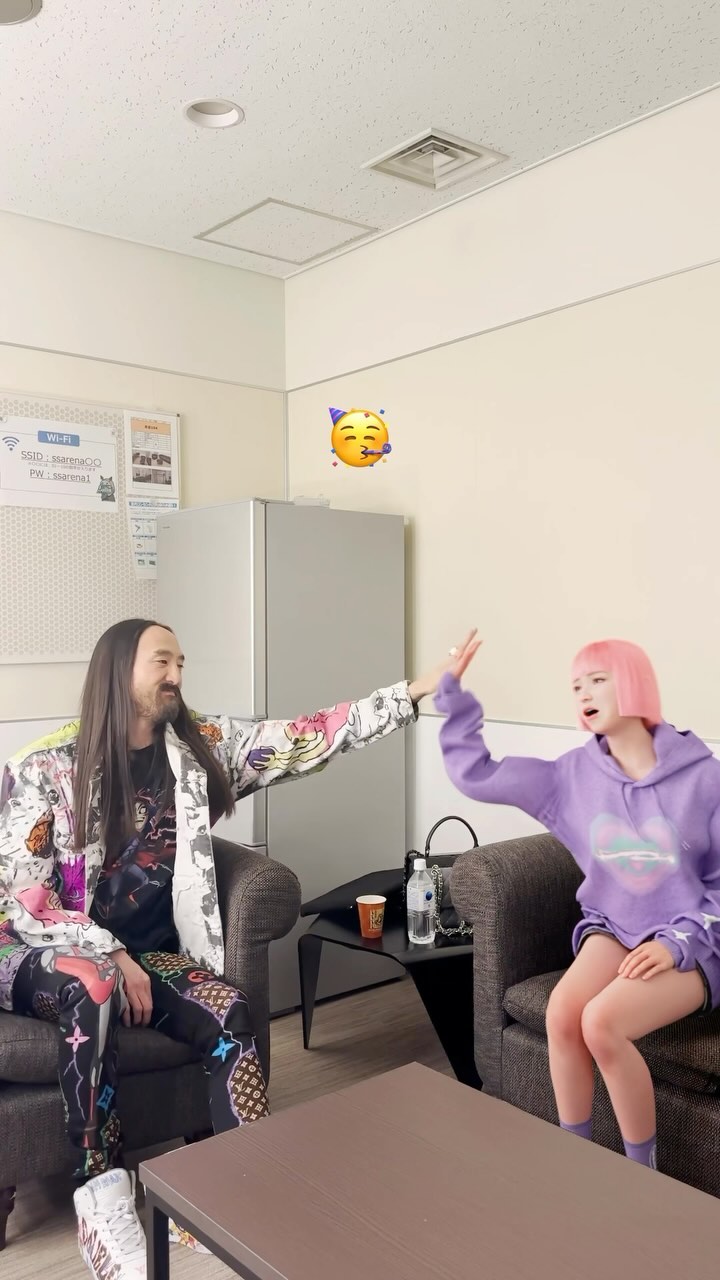
Can a virtual human interview @steveaoki ??? I was too nervous 😫 What should I ask next when I see him??? @steveaoki 先生のライブ前に 人生初!のインタビューを挑んでみたっ けど緊張しすぎてガチガチ笑🙈💦
Can a virtual human interview @steveaoki ??? I was too nervous 😫 What should I ask next when I see him??? @steveaoki 先生のライブ前に 人生初!のインタビューを挑んでみたっ けど緊張しすぎてガチガチ笑🙈💦
This reel is a social-anxiety interview joke built around a simple premise: what if you finally got to interview Steve Aoki, but you were too nervous to behave normally? The entire piece is staged in a plain backstage room with Steve seated confidently on one side and the nervous interviewer on the other in a purple hoodie and pink bob. The humor comes from internal-thought captions like "was that a weird question", "how should i react", "when should i start talking", and "send help", plus a final gag where she visually disappears from the couch. Search-intent wise, the clip crosses awkward interview meme, POV social anxiety, celebrity interview comedy, Steve Aoki fan content, internal monologue reel, and disappearing embarrassment meme. It works because the setup is specific enough to feel real but broad enough to map onto anyone who has ever overthought a conversation in real time.
The room is intentionally ordinary. Beige walls, a fridge, small table, and practical seating make the scene feel like a real backstage holding room rather than a produced comedy set.
Steve Aoki is relaxed, gesturing, and present. The interviewer is visibly stiff, small, and hyper-aware. That status contrast is the engine of the joke.
The inner-thought captions function as the real script. They externalize every anxious social calculation that the character is trying to hide.
The sudden stage or music-video cutaways briefly inflate the scene into something dramatic, which makes the return to the plain interview room even funnier.
The ending lands because it turns a metaphor into a literal visual effect. Instead of merely wishing she could vanish, the interviewer actually dissolves out of the frame.
| Time range | Visual content | Shot language | Comedy function | Viewer takeaway |
|---|---|---|---|---|
| 00:00-00:06.0 (estimated) | Two-shot with Steve Aoki and nervous interviewer plus POV caption | Deadpan setup | Establish the relatable social-anxiety premise | This is going to be an awkward-interview joke |
| 00:06-00:10.0 (estimated) | Interviewer close-up with "was that a weird question" | Internal-monologue insert | Reveal the overthinking spiral | She is panicking immediately |
| 00:10-00:14.0 (estimated) | Blue stage cutaway with giant impact text | Hyperbolic escalation | Temporarily dramatize the moment | Her brain is making this feel much bigger than it is |
| 00:14-00:24.0 (estimated) | Steve answering while captions read "how should i react", "when should i start talking", "send help" | Awkward reaction comedy | Stretch the discomfort | The silence is now the joke |
| 00:24-00:31.0 (estimated) | Static two-shot with prolonged uncomfortable politeness | Tension hold | Delay the release | The scene keeps getting funnier because nothing resets it |
| 00:31-00:34.2 (estimated) | Interviewer dissolves away under "so let me dissapear..." | Literalized punchline | End the spiral visually | Embarrassment becomes magical escape |
Celebrity interviews, first meetings, job interviews, or meeting a crush all work because they combine aspiration with panic.
A believable location makes the comedy feel like it really happened instead of like a skit built in a studio.
The contrast in composure is what creates the rhythm of the scene.
Short captions like "was that weird" or "send help" are faster and funnier than long explanation blocks.
A brief fantasy cutaway, zoom, or sound shift can show how huge the moment feels inside the character's head.
If the character wants to disappear, freeze, or sink into the floor, show it happening. That converts inner feeling into a memorable punchline.
Broad tags: #comedy, #pov, #interview, #reels. These support broad discovery.
Mid-tier tags: #socialanxiety, #awkwardmoments, #celebrityinterview, #internalthoughts. These align with the joke structure.
Niche long-tail tags: #steveaoki, #awkwardinterviewmeme, #disappearingskit, #anxietypov. These target sharper audience overlap.
The emotional core is still obvious: the pressure of trying to act normal around someone intimidating or important.
They externalize the overthinking loop that would otherwise stay invisible, which is where most of the humor lives.
It makes the situation feel unscripted and real, which heightens the cringe-relatability.
They dramatize how huge the moment feels inside the interviewer's head and create contrast with the boring room.
Overacting the nervous person too broadly. The joke works better when the panic feels contained and familiar.