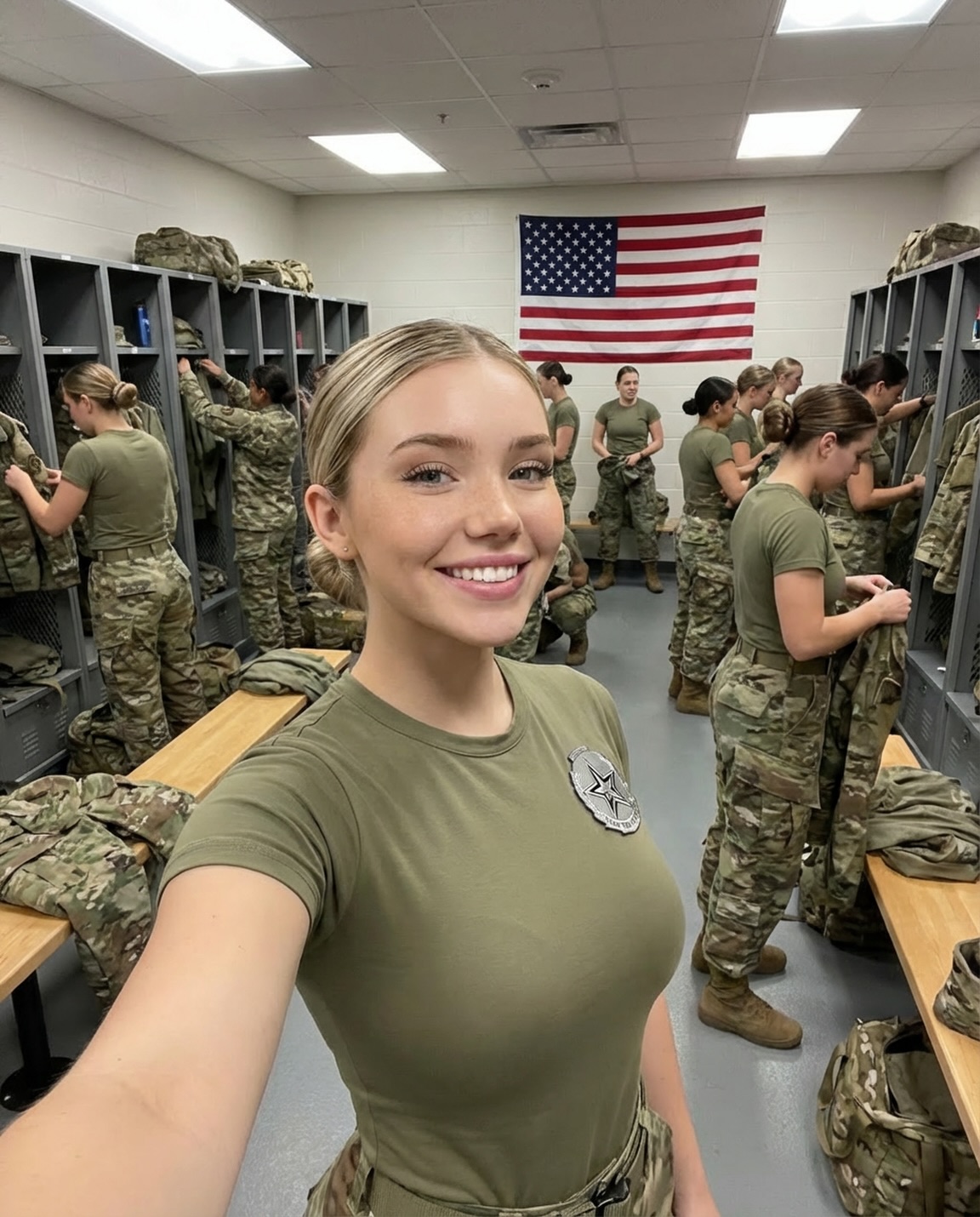
Who’s volunteering to help me change? 🥰👇
Who’s volunteering to help me change? 🥰👇
This image is a masterclass in a simple growth trick: one friendly face up close, a whole world happening behind it. You don’t need a complicated scene—just a believable environment that signals “real life,” and a foreground moment that feels like it was captured for friends, not for an audience.
The foreground smile is doing the heavy lifting. It’s direct eye contact, clean lighting, and a selfie angle that feels personal. But the background is what turns a “nice selfie” into a conversation piece: lockers, uniforms, benches, bags, and multiple people mid-action. Your brain reads it as a slice of a larger story.
Even the caption-style idea (“Who’s volunteering to help me change?”) works because it’s playful and invites replies. It’s not a long explanation—it’s a prompt for the audience to participate.
| Signal | Evidence (from this image) | Mechanism | Replication Action |
|---|---|---|---|
| Foreground intimacy | Selfie distance, big smile, direct eye contact | Feels like a private moment, which boosts comments and saves | Lock the selfie lens (24–28mm), keep eyes sharp, keep expression warm |
| “Busy background” authenticity | Multiple people mid-task, open lockers, scattered gear | Context gives the image a narrative and makes viewers scan longer | Add 8–14 background figures doing distinct actions; keep room details readable |
| Strong anchor symbol | Large flag centered on the back wall | A clear focal marker stabilizes the composition and boosts memorability | Place one bold, simple background anchor (flag/sign/emblem) and keep it crisp |
Transfer recipe 1: “Workshop selfie”
Transfer recipe 2: “Backstage crew selfie”
Transfer recipe 3: “Team locker-room but different niche”
What stands out first is the lighting: bright, flat fluorescent panels that feel unfiltered and honest. That “unsexy” light is actually a growth advantage because it signals documentary reality. Next, the composition is built on depth. Lockers on both sides create strong leading lines, and the room opens toward a simple anchor on the back wall. This makes the viewer’s eye travel: face → background activity → anchor → back to face.
Color is controlled even in a busy scene. The foreground shirt is olive drab, the background is camouflage, and the environment is neutral gray and white. That palette keeps the frame from becoming chaotic. The final ingredient is motion implied without motion blur: people are mid-task (sorting gear, opening lockers), which makes the still image feel alive and gives viewers a reason to linger.
| Prompt chunk | What it controls | Swap ideas (EN, 2–3 options) |
|---|---|---|
| “smartphone selfie, front camera, slight high-angle, arm extended” | Selfie realism and framing | “wide-angle phone selfie”, “mirror selfie”, “close-up candid selfie” |
| “locker room with grey metal lockers on both sides, open doors” | Environment structure and depth | “studio storage shelves”, “school hallway lockers”, “gym changing room” |
| “multiple people in background mid-task, distinct actions” | Authenticity and dwell time | “team preparing equipment”, “crew packing cases”, “friends getting ready” |
| “overhead fluorescent panel lighting, even exposure, cool-neutral” | Documentary vibe vs. cinematic vibe | “soft window daylight”, “warm tungsten practical lights”, “overcast outdoor shade” |
| “flag/sign/logo centered on back wall” | Compositional anchor and memorability | “neon sign”, “team logo banner”, “simple poster wall” |
photorealistic smartphone selfie, slight high-angle, smiling young woman with freckles and blonde low bun, olive drab t-shirt and camouflage trousers, busy locker room with grey metal lockers on both sides, open locker doors with gear, benches with jackets and bags, many women in background mid-task, large flag on back wall centered, overhead fluorescent panel lighting, crisp documentary realism, vertical 3:4Run a baseline first. Then change only one knob per iteration: either the anchor (flag → logo), or the environment (locker room → workshop), or the wardrobe (uniform → crew tee). Keep everything else locked so the model doesn’t “solve a different photo.”