The Rainy Window Memory: How kakudrop Built This AI Art
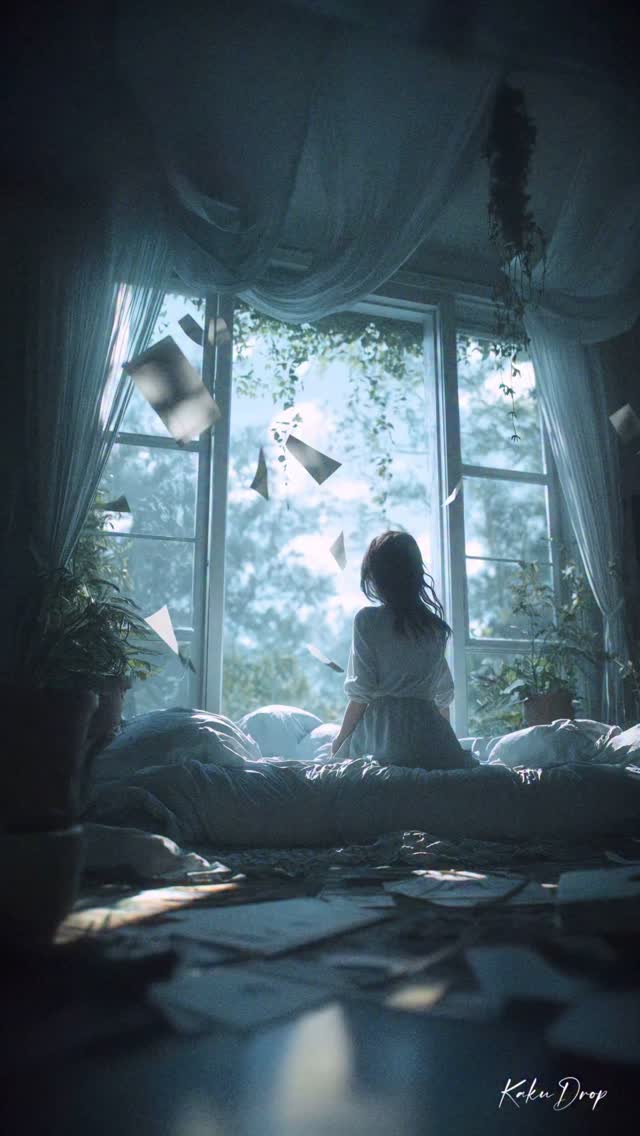
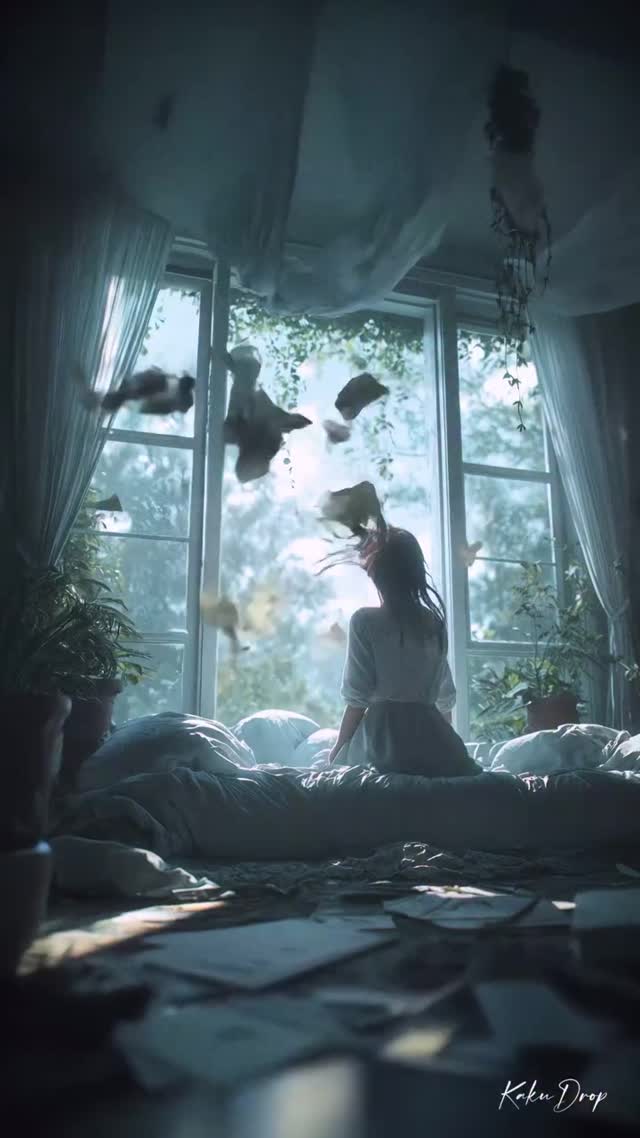
This frame proves that emotional storytelling does not require eye contact. The subject sits with her back to us, and yet the mood is immediate: rain, stillness, drifting papers, and a room full of soft blue light. The scene feels like memory in physical form.
For creators, this is a strong format when the goal is reflection rather than performance. It invites viewers to project their own memories into the frame.
Why it performs
The first mechanism is emotional openness through anonymity. Because the face is hidden, viewers connect through posture and environment. The second mechanism is symbolic movement. Floating papers suggest thoughts, seasons, and unfinished stories, which makes the post interpretable and shareable.
| Signal |
Evidence (from this image) |
Mechanism |
Replication Action |
| Anonymity-based empathy |
Back-facing silhouette, no visible face |
Viewers project personal emotions into scene |
Use body language instead of facial performance for introspective posts |
| Memory symbolism |
Papers floating and scattered in room |
Transforms space into metaphor |
Add one symbolic moving element tied to caption theme |
| Weather-emotion alignment |
Cool rainy window light and muted interior |
Atmosphere matches nostalgic narrative |
Match weather mood to emotional copy intention |
Best-fit scenarios
- Reflection captions: ideal for memory, longing, and transition themes.
- Music visual companions: strong for melancholic tracks and lyric-based posts.
- AI cinematic storytelling: useful for chapter-like emotional worldbuilding.
- Seasonal mood diaries: effective in rainy/autumn/winter narrative arcs.
Not ideal
- Product-driven posts requiring direct focus on item details.
- High-energy campaign launches needing clear action cues.
- Face-first influencer portraits intended for identity recognition.
Three transfer recipes
- Keep: back-facing subject + window light. Change: symbolic object. Template: "{silent figure} {weather window} {memory symbol}"
- Keep: cool palette and soft diffusion. Change: season context. Template: "{cool haze} {season cue} {introspective posture}"
- Keep: room-as-metaphor composition. Change: narrative caption angle. Template: "{poetic interior} {floating element} {quiet emotional line}"
Aesthetic read
The visual power here is restraint. No loud expression, no aggressive color, no dramatic pose. Instead, drapery, rainlight, and suspended paper fragments do the emotional work. The frame feels like a paused thought. That is why it lingers. For creators making mood-heavy content, this is a reliable method: keep one human anchor and let environmental symbolism carry narrative depth.
| Observed |
Recreate |
Why it matters |
| Backlit window silhouette |
Place subject against brightest light source from behind |
Enhances introspective anonymity |
| Floating + grounded paper layers |
Use both midair and floor paper elements |
Builds symbolic and spatial depth |
| Cool low-saturation grading |
Limit warm tones and keep diffusion soft |
Supports memory and melancholy mood |
Prompt technique breakdown
| Prompt chunk |
What it controls |
Swap ideas (EN, 2-3 options) |
| subject orientation |
Emotional openness |
"back-facing" / "side silhouette" / "head-down rear view" |
| symbol element |
Narrative metaphor |
"floating papers" / "falling petals" / "dust motes + letters" |
| window weather cue |
Seasonal emotion |
"rain blur" / "fogged glass" / "snow light" |
| diffusion level |
Dream quality |
"soft haze" / "medium bloom" / "misty cinematic" |
Remix steps
Baseline lock: lock back-facing silhouette, rainy window backlight, and one floating memory symbol.
One-change rule: alter one mood variable per version and compare save/comment depth.
- Run 1: baseline rainy memory room.
- Run 2: keep composition, change only symbolic object type.
- Run 3: keep best symbol, change only weather intensity.
- Run 4: keep winners, test one palette shift while preserving soft diffusion.