血哭の楽園 - #aivideo #aifashon #aianimetion #aivideo #generativeart #stablediffision #midjourney #artificialfriends #Liber #japan #klingai
血哭の楽園 - #aivideo #aifashon #aianimetion #aivideo #generativeart #stablediffision #midjourney #artificialfriends #Liber #japan #klingai
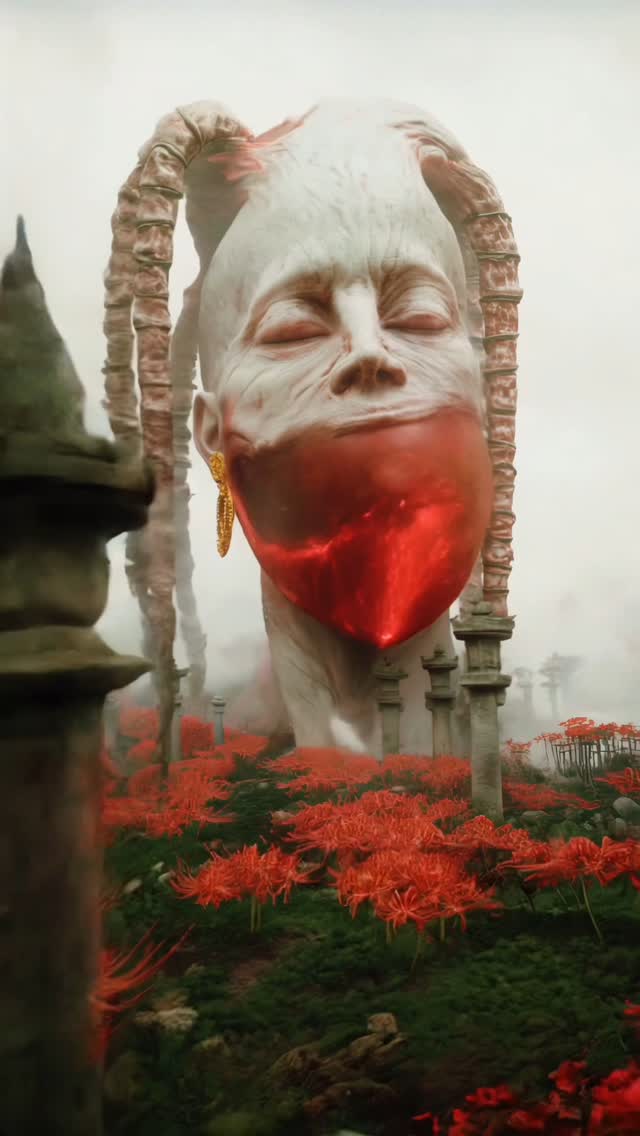
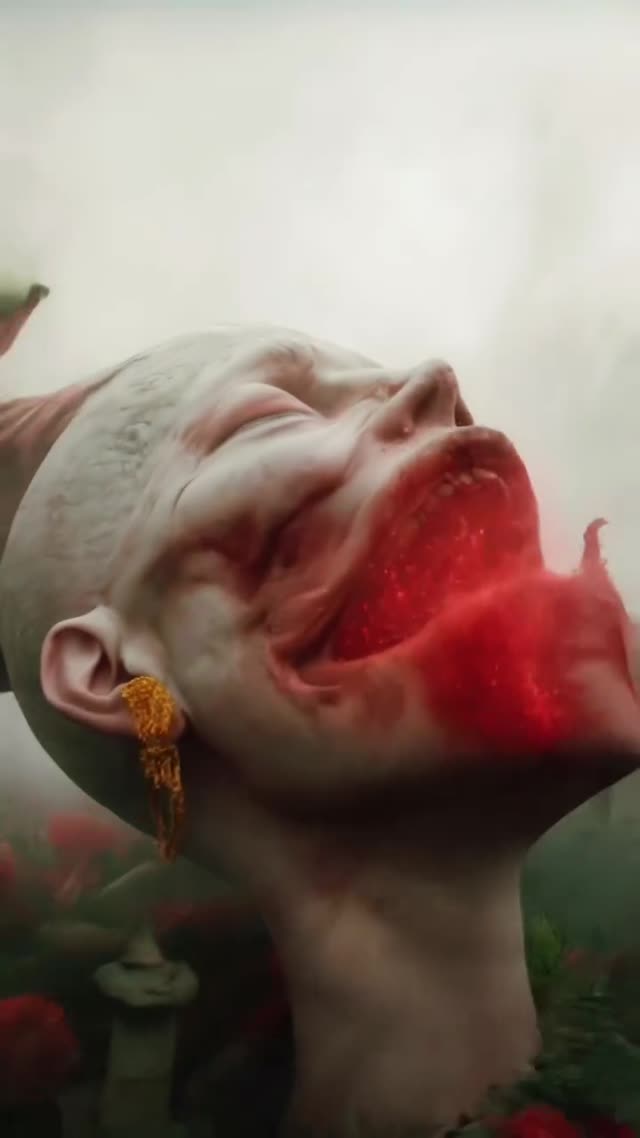
This frame is a strong growth example for dark-fantasy and concept-art creators. It combines one unforgettable subject with strict color discipline and a symbolic environment that keeps viewers looking longer than a typical beauty render.
| Recipe | Keep | Change | Slot template (EN) |
|---|---|---|---|
| Frozen Relic Version | Monument scale, selective accent, heavy atmosphere | Red flowers to icy shards, warm glow to cyan glow | {monument_type} in {climate_scene}, muted palette, one glowing accent material |
| Desert Shrine Version | Single giant landmark and lore mood | Flower field to dunes, fog to heat haze | {colossal_subject} above {terrain_type}, symbolic foreground details, cinematic haze |
| Cyber Ruin Version | Calm face + dangerous element duality | Stone to composite metal, flowers to neon cables | {head_form} with {danger_feature}, {environment_style}, controlled two-color accent |
The image succeeds through hierarchy. The monument face is the narrative core, the red jaw is the emotional spike, and the flower field is the cultural texture. Because each layer has a distinct role, the composition stays readable even with dense visual detail.
Material contrast is another strong point. Chalky stone skin and glossy translucent red surface create tactile opposition, which makes the focal area feel physically believable. Texture contrast often does more for realism than adding extra objects.
The atmosphere is intentionally soft. Mist lowers background detail and protects the foreground story from distraction. For creators, this is a practical lesson: if your concept feels noisy, use atmospheric compression before adding more elements.
| Observed detail | Why it matters | Recreate move |
|---|---|---|
| Closed-eye giant face | Projects calm, ritual, and timelessness | Use "eyes closed, serene expression" as a locked subject token. |
| Luminous red lower-jaw plate | Creates danger focal point | Add a single glowing material patch with internal light behavior. |
| Dense red spider-lily field | Builds symbolic atmosphere and color rhythm | Use repeated foreground flora with strong hue consistency. |
| Fog-softened ruins | Adds depth and mystery | Fade distant objects with heavy mist and low contrast. |
| Muted base palette | Improves accent color impact | Reduce saturation globally, then selectively boost one accent family. |
| Prompt chunk | What it controls | Swap ideas (EN, 2-3 options) |
|---|---|---|
| "colossal serene head monument, eyes closed" | Primary narrative symbol | "sleeping titan bust" / "ancient deity face" / "broken guardian statue" |
| "translucent glowing crimson lower jaw" | Threat/focus accent | "molten gold jaw" / "ice-blue crystal jaw" / "obsidian ember glow" |
| "dense red spider lilies in foreground" | Texture repetition and color bed | "white lilies" / "black thorns" / "bioluminescent grass" |
| "misty ruined temple environment" | World-building depth | "foggy industrial ruin" / "sunken city relics" / "forest shrine remains" |
| "muted cinematic grade with selective red accents" | Visual clarity and mood consistency | "teal-cyan selective accent" / "amber monochrome" / "green-black duotone" |
If the image loses impact, your accent spread is too wide. Reduce bright color coverage first, then sharpen one focal material zone.