💙 MUSIC 💙 I’ve been having fun in the studio lately. I wonder what’s next…🤩🤫🤔
How lilmiquela Built This Music Studio Teaser Portrait — and How to Recreate It
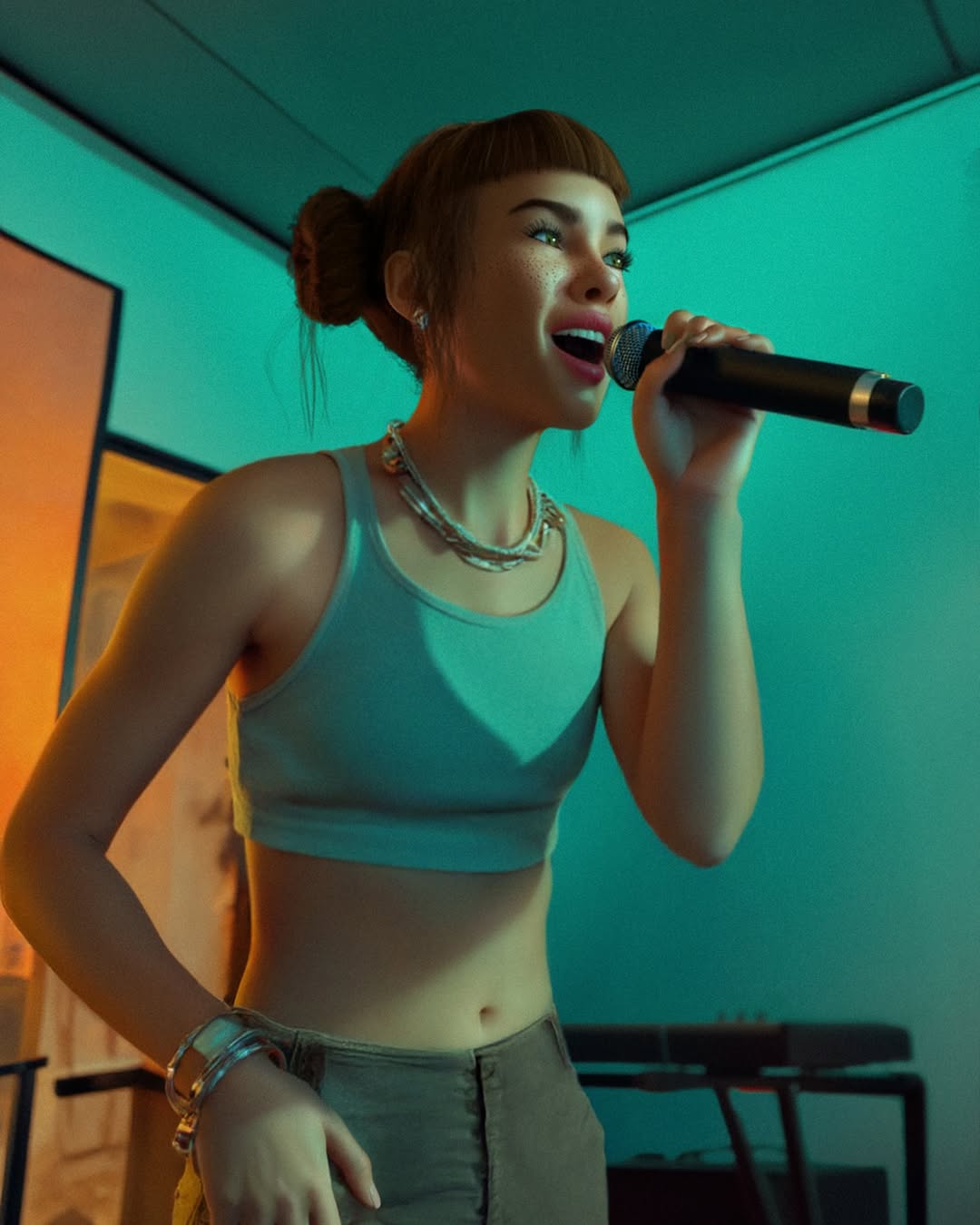
This image works as a music teaser because it captures process, not just polish. The audience sees a live vocal moment, which makes upcoming releases feel real and near.
Why this teaser style can drive anticipation quickly
The first strength is behind-the-scenes credibility. A visible microphone and candid singing pose signal active creation, not just post-release promotion. Fans respond strongly to process evidence because it feels like insider access.
The second strength is emotional immediacy. Open-mouth vocal expression and body tension communicate performance energy in a still frame. That energy creates curiosity around "what's next" and supports teaser captions perfectly.
The third strength is color mood design. Teal ambient light paired with warm orange side light gives a modern studio identity that looks cinematic but still intimate. This balance helps the post feel premium without losing authenticity.
Signal
Evidence (from this image)
Mechanism
Replication Action
Process Proof
Microphone-in-hand mid-vocal moment
Fans interpret this as real studio progress
Capture one unmistakable creation action in frame
Performance Emotion
Dynamic facial expression and posture tension
Emotion preview increases release curiosity
Use active singing/recording expressions, not static poses
Distinct Lighting Identity
Teal room fill + warm doorway glow
Color signature strengthens brand recall
Lock a dual-tone studio lighting formula for music posts
Minimal Scene Noise
Simple room with limited background distractions
Focus stays on artist and action
Keep background elements secondary and low contrast
Best-fit scenarios and transfer options
Best-fit scenarios
Pre-release music teasers: Ideal for announcing work-in-progress sessions.
Artist comeback posts: Strong for signaling creative momentum after quiet periods.
Studio diary content: Great for maintaining fan connection between releases.
Virtual artist identity building: Useful for blending realism and stylized branding.
Not ideal scenarios
Final album cover reveal: Candid process shots may feel less definitive.
Technical product promotions: Emotional performance framing can overshadow product details.
Large event recaps: Solo studio intimacy may underrepresent event scale.
Transfers (exactly 3)
Late-Night Session Variant
Keep: microphone action and dual-tone light identity.
Change: deepen shadows and add subtle console lights.
Slot template (EN):{artist mid-vocal} in {small studio} with {teal-amber lighting mix}
Acoustic Rehearsal Variant
Keep: candid performance expression.
Change: microphone to headphones + lyric sheet gesture.
Slot template (EN):{artist in rehearsal action} with {process prop} and {intimate light setup}
Collab Tease Variant
Keep: performance-in-progress framing and color mood.
Change: include second mic stand silhouette to imply feature guest.
Slot template (EN):{lead artist close-up} + {hint of collaborator setup} in {signature studio palette}
Aesthetic read: why this still frame feels like a clip moment
The composition prioritizes gesture and voice. The microphone and open mouth create immediate action context, while the body angle keeps visual momentum. Lighting uses color contrast as narrative: cool production zone and warm human zone. Wardrobe stays simple, allowing face and gesture to carry attention. This is effective teaser design because it feels spontaneous but still visually controlled.
Observed
Concrete evidence
Recreate move
Action-first framing
Mic-to-mouth distance and vocal expression
Capture at the peak of a visible action, not between actions