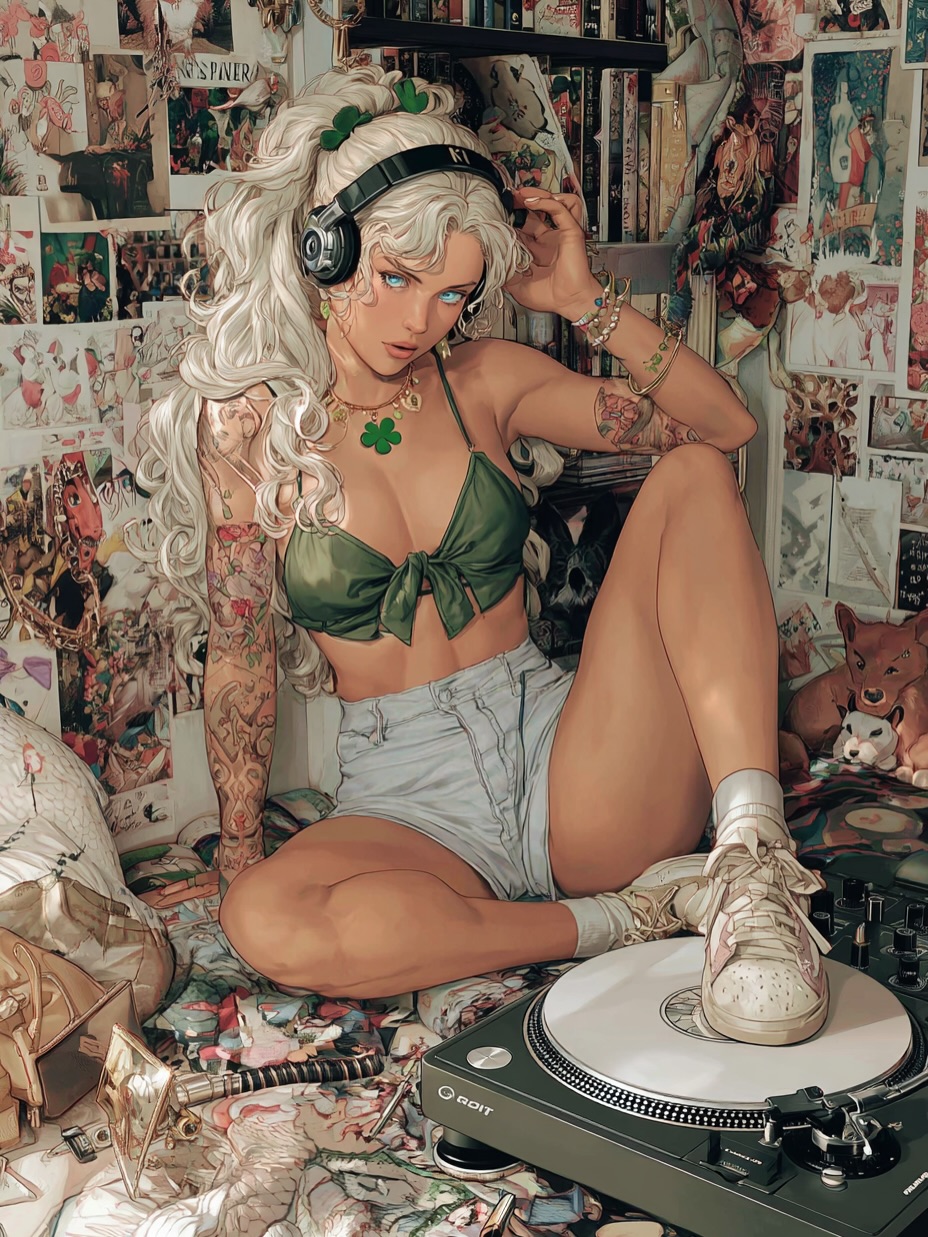
This image works because it makes the room as important as the character. The girl, the turntable, the wall collage, the books, the bedding, and the styling all participate in the same identity system. Instead of a portrait placed in a bedroom, this feels like a full personal world. That is why the image reads as culture, not just fashion.
The frame rewards repeated looking. First you read the character: platinum curls, headphones, green top, tattoos. Then the eye drops to the turntable. Then it starts wandering across the posters, shelves, and scattered objects. That layered discovery is a major engagement advantage. It makes the image feel like a moodboard, a character sheet, and a lifestyle ad all at once.
| Signal | Evidence (from this image) | Mechanism | Replication Action |
|---|---|---|---|
| Personal-world density | Wall collage, books, bedding, small objects, posters, and DJ gear all fill the room | Creates narrative depth and encourages slow inspection | Build the room as a visual diary instead of a neutral background |
| Subculture identity | Headphones, turntable, tattoos, alt styling, poster-covered walls | The subject reads as part of a scene, not a generic model | Use 3-4 coherent culture markers rather than random cool props |
| Character-first composition | The seated pose stays readable even inside the busy environment | The room adds richness without erasing the hero subject | Keep the silhouette strong before adding environmental complexity |
| Style hybridity | The image blends anime line control with lifestyle editorial room design | Hybrid aesthetics feel collectible and highly shareable online | Mix one illustration language with one lived-in lifestyle setup |
The image sits at the intersection of anime character art, Tumblr-era bedroom collage culture, bedroom DJ romanticism, and alt-fashion poster design. The best decision here is that the subject is not over-separated from the environment. She feels embedded in her own room. That makes the image emotionally stickier than a clean studio fashion shot would be.
| Prompt chunk | What it controls | Swap ideas (EN, 2-3 options) |
|---|---|---|
| platinum-curled alt girl with headphones and tattoos | Defines the hero identity fast | silver-haired bedroom DJ; tattooed indie girl; alt-pop vinyl collector character |
| green bralette and denim shorts styling | Locks the color balance and casual fashion read | olive crop top and jorts; forest-green tied top; vintage denim summer styling |
| turntable in the foreground | Anchors the music identity physically | vinyl deck setup; bedroom mixer station; record player foreground hero prop |
| collage-covered bedroom walls and shelves | Creates the worldbuilding layer | poster-heavy room; manga-clutter wall collage; personal archive bedroom backdrop |
| anime-inspired editorial illustration finish | Controls the final aesthetic language | semi-realistic character poster art; fashion-anime room illustration; premium internet editorial art |
This is a powerful repeatable format because it is built on identity-rich interiors. You can keep the same logic and shift the subculture: bedroom guitarist, fashion zine editor, analog photographer, manga collector, synth producer, or skateboard girl. The room becomes a narrative container, and the character becomes its clearest expression.
To remix it, keep the pose and change the room theme. Or keep the collage-room density and switch the character styling from alt DJ to gamer, illustrator, vinyl archivist, or glam punk. You can also preserve the same bedroom template and rotate the dominant color system: green, red, lavender, chrome, or pale blue. The key is to keep the environment curated, not random.
If the result becomes visually messy, simplify the palette before reducing the room objects. If it loses the room story, bring back the posters, books, and equipment. If it starts looking like generic anime pin-up art, strengthen the environmental realism and the DJ props. The strongest version should feel like a room someone truly lives in, filtered through an editorial illustration lens.