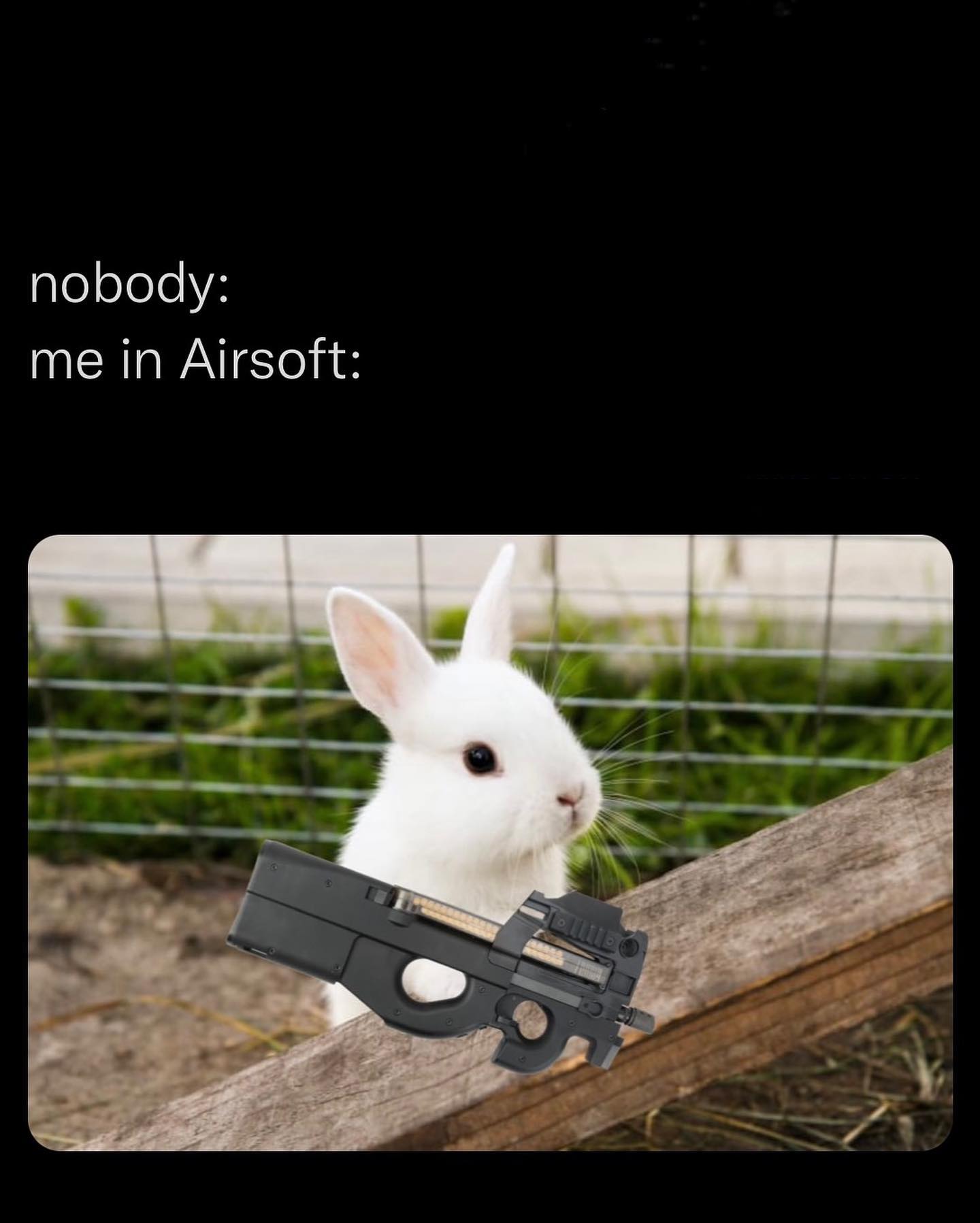
who are you calling gun bunny? 🐰 #guns #gunbunny #girlswithguns #girlswhoshoot #idfgirls #p90 #bunnygirl #cosplaygirl
who are you calling gun bunny? 🐰 #guns #gunbunny #girlswithguns #girlswhoshoot #idfgirls #p90 #bunnygirl #cosplaygirl
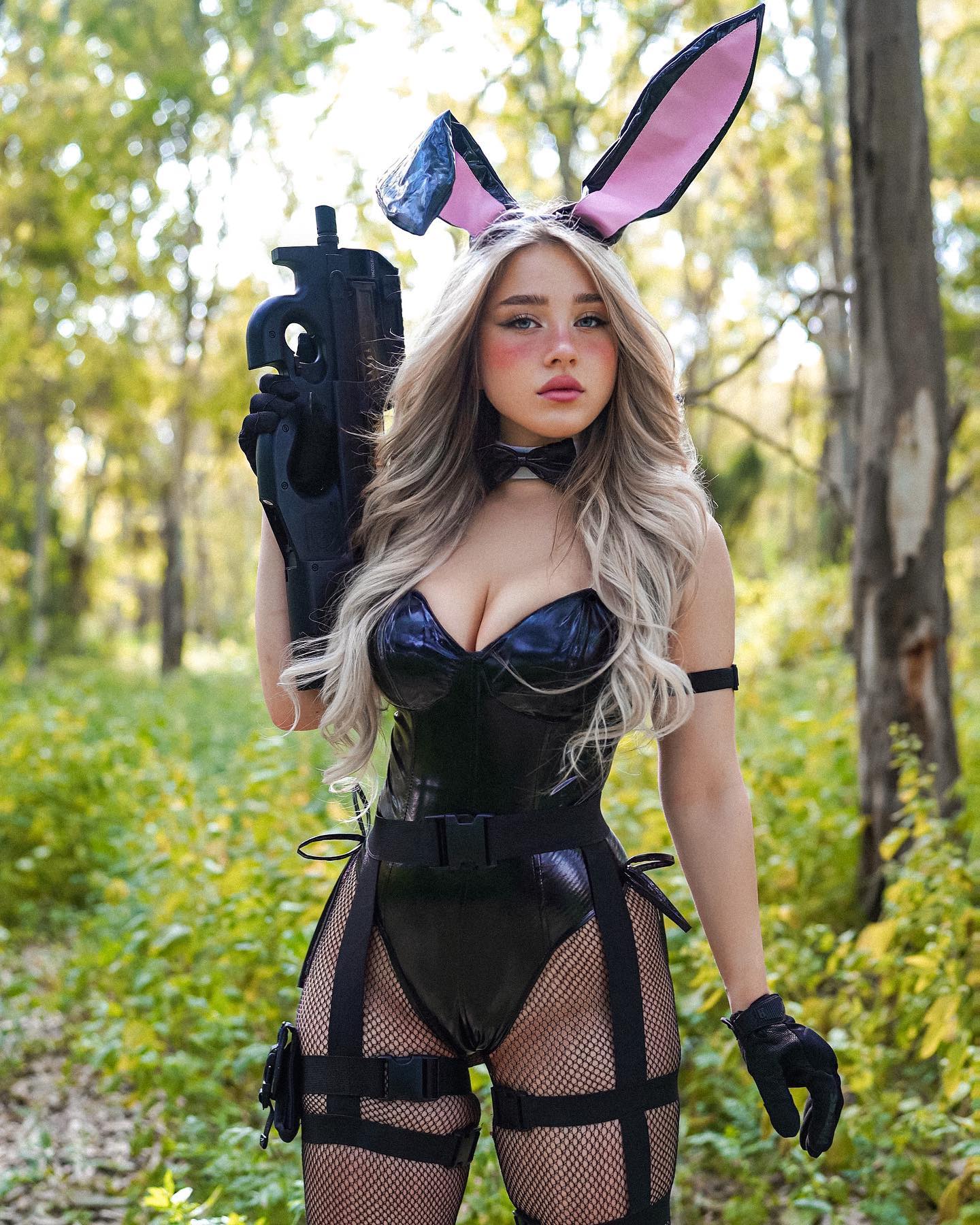
This image works because it merges two very different visual languages on purpose. The bunny motif is playful and exaggerated, while the prop weapon and black harness styling add edge. That tension is exactly what makes the portrait memorable. If it leaned only cute, it would feel lighter and more generic. If it leaned only tactical, it would lose the pop-cosplay contrast that gives it personality.
The forest setting is also more useful than it might seem. It gives the costume an unexpected context and prevents the image from feeling trapped inside studio-convention aesthetics. For creators, that is a strong lesson: a stylized costume often becomes more interesting when the background is simple, natural, and slightly at odds with the look.
The strongest hook is immediate contradiction. Bunny ears and fishnet styling suggest one kind of image. The black prop gun suggests another. That contrast creates instant curiosity, which is exactly what character-driven content needs. The subject’s serious face then reinforces the idea that the image knows its own visual joke and is leaning into it on purpose.
| Signal | Evidence (from this image) | Mechanism | Replication Action |
|---|---|---|---|
| Contrasting role cues | Bunny ears paired with a large black prop weapon | Creates a fast “wait, what?” reaction | Combine one soft or playful symbol with one harder tactical or sci-fi object |
| High-read silhouette | Ears, long hair, corset shape, prop held upright | Makes the character legible at thumbnail size | Build the costume around a few big silhouette markers, not tiny details |
| Natural background simplicity | Soft woodland path and trees behind the subject | Lets the costume remain the main event | Use uncluttered outdoor settings for highly designed cosplay looks |
| Serious facial tone | Direct calm expression despite the playful costume elements | Keeps the image from collapsing into parody | Hold the face steady when the outfit is already loud |
The image feels character-driven because every element points toward a role, even if that role is invented. The ears, the gun, the gloves, the corset, and the fishnet straps all tell the viewer that this is not random fashion styling. It is character styling. That distinction matters in prompt work, because character images succeed when the pieces feel like parts of the same invented world.
The bright outdoor light helps keep the image readable. In darker settings, a black costume like this could lose definition. Here, the forest light separates the textures and lets the glossy surfaces, mesh, and straps remain visible. That makes the costume much easier to understand.
| Observed | Why It Matters | How To Recreate |
|---|---|---|
| Black-and-pink bunny ears above a dark corset silhouette | Creates a strong top-to-bottom character outline | Build around one clear head accessory and one strong torso silhouette |
| Large upright prop weapon | Adds sci-fi/tactical tension immediately | Use one oversized prop that changes the story in a single glance |
| Forest background with bright filtered light | Helps separate dark costume textures | Place dark costumes in brighter natural environments when detail matters |
| Fishnet and harness leg details | Add edge and structure to the lower silhouette | Use repeated strap geometry when you want a costume to feel more constructed |
| Prompt chunk | What it controls | Swap ideas (EN, 2-3 options) |
|---|---|---|
| young woman in a bunny-tactical cosplay holding a large prop rifle | Main concept and role contrast | 'bunny soldier cosplay', 'sci-fi bunny character portrait', 'playful tactical cosplay shot' |
| black glossy bodysuit with fishnet tights and thigh garters | Costume structure | 'latex bodysuit with harness straps', 'dark corset and mesh legwear', 'combat-inspired bunny suit' |
| platinum-blonde waves and black-pink bunny ears | Identity silhouette and character cue | 'silver twin tails', 'pink ears with black trim', 'white wig with animal headband' |
| sunlit woodland path in the background | Environmental contrast and readability | 'bright park trail', 'forest clearing', 'soft green outdoor backdrop' |
| serious direct expression despite playful styling | Tone control | 'stoic cosplay face', 'calm direct stare', 'confident neutral expression' |
Lock three things first: the bunny ears, the black costume silhouette, and the large prop weapon. Those are the anchor cues. Then iterate one variable at a time. First version: establish the upper-body silhouette and ear visibility. Second version: refine prop size and placement. Third version: tune the forest brightness so the dark costume stays readable. Fourth version: only then adjust expression or leg harness detail. That sequence keeps the character identity sharp instead of letting the costume turn into texture overload.