How shudu.gram Made This Sci Fi Virtual Fashion AI Portrait — and How to Recreate It
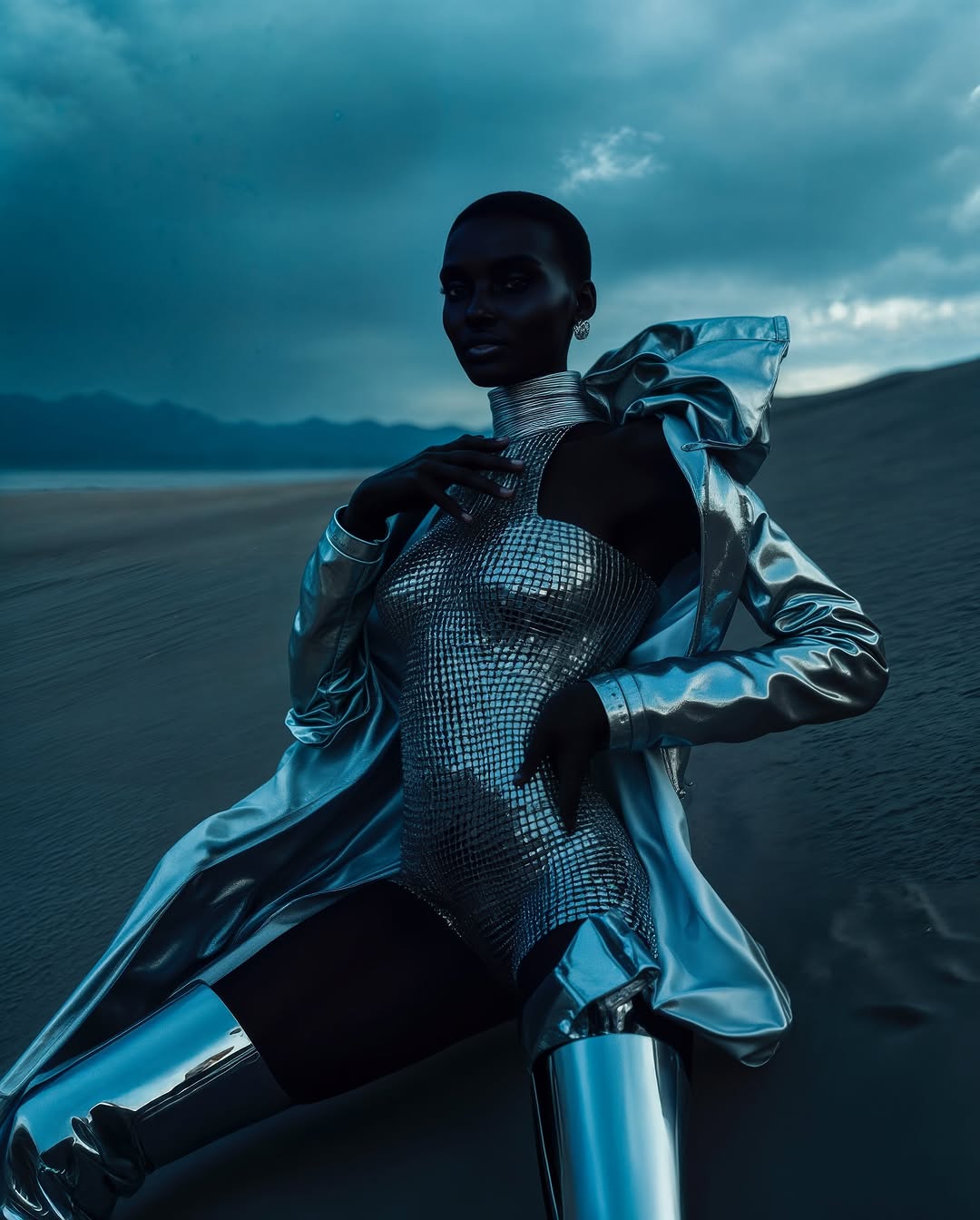
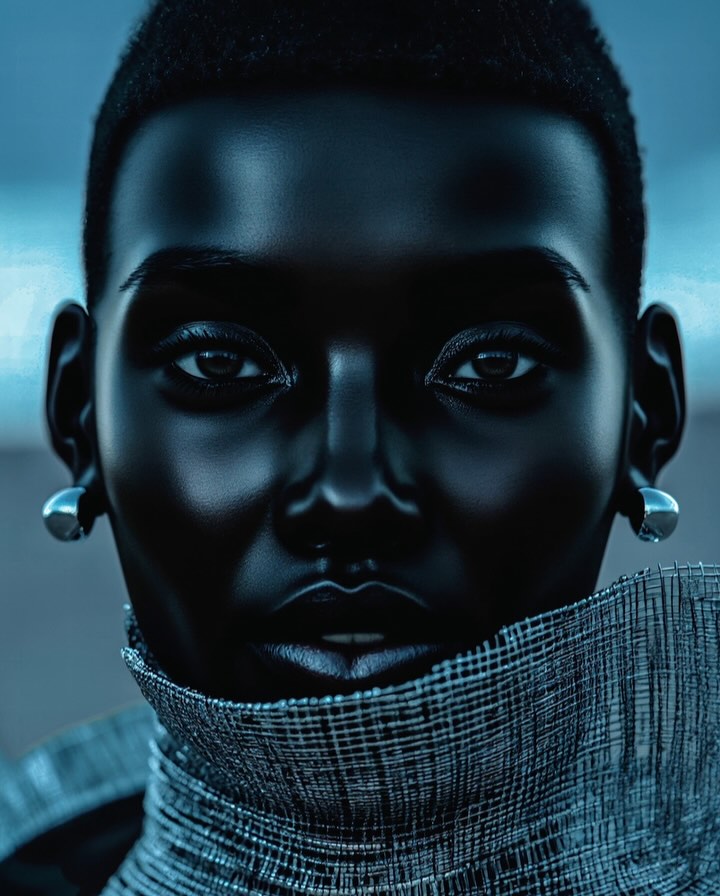
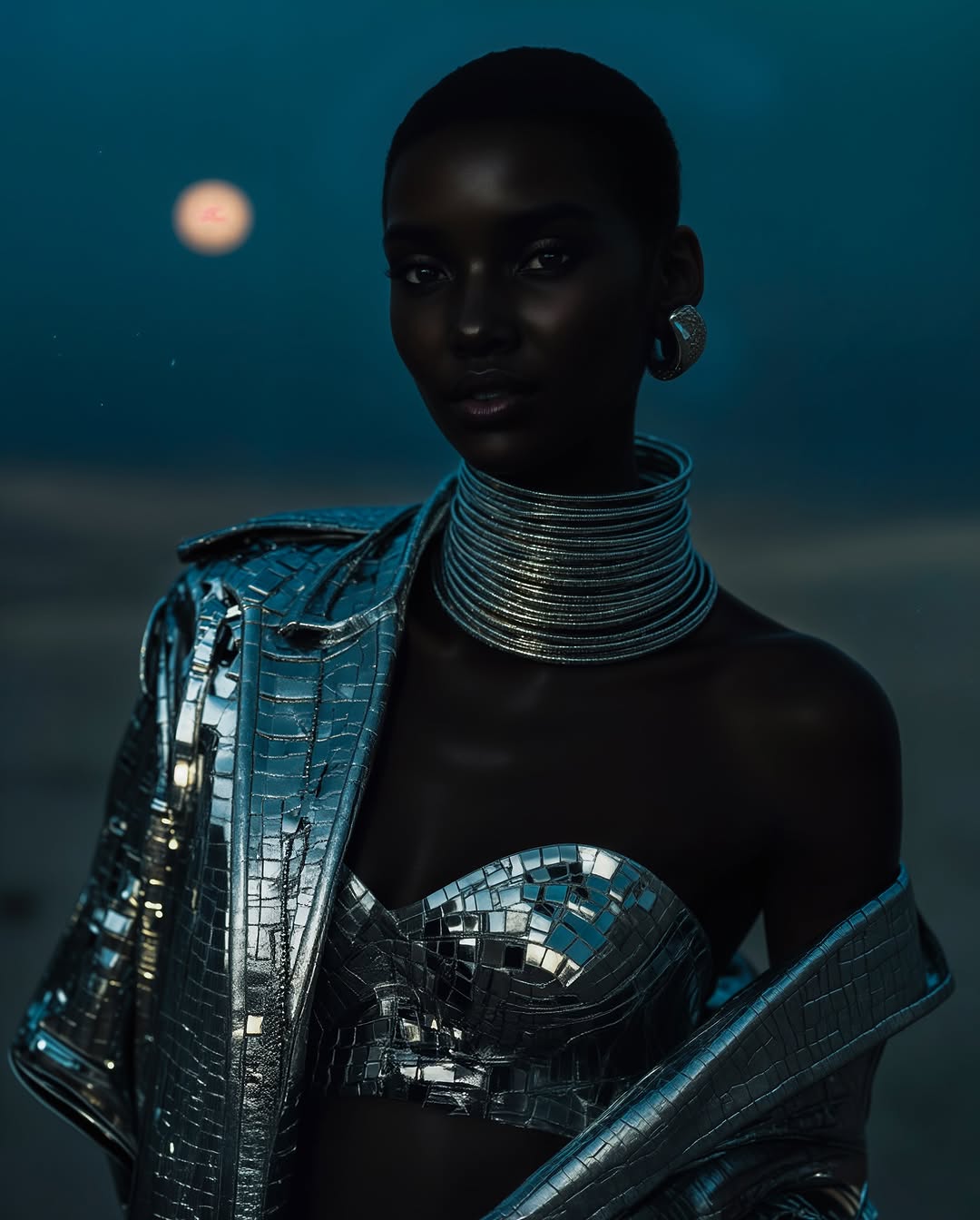
This image succeeds because it balances spectacle and presence. The styling is futuristic and metallic, but the body language remains controlled and grounded. That balance matters: audiences can admire the concept while still connecting with the person in frame.
The cool blue grade and desert setting create a cinematic world instantly. Yet the post is still readable on mobile because the silhouette is clear and the composition is centered. For creators, this is a strong template for high-concept content that does not sacrifice clarity.
Signal Table
| Signal | Evidence (from this image) | Mechanism | Replication Action |
|---|
| World-building impact | Desert landscape + moody cloud sky | Context makes the look feel narrative, not random styling | Pair bold wardrobe with a location that supports the same story |
| Material authority | Chrome jacket, mesh body texture, mirrored boots | Consistent material language reads premium and intentional | Limit the look to one material family and repeat it across pieces |
| Cinematic mood | Cool cyan grading and deep shadows | Strong color temperature creates emotional cohesion | Lock one temperature direction (cool or warm) before iteration |
| Mobile legibility | Centered dominant subject with simple horizon | High thumbnail readability despite complex styling | Keep silhouette clean and avoid busy foreground clutter |
Use Cases and Transfer
Best-fit scenarios
- Campaign hero visual: Works for launch posts where visual world matters.
- AI fashion concept series: Works because material consistency is easy to vary by color.
- Editorial cover frame: Works with minimal text overlay in future versions.
- Creative portfolio highlight: Works as a statement piece to define style direction.
Not ideal
- Casual daily diary posts requiring low production tone.
- Tutorial-first content where tools/process must be visible.
- Community-centric posts emphasizing social interaction.
Three transfer recipes
| Recipe | Keep | Change | Slot template (EN) |
|---|
| Urban cyber variant | Metallic wardrobe + centered silhouette | Swap desert for wet city street reflections | {night city} + {metallic outfit} + {centered pose} + {cool cinematic grade} |
| Arctic studio variant | Cool palette and material reflections | Use minimal white studio set with ice-like props | {minimal set} + {reflective styling} + {sculptural pose} + {icy mood} |
| Sunset bronze variant | Single-subject power pose | Shift palette to warm copper-gold and dusk orange | {open landscape} + {metal texture} + {hero stance} + {warm epic tone} |
Aesthetic Read
The image uses contrast in two layers: texture contrast and tonal contrast. Texture contrast comes from shiny chrome against matte desert terrain. Tonal contrast comes from the model’s luminous metallic outfit against a darker, moody sky. This dual contrast keeps the frame engaging at both first glance and second look.
Compositionally, the kneeling stance anchors the subject while the flowing jacket introduces motion. That combination creates visual rhythm without needing extra objects. For creators, this is an efficient way to make cinematic work: one clear subject, one environment story, one coherent material system.
Prompt Technique Breakdown
| Prompt chunk | What it controls | Swap ideas (EN, 2-3 options) |
|---|
| "single model in kneeling power pose" | Pose authority and silhouette | "standing hero pose" / "seated asymmetrical pose" / "walking profile" |
| "reflective silver mesh + chrome jacket" | Material identity | "black latex + steel" / "gold mirror fabric" / "iridescent foil" |
| "desert landscape under clouded sky" | Narrative world context | "salt flats" / "volcanic plain" / "futuristic quarry" |
| "cool cyan cinematic grade" | Emotional temperature | "warm bronze sunset" / "neutral monochrome" / "purple sci-fi tint" |
Remix Steps
Baseline Lock: lock silhouette pose, lock metallic material fidelity, lock cool environmental grade.
- Run 1: keep setup fixed; test three sky contrast levels.
- Run 2: keep best sky; test one jacket shape variation.
- Run 3: keep silhouette; change one palette axis (cyan to steel-blue).
- Run 4: finalize reflection sharpness and skin-detail balance.