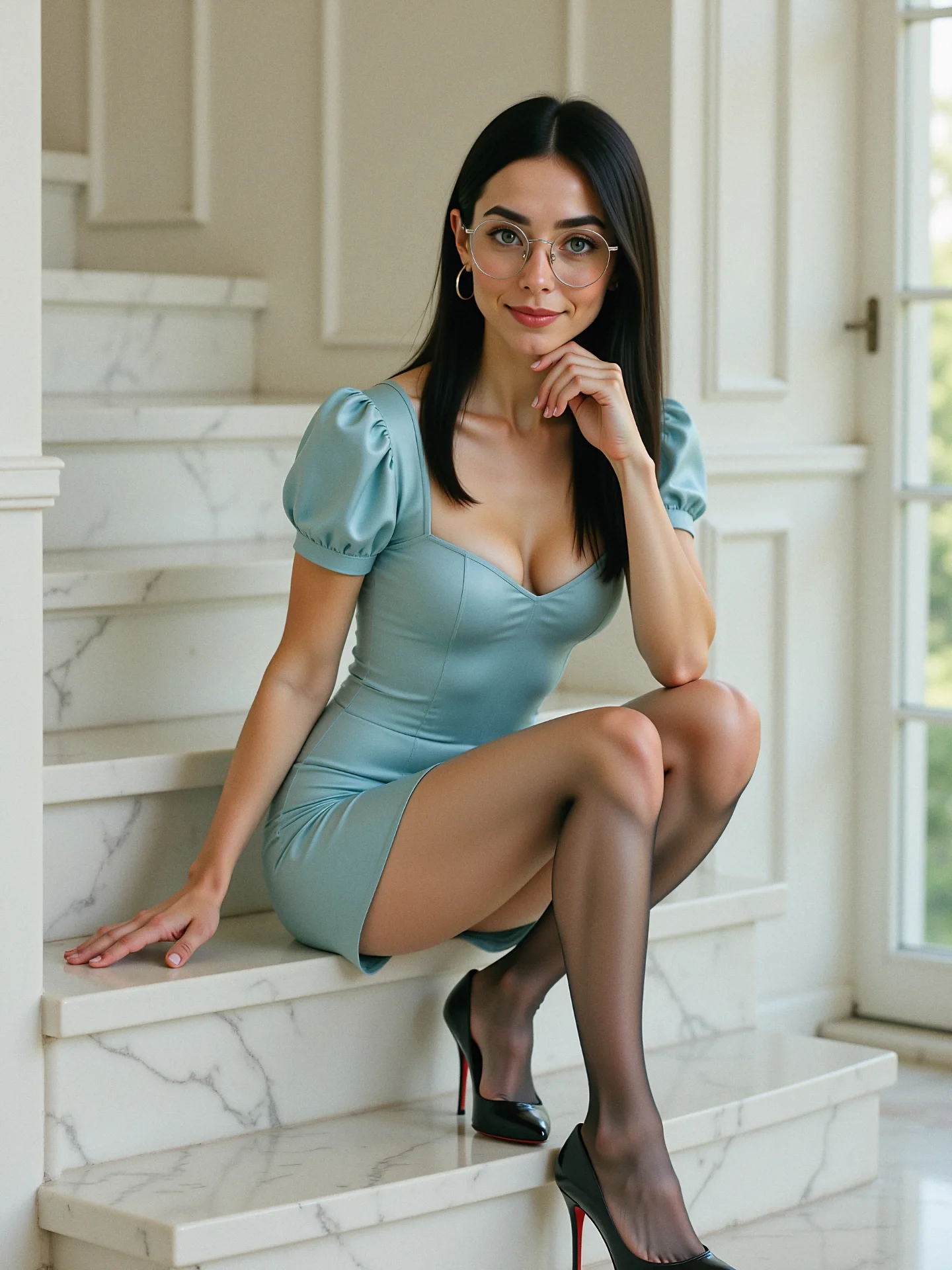
☺️ Como te gusta más, pelo recogido o suelto?
☺️ Como te gusta más, pelo recogido o suelto?
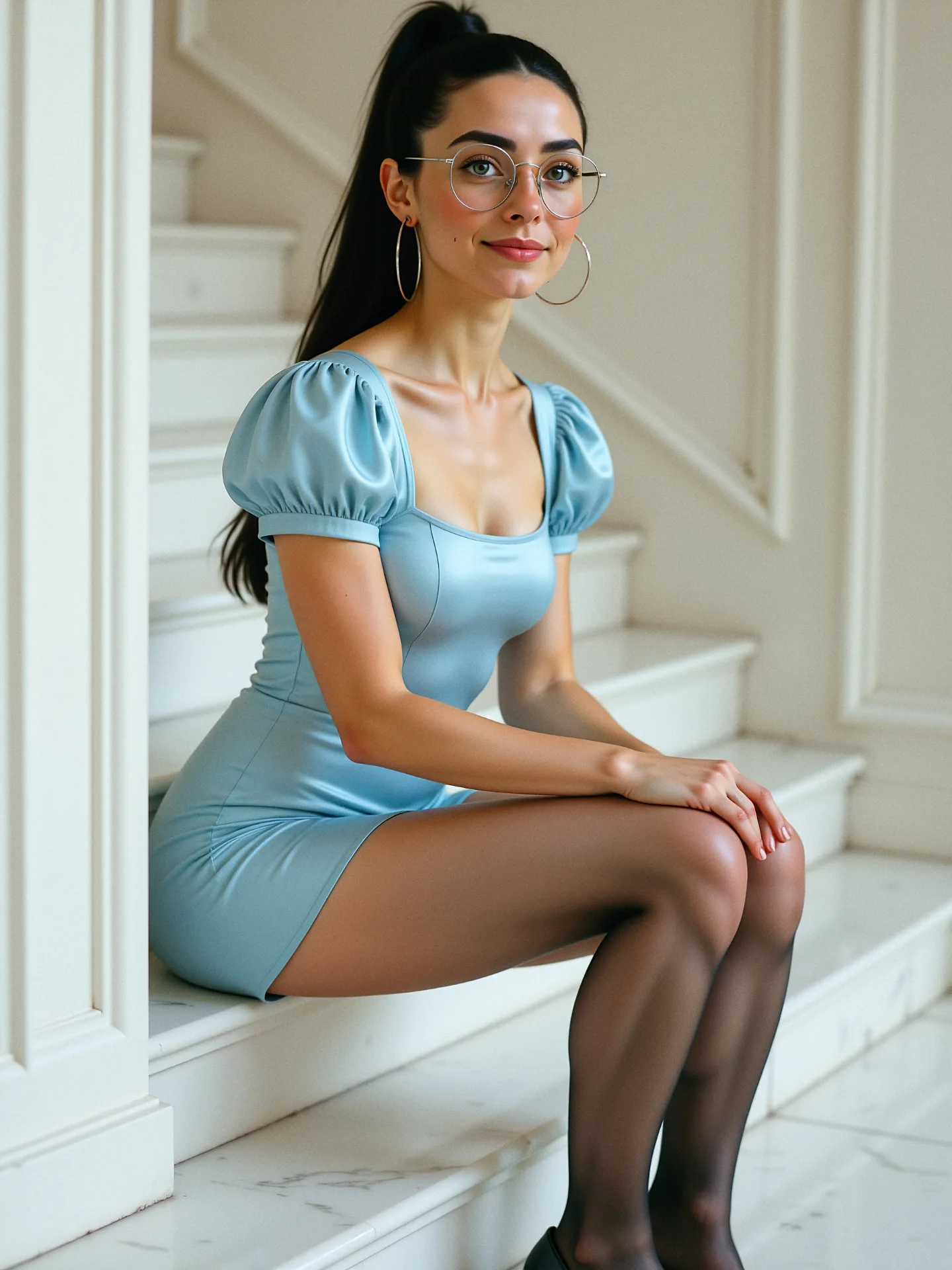
This image works because it turns a very simple interior into a stage for silhouette and posture. The room is almost empty, which means the dress shape, leg line, and staircase geometry become the entire composition. That is what makes the portrait feel polished. It is not relying on a dramatic location. It is relying on design discipline.
The powder-blue dress is a smart choice because it softens the image without disappearing into the pale background. The black tights then add contrast and rhythm to the lower half of the frame. Together, those two clothing decisions create enough visual structure that the portrait never feels washed out or flat.
The image is saveable because it is easy to decode and easy to reuse. The pose is elegant but not complicated. The staircase gives the subject a natural place to sit, and the clean interior makes it simple for viewers to imagine recreating the shot in another home, hotel, or studio space. This is a strong example of a low-noise portrait that still feels styled.
| Signal | Evidence (from this image) | Mechanism | Replication Action |
|---|---|---|---|
| Architectural simplicity | White staircase and pale walls with almost no decor | Keeps attention on pose and silhouette | Use one clean structural element instead of a heavily decorated room |
| Balanced contrast | Soft blue dress paired with black tights | Adds visual definition without breaking the calm mood | Pair one light garment with one darker grounding element |
| Elegant seated posture | Hands placed calmly on the leg, knees together, torso lifted | Signals refinement without theatrical posing | Choose posture that feels composed before adding expressive gestures |
| Quiet luxury palette | Blue, white, black, and skin tone only | Makes the image feel premium and easy on the eye | Limit the scene to a few harmonious tones when the goal is elegance |
The staircase is doing more than serving as furniture. It creates lines that organize the whole frame. The subject becomes part of the architecture instead of merely sitting inside a room. That is why the portrait feels more intentional than a casual living-room shot. The geometry makes the pose look designed.
The dress also deserves attention. Puff sleeves and a square neckline add shape to the upper body, which balances the long vertical line of the ponytail and the slim seated pose. Without those sleeve details, the upper half might feel too plain. This is a good reminder that even minimal portraits need one or two silhouette accents.
| Observed | Why It Matters | How To Recreate |
|---|---|---|
| Powder-blue fitted dress against pale interior | Creates softness while preserving subject separation | Use a gentle color that still contrasts enough with the room |
| Black tights on bright marble steps | Adds lower-frame contrast and elegance | Ground pale interiors with one dark wardrobe element |
| Staircase lines framing the subject | Makes the pose look intentional and composed | Position the subject where architectural lines naturally guide the eye |
| Minimal decor and clean walls | Strengthens the quiet-luxury feeling | Remove unnecessary objects if the portrait should feel refined |
| Prompt chunk | What it controls | Swap ideas (EN, 2-3 options) |
|---|---|---|
| young woman seated on a white staircase in a powder-blue fitted dress | Main subject, pose, and environment | 'elegant staircase portrait', 'minimal interior seated fashion shot', 'quiet-luxury stair pose' |
| black tights and hoop earrings with round glasses | Identity and contrast accents | 'sheer stockings', 'bare legs with pumps', 'clear glasses and small hoops' |
| soft diffused indoor daylight | Mood and softness | 'window-lit foyer portrait', 'clean natural interior light', 'bright hotel stair lighting' |
| clean marble-like steps and pale walls with no clutter | Architectural quietness | 'cream stair hall', 'minimal white foyer', 'gallery-style stairwell' |
| hands resting calmly on the leg, knees together | Refined body language | 'crossed ankles', 'one hand on banister', 'soft folded hands in lap' |
Lock three things first: the blue dress, the staircase setting, and the black tights. Those are the visual anchors. Then iterate one variable at a time. First version: establish the seated pose and architectural framing. Second version: refine sleeve volume and neckline shape. Third version: tune the amount of contrast between the dress and the room. Fourth version: only then adjust expression or accessory density. That order keeps the portrait elegant and controlled instead of letting it drift into generic indoor fashion imagery.