How tastyy-biteee Made This Baby Potato Mascot Macro Food Breakdown — and How to Recreate It
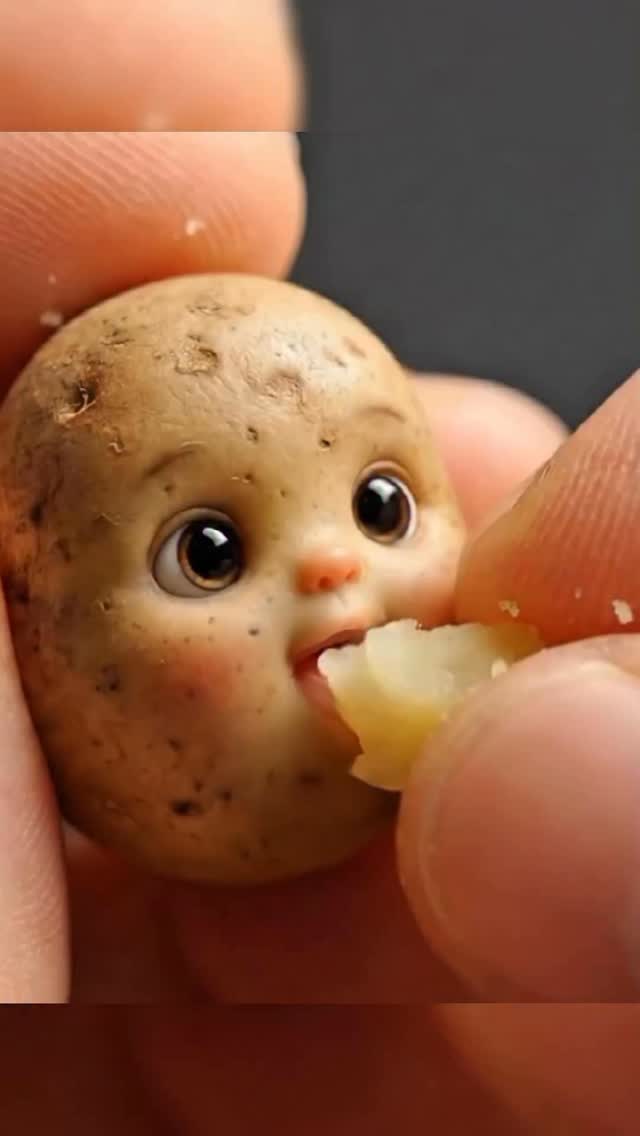
This image works because it is funny, intimate, and visually immediate at the same time. A potato with a baby face is already strange, but the real hook is the feeding moment. Once the fingers and bite enter the frame, the picture becomes a tiny narrative instead of just a novelty object. That shift makes the image feel more alive and more shareable.
Why This One Stops The Scroll
The composition is aggressively close. There is no wide scene to decode and no secondary prop to distract from the idea. The viewer sees the eyes first, then realizes the face belongs to a potato, then notices the tiny feeding action. That three-step read sequence creates both surprise and emotional engagement in a very small visual space.
Signal Table
| Signal | Evidence (from this image) | Mechanism | Replication Action |
|---|---|---|---|
| Surprise identity clash | A realistic potato skin carries a soft baby face | The mind enjoys the conflict between vegetable realism and infant emotion | Keep the source object obvious while simplifying the face |
| Micro-storytelling | A fingertip feeds a small bite into the tiny mouth | Action turns a gimmick into a moment of care | Add one interaction prop that implies relationship or need |
| Scale intensity | Human fingers nearly fill the frame around the mascot | Macro scale makes the creature feel fragile and collectible | Use fingers or palm contact to make size instantly legible |
| Texture credibility | The potato skin still shows spots, pores, and imperfections | Real material texture keeps the image from feeling synthetic | Preserve raw vegetable texture instead of polishing it away |
Aesthetic Read
This is surreal macro cuteness with a food-based body horror idea softened into something charming. The image does not become unsettling because the facial design is restrained. Tiny features, round eyes, soft blush, and gentle feeding cues keep the emotional register affectionate rather than creepy. That balance is the real craft decision.
Prompt Technique Breakdown
| Prompt chunk | What it controls | Swap ideas (EN, 2-3 options) |
|---|---|---|
| anthropomorphic baby potato mascot | Defines the subject logic quickly | tiny yam baby; baby chestnut mascot; baby truffle creature |
| realistic speckled potato skin with embedded baby face | Preserves material identity while enabling the emotional read | earthy root skin; dusty tuber surface; imperfect natural peel texture |
| held between fingers and fed a small bite | Adds scale and narrative interaction | resting in fingertips; kissed by a spoon; offered a crumb-sized bite |
| extreme macro close-up with dark background | Creates intensity and isolates the idea | neutral charcoal blur; soft black macro backdrop; studio-dark background haze |
| photoreal cute surreal food-creature aesthetic | Sets the final tonal balance | viral edible mascot look; premium macro novelty aesthetic; tactile whimsy close-up |
Why This Structure Is Repeatable
The system is reusable because it relies on a stable recipe: one humble food object, one minimal face, and one caregiving action. That formula can be pushed across onion babies, garlic babies, mushroom babies, chestnut babies, or seed creatures. The trick is not the ingredient. The trick is the emotional framing.
Remix Playbook
For variations, keep the finger-feeding setup and switch the produce. Or keep the potato and change the mood: bright kitchen warmth, dark cinematic nursery, or whimsical harvest branding. You can also swap the action from feeding to hugging, sleeping, or peeking out of a basket while keeping the macro scale and tactile realism intact.
Execution Advice
If the result turns creepy, simplify the face and reduce human skin cues. If it looks too toy-like, push harder on real potato texture and irregularity. If it loses the cute factor, enlarge the eyes slightly and keep the mouth tiny. The best version should feel like a real potato first, then reveal itself as a tiny hungry mascot second.