🩷💛🩷💛🩷 #virtualinfluencer
🩷💛🩷💛🩷 #virtualinfluencer
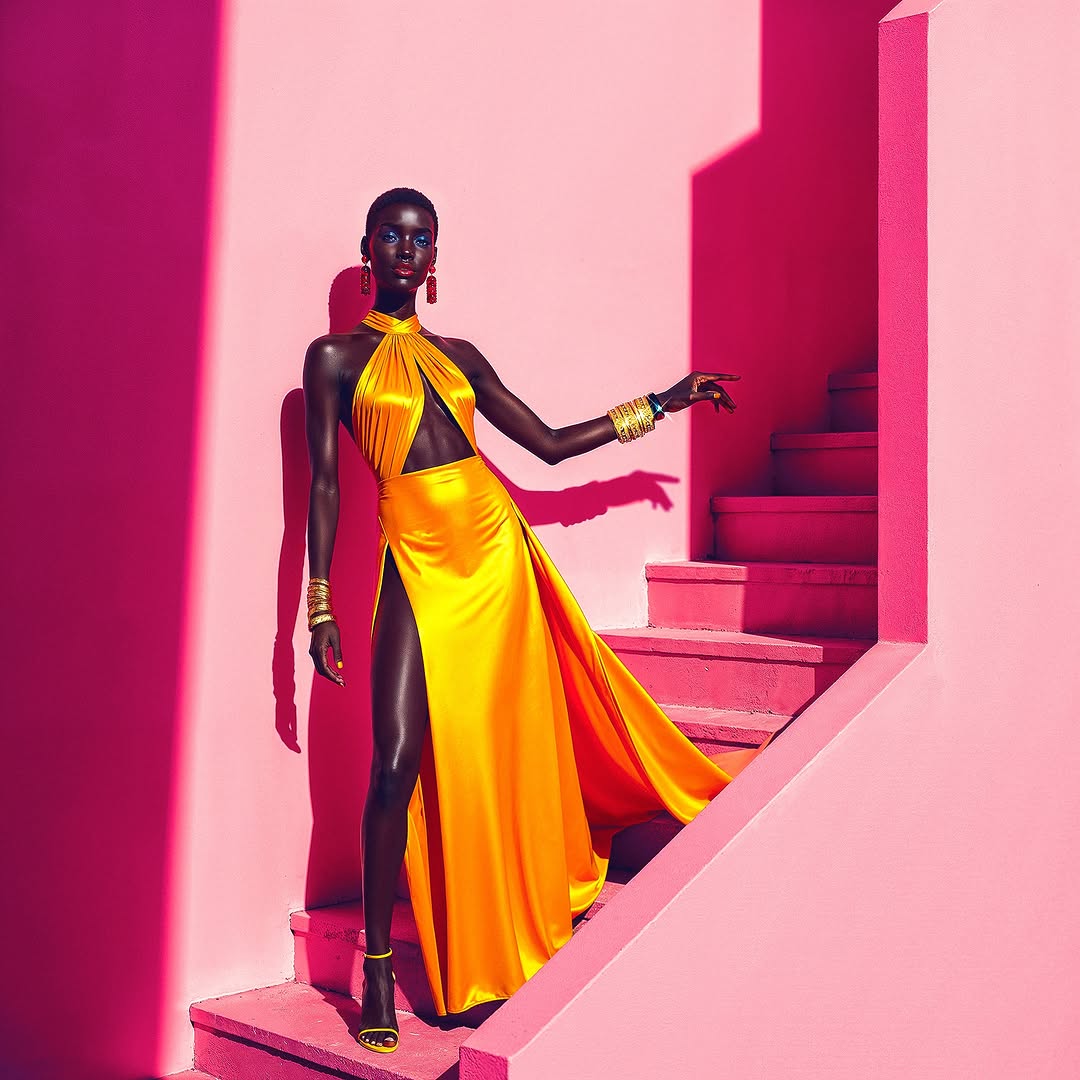
This image works because every element is directional. The model’s extended arm points toward the staircase, the hard light throws a sharp shadow, and the saturated yellow gown cuts through the pink set like a visual alarm. Nothing is passive. That directional structure is exactly what helps fashion content stop users in motion-heavy feeds.
From a creator-growth perspective, this is a masterclass in controlled boldness. You get strong color contrast, architectural geometry, and a clear silhouette, but the frame still remains readable. The set is minimal, the subject is singular, and the styling is coherent. High energy, low confusion.
| Signal | Evidence (from this image) | Mechanism | Replication Action |
|---|---|---|---|
| Color shock value | Electric yellow-orange dress against hot pink environment | High contrast increases immediate stop probability | Pick one dominant warm accent garment against a single opposing backdrop hue |
| Directional composition | Arm extension and staircase lines guide the eye rightward | Creates visual movement in a still image | Design one deliberate leading line from pose to set geometry |
| Couture texture cue | Glossy satin highlights and metallic jewelry stacks | Signals premium styling and editorial intent | Lock fabric sheen and accessory material in prompt blocks |
| Hard-light drama | Crisp cast shadows on wall and floor | Adds depth and theatrical intensity | Use one hard key source and preserve shadows in post |
Not ideal: calm lifestyle storytelling, technical tutorials, or minimal neutral product shots.
| Transfer | Keep | Change | Slot template (EN) |
|---|---|---|---|
| Blue-Red Stage Transfer | Hard shadow lighting and directional pose | Pink set to cobalt, yellow dress to red satin | {set_color} {dress_color} {pose_direction} {shadow_hardness} |
| Monochrome Geometry Transfer | Architectural stairs and silhouette-first framing | Color clash to black-white set with metallic garment accent | {geometry_type} {primary_tone} {accent_material} {fashion_mood} |
| Sunset Editorial Transfer | Strong contrast and jewelry layering | Studio pink to warm sandstone backdrop | {backdrop_texture} {fabric_sheen} {accessory_density} {contrast_profile} |
The frame achieves tension through controlled opposition. Warm yellow satin sits against cool-magenta architecture. Soft skin gradients contrast with hard-edged cast shadows. Curved drapery folds oppose straight staircase geometry. These paired opposites keep the image visually alive without becoming chaotic.
The pose contributes equally. The extended arm is not decorative; it creates an active line that links body, shadow, and stairs. This transforms a static portrait into a narrative of motion and intent. For creators building a high-fashion visual system, this is a repeatable blueprint: one bold palette, one geometric set anchor, one directional gesture, one disciplined light source.
| Observed | Recreate |
|---|---|
| Single-subject high-contrast color block | Use one saturated wardrobe color against one saturated backdrop hue |
| Architectural right-side staircase | Add simple geometric set element to create depth and direction |
| Sharp shadow storytelling | Place a hard key and keep shadow edges intact in grade |
| Glossy material rendering | Specify satin sheen and highlight control in prompt |
| Gesture-led composition | Pose one arm as leading line to guide viewer attention |
| Prompt chunk | What it controls | Swap ideas (EN, 2-3 options) |
|---|---|---|
| "dark-skinned fashion model, short cropped hair" | Subject silhouette and identity | "long braided model", "slick bun profile", "androgynous short crop" |
| "yellow-orange satin cutout halter gown" | Primary color and fabric behavior | "lime silk gown", "red satin drape", "metallic silver slip" |
| "stacked bangles and drop earrings" | Luxury styling density | "minimal cuff only", "statement ear cuffs", "pearl layers" |
| "hot-pink wall and pink staircase" | Set architecture and color identity | "cobalt stair set", "neutral concrete steps", "deep purple backdrop" |
| "hard directional studio light" | Shadow shape and dramatic tone | "soft glam light", "split light", "hard key + subtle rim" |
| "square fashion composition, subject left-of-center" | Spatial balance and flow | "centered symmetry", "right-weighted stance", "wider environmental crop" |
Baseline lock: pink architecture, yellow satin sheen, hard shadow quality.
One-change rule: adjust one dimension at a time to keep visual language stable.
This workflow helps creators scale bold editorial content without losing stylistic control.