How dreamfall.art Made This Black Runway Fashion AI Portrait - and How to Recreate It
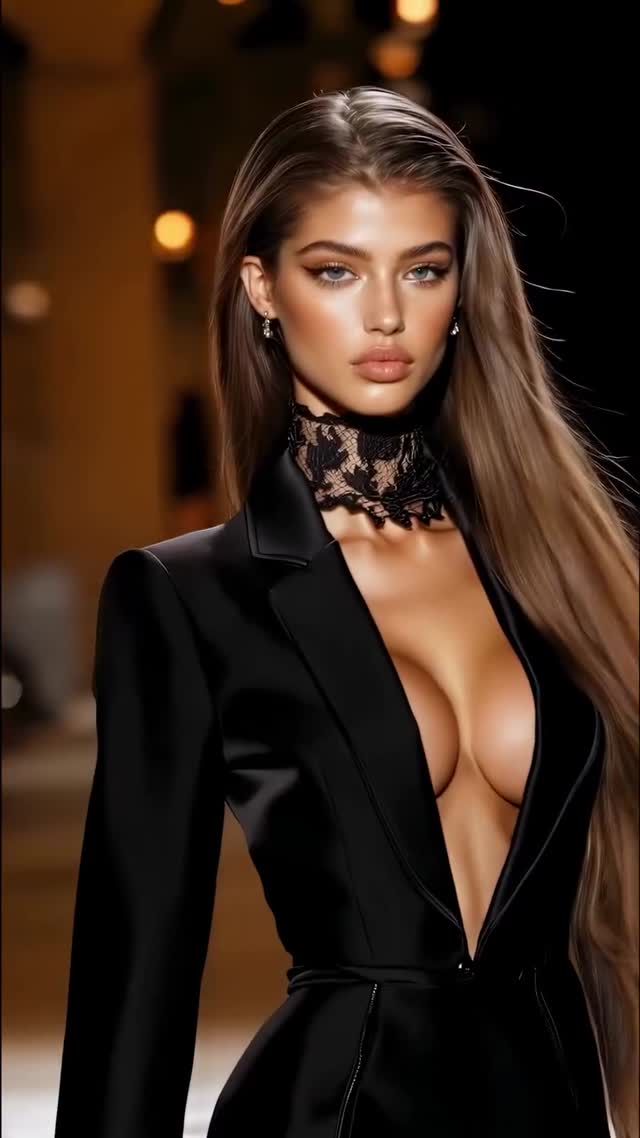
This image lands because it combines two outcomes creators want at the same time: instant elegance and instant clarity. The subject is centered, the styling is monochrome, and the background is intentionally blurred. That means users can decode the entire frame in a split second, which is exactly what helps a post survive fast-feed behavior.
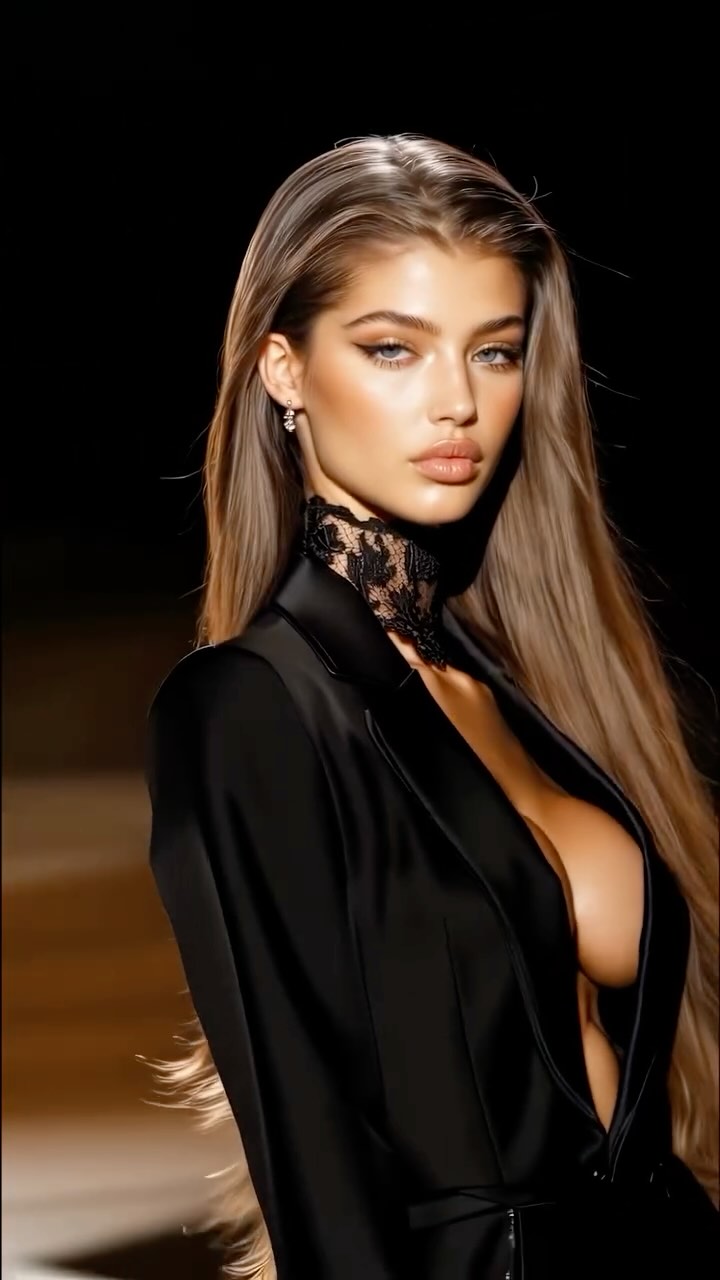
The second driver is authority signaling. Tailored black satin, lace neck detail, and warm runway bokeh all communicate premium context. Even without text, the frame implies fashion credibility. In social performance terms, that credibility often lifts saves because the image feels reference-worthy.
Why this visual can go viral
The post uses "constraint contrast" well: a narrow color palette with high texture contrast. Black fabric absorbs most of the scene, while skin highlights and satin reflections create precise focal points. This prevents visual chaos and keeps attention on the model's face and silhouette.
It also works because of direct eye contact. A strong frontal gaze creates interpersonal pull, making the viewer feel addressed. Combined with shallow depth of field, this turns a static portrait into a high-retention frame.
| Signal |
Evidence (from this image) |
Mechanism |
Replication Action |
| Monochrome Authority |
Black tailored outfit with clean silhouette |
High-end styling cues increase perceived value |
Lock one dominant wardrobe color and keep shape architecture sharp |
| Frontal Engagement |
Direct confident gaze into camera |
Eye contact raises emotional connection and stop rate |
Prioritize gaze direction before adjusting secondary styling knobs |
| Depth Separation |
Warm background bokeh with sharp subject details |
Clear hierarchy improves readability on mobile thumbnails |
Use shallow DoF and reduce background detail density |
Use Cases and Transfers
Best-fit scenarios
- Fashion account hero posts: ideal for defining a premium brand direction.
- Collection launch teasers: works well when paired with short, confident copy.
- AI model profile series: repeatable format for weekly high-status portraits.
- Personal branding for stylists: communicates taste with minimal visual noise.
Not ideal
- Tutorial-led content: this frame is mood-centric and leaves little space for instruction.
- Multi-product showcases: the portrait focus makes object comparisons harder.
- Casual daily vlog aesthetics: tone may feel too formal for low-friction storytelling.
Three transfer recipes
- Keep: centered portrait and direct eye contact. Change: neckline architecture and accessory style. Template: "{subject} in {tailored silhouette} with {statement detail} under {runway lighting}"
- Keep: warm bokeh background + shallow DoF. Change: palette accents and hair texture. Template: "{portrait crop} with {hair style}, {palette accent}, and {background mood}"
- Keep: black-dominant fashion base. Change: fabric finish and pose angle. Template: "{pose} in {black fabric type}, {camera angle}, {light direction}"
Aesthetic Read
The image feels expensive because it is architected around line and shine. The lapels create sharp geometric frames around the chest area, while the lace choker introduces fine-grain texture at the neck. This coarse-to-fine texture contrast gives the portrait depth without adding clutter.
Another key aesthetic move is tonal restraint. The palette is mostly black, skin, and amber. This narrow range gives every highlight a clear purpose. The hair is styled as a soft vertical curve that stabilizes the composition and keeps the frame from feeling too rigid. Overall, the visual language is a practical template for creators who want premium outcomes with repeatable rules.
| Observed |
Recreate |
Why it matters |
| Centered subject with frontal gaze |
Place eyes near upper-third center and keep gaze direct |
Improves emotional pull and retention |
| Satin highlight streaks on black fabric |
Use glossy fabric language with controlled speculars |
Creates premium texture at thumbnail scale |
| Lace neck detail as secondary focal point |
Add one fine-texture accessory near face |
Increases visual richness without distraction |
| Warm venue bokeh |
Keep background lights soft and out of focus |
Supports mood while preserving subject hierarchy |
Prompt Technique Breakdown
| Prompt chunk |
What it controls |
Swap ideas (EN, 2-3 options) |
| tailored silhouette |
Fashion authority and structure |
"blazer dress" / "structured corset jacket" / "minimal tux silhouette" |
| neck detail layer |
Fine texture near face |
"lace choker" / "metal collar" / "pearl neckpiece" |
| gaze + expression |
Emotional engagement |
"direct neutral gaze" / "soft side glance" / "confident half-smile" |
| background depth treatment |
Subject isolation and readability |
"amber runway bokeh" / "dark backstage blur" / "soft gallery lights" |
Remix Steps
Baseline Lock: centered crop, direct gaze, black satin material behavior.
One-change rule: each new generation should alter only one to two visual knobs.
- Run 1: reproduce baseline exactly for control.
- Run 2: change only neck-detail accessory while keeping outfit and light fixed.
- Run 3: change only pose angle from frontal to three-quarter.
- Run 4: change only background warmth intensity and compare engagement.