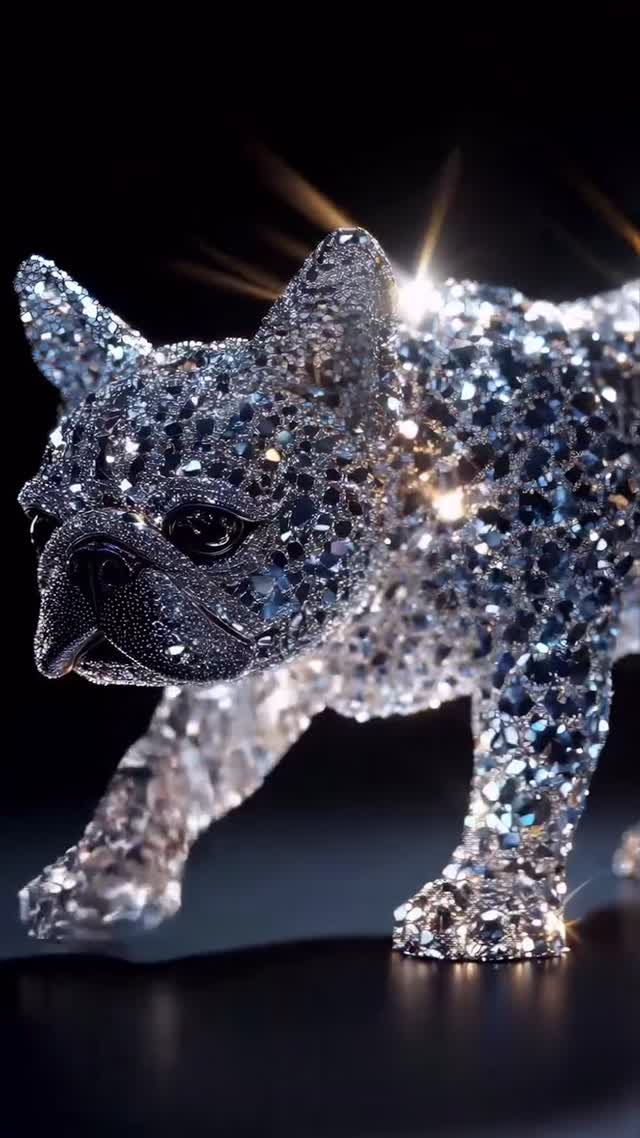
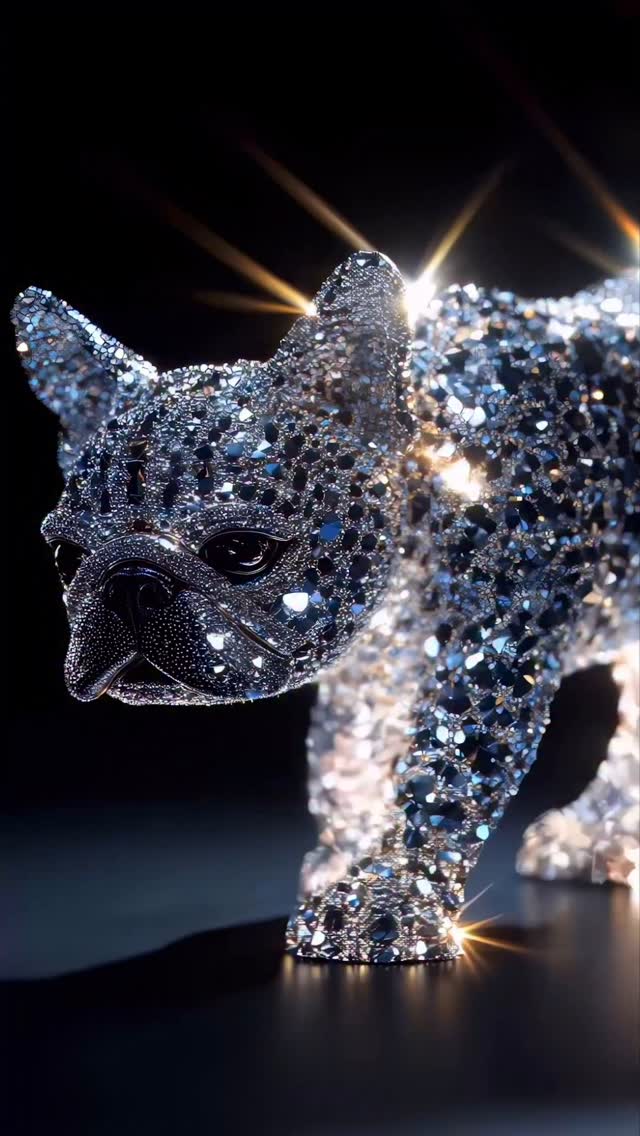
Diamond Frenchies😄💎
Are you serious about learning how to create AI visuals at a professional level? In my course, I teach everything I use in my own process:
• How I build concepts and visual storytelling
• The exact tools, prompts, and workflows I use
• How to refine, edit, and create a portfolio that gets noticed
This is the full system I used to grow Dreamfall Art and work with brands.
If you want access —
Comment “COURSE” below and I’ll send you the link directly.
Animated with @klingai_official
#midjourney #ai #aiart #aiartcommunity #midjourneyart #klingai #conceptart #aicommunity #artistsofinstagram #frenchbulldoglife #bulldog #dog
Why dreamfall.art's Crystal French Bulldog Went Viral — and the Formula Behind It
This image wins because it looks instantly premium and instantly readable. You do not need three seconds to decode it. You need half a second to feel the surprise: a familiar dog silhouette rebuilt as a jewel object, lit like a luxury product. That fast recognition plus novelty is a strong recipe for shares and saves.
There is another reason this visual travels: it balances fantasy and control. The concept is playful, but the execution is strict. The background is nearly black, the subject count is one, and the lighting does one job very clearly. For creators, this is useful because repeatable growth comes from repeatable constraints, not random visual noise. This frame is a good example of constraint-driven style.
If you want to replicate outcomes, do not copy only the object. Copy the mechanism: one clear silhouette, one controlled lighting thesis, and one high-contrast material story.
Why It Went Viral
The post behaves like a luxury ad but feels like creator culture. That combination matters. Pure brand polish can feel distant, while raw creator content can feel disposable. This visual sits in the middle: polished enough to stop the scroll, playful enough to feel shareable in a personal feed.
The crystal surface does most of the emotional work. Sparkle communicates value and spectacle without extra text overlays. At the same time, the bulldog form keeps the image approachable because the audience recognizes the shape immediately. This is a classic hook pattern: familiar structure plus unexpected texture.
The composition also protects performance. The frame removes all competing objects, so attention has only one destination. Even on a small phone screen, the eye lands on the face first, then travels across the gem highlights. That guided eye path improves dwell time and makes the post easier to remember when users scroll later.
Signal
Evidence (from this image)
Mechanism
Replication Action
Familiar + Novel
Recognizable French bulldog silhouette made from crystals
Pattern interruption without cognitive confusion
Keep a common silhouette, then swap one high-impact material
Attention Anchor
Hard backlight creates star-like sparkle on the shoulder ridge
Specular hotspots pull eyes and increase thumb-stop rate
Lock one deliberate hotspot and avoid evenly flat lighting
Low Noise Frame
Single subject on dark background, no extra props
Faster visual decoding and stronger memory imprint
Remove secondary objects unless they support the core story
Slot template (EN): "macro {object} with {surface texture}, lit by {key light direction}, against {background tone}"
Keep: high-contrast silver palette and clean negative space.
Change: scene accent color, backlight flare size, camera height.
Slot template (EN): "{hero shape} in {palette}, with {flare behavior}, framed from {camera height}"
Aesthetic Read
This image feels expensive because of controlled restraint. The frame does not rely on many colors, many props, or many subjects. Instead, it relies on material contrast: bright faceted reflections against deep black space. That single contrast axis creates immediate drama while keeping the message clean. The bulldog profile is also a smart aesthetic anchor because the shape is iconic and rounded, so even heavy sparkle does not break readability.
Another strong aesthetic choice is the lens behavior. The front of the subject is crisp where recognition matters most, while the rear transitions into softness. That focus gradient adds depth and keeps the picture from looking flat or synthetic. Finally, the lighting direction is coherent: a hard back/top source drives starburst highlights, and a softer frontal fill keeps facial geometry legible. The result is a frame that feels both artistic and commercially useful, which is exactly what creator growth content needs.
Observed
Recreate
Why It Matters
One-subject silhouette fills most of the frame
Keep the hero object at roughly 60-75% frame occupancy
Improves readability in fast-feed mobile viewing
Directional hard backlight with sparkle hotspots
Place key light high and behind, then add low front fill
Creates luxury cues and stronger visual hierarchy
2-3 dominant tones: black, silver, icy blue
Limit palette and reserve accents for highlight glints
Builds brand consistency and thumbnail recognition
"near-black gradient" / "deep navy void" / "charcoal seamless backdrop"
lens feel and focus falloff
Premium macro look and hierarchy
"85mm macro" / "100mm product tele" / "50mm close focus"
Prompt knob priority
Lock in this order: silhouette first, lighting second, material third. If these three are stable, most remixes still feel on-brand even when scene details change.
Remix Steps
Baseline Lock: composition crop, lighting direction, and macro lens feel.
One-change rule: change only one or two knobs each run so you can attribute performance differences to a specific visual decision.
Run 1 (Control): recreate the crystal bulldog frame with no stylistic changes.
Run 2 (Material test): keep pose and light, change only crystal type (clear to opal or chrome).
Run 3 (Silhouette test): keep light and material, change only the animal silhouette.
Run 4 (Contrast test): keep subject and pose, change only background brightness and flare intensity.