How dreamfall.art Made This Waterline Portrait — and How to Recreate It
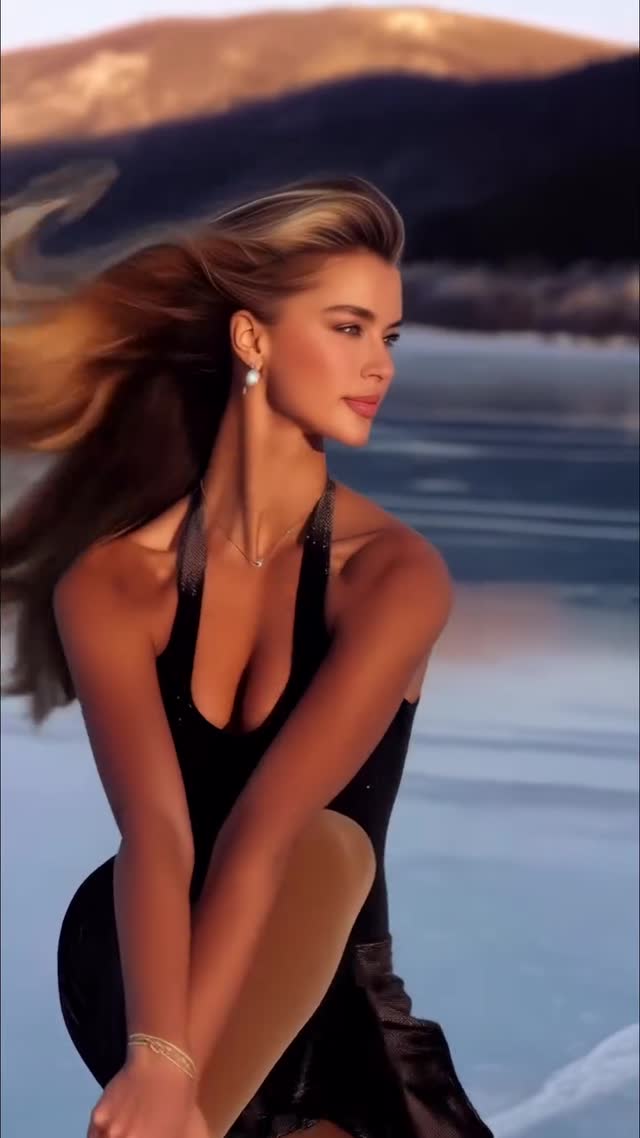
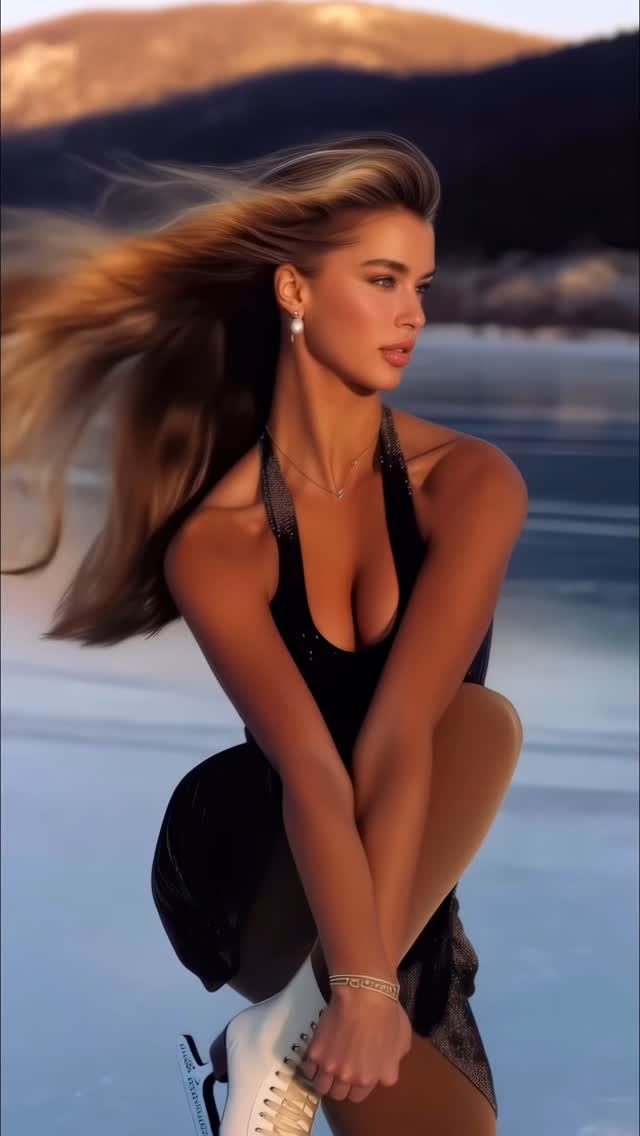
This frame works because it stages a clear contrast story in one glance: warm human presence against a cold natural environment. The model is styled in black with clean lines, while the lake and mountain tones stay cool and quiet. That temperature contrast creates instant visual tension, which is one of the fastest ways to earn attention in crowded feeds.
The image also feels intentional rather than random. Hair direction, body angle, and gaze all point in a coherent direction. Nothing in the frame fights for attention. For small creators, this matters more than expensive production. Audience trust grows when people feel your visuals are deliberate and repeatable.
Why this visual can travel
Viral performance here is not about shock value. It is about controlled elegance with emotional clarity. The subject appears calm, but the wind in the hair adds motion, so the image is both still and alive. This mixed signal increases dwell time because viewers spend an extra moment decoding the mood.
The second mechanism is readability. One subject, one clear silhouette, one color thesis. Mobile users do not need to zoom or inspect. They understand the style immediately, which increases save intent for people collecting visual references.
| Signal |
Evidence (from this image) |
Mechanism |
Replication Action |
| Temperature Contrast |
Warm skin and hair highlights against cool blue-gray water |
High emotional separation improves thumb-stop probability |
Lock warm key light on subject, keep environment cooler in grade |
| Motion Within Stillness |
Wind-swept hair with stable seated posture |
Static frame gains narrative energy without clutter |
Introduce one controlled motion cue (hair, fabric, mist) only |
| Single-Focus Composition |
No competing props, clean mountain and shoreline layers |
Fast visual decoding increases memory retention |
Remove all non-essential objects before final render pass |
Where this style fits and where it does not
Best-fit scenarios
- Luxury lifestyle reels: keep profile pose and wind cue, swap location and wardrobe details.
- Personal brand hero posts: use the same portrait grammar across a monthly series for recognizability.
- Travel-fashion campaigns: keep color contrast system, rotate terrain types.
- Creator course ads: pair this visual style with short action-oriented captions for conversion.
Not ideal
- Technical tutorials: this aesthetic is mood-first and not optimized for on-image instructions.
- Product detail showcases: shallow focus and portrait bias can hide small product features.
- Comedic meme formats: the polished tone may conflict with casual humor expectations.
Three transfer recipes
- Keep: profile gaze + wind hair + warm/cool split. Change: wardrobe silhouette and terrain. Template: "{subject} in {wardrobe} at {cold location} with {warm key light}"
- Keep: clean negative space on gaze side. Change: time of day and sky texture. Template: "{pose} looking into {direction} with {atmosphere} and {light mood}"
- Keep: one-subject framing and minimal props. Change: material accents and color of highlights. Template: "single {subject} portrait, {accent material}, {palette}, {lens feel}"
Aesthetic read
The strongest aesthetic trait is directional coherence. Hair flow, shoulder line, and gaze all move toward the same side, creating a clear internal rhythm. That rhythm makes the portrait feel cinematic instead of static. Another important choice is tonal economy. The frame leans on a narrow palette: black wardrobe, warm skin, cool environment. Because the palette is constrained, the face remains the emotional center.
The lighting strategy also deserves attention. A warm key source shapes facial planes and collarbone highlights, while cool ambient fill preserves the environment without overpowering the subject. This dual-light logic is practical for replication because it gives creators a simple rule set: warm person, cool world. When repeated across multiple posts, this becomes a recognizable visual signature.
| Observed |
Recreate |
Why it matters |
| Subject fills most of vertical frame |
Use medium-full portrait crop and avoid wide establishing shots |
Improves mobile readability and identity clarity |
| Wind-driven hair movement |
Add a single motion cue while keeping body pose stable |
Adds energy without reducing elegance |
| Warm skin vs cool background color split |
Grade subject warmer and environment cooler by design |
Creates instant visual tension that attracts attention |
| Minimal object count |
Keep one subject and one location narrative only |
Reduces cognitive load and boosts retention |
Prompt technique breakdown
| Prompt chunk |
What it controls |
Swap ideas (EN, 2-3 options) |
| pose and gaze direction |
Narrative flow and emotional intent |
"seated profile" / "standing side glance" / "half-turn over shoulder" |
| hair motion cue |
Perceived dynamism in still imagery |
"wind-blown long hair" / "gentle breeze movement" / "fabric motion" |
| environment class |
Mood context and tonal base |
"icy lake" / "high desert dusk" / "coastal cliff" |
| light temperature split |
Depth and visual tension |
"warm key cool fill" / "sunset key neutral fill" / "golden rim blue ambient" |
| wardrobe silhouette |
Style identity and contrast readability |
"black halter" / "minimal evening dress" / "tailored monochrome look" |
Remix execution playbook
Baseline Lock: portrait crop, warm-key/cool-fill lighting, and single-subject composition.
One-change rule: modify only one to two knobs per generation to keep attribution clean.
- Run 1: recreate the baseline frame exactly for a control reference.
- Run 2: change only environment type (lake to cliff) while preserving light split.
- Run 3: change only wardrobe silhouette while keeping pose and hair direction.
- Run 4: change only key-light warmth and compare save-rate response.