The Desert Ride: How dreamfall.art Built This AI Art
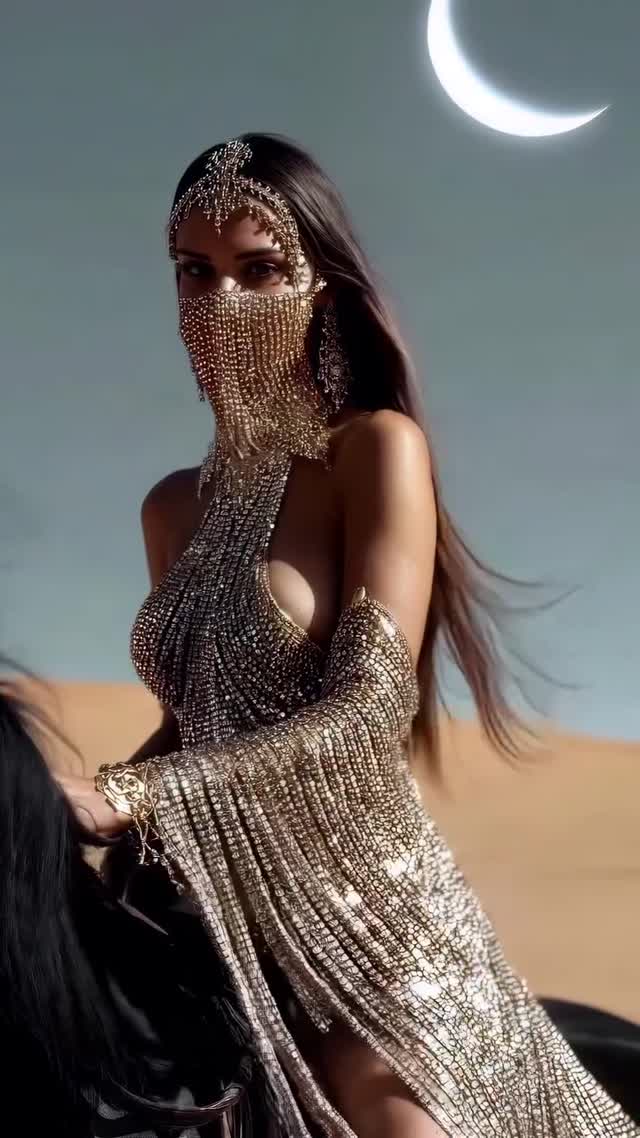
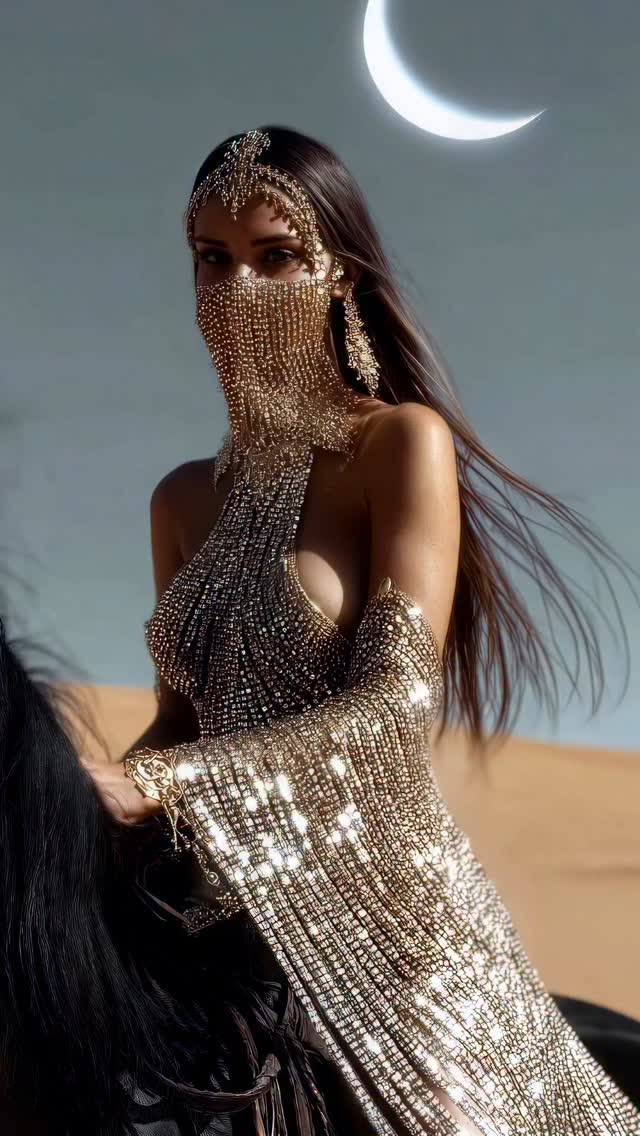
This post succeeds because it merges runway glamour with simple visual architecture. You get one hero character, one symbolic environment, and one unforgettable sky cue (the crescent moon). The composition feels premium, but the structure is easy to remix for creators working with AI workflows.
The viral trigger is contrast. Hard metallic texture sits against soft desert gradients, and the dramatic styling is balanced by a very clean background. This contrast creates immediate stop power without turning into visual chaos.
Signal Table
| Signal | Evidence (from this image) | Mechanism | Replication Action |
|---|
| Texture contrast | Reflective chainmail garment against matte sand dunes | High material contrast improves first-glance memorability | Always pair one high-specular texture with one soft natural backdrop |
| Iconic sky anchor | Large crescent moon in upper-right region | Single symbolic element makes the scene instantly recognizable | Add one strong sky symbol (moon/sun/halo) in a fixed corner |
| Luxury identity coding | Dense jeweled headpiece, veil chains, coordinated accessories | Signals premium positioning and editorial intent | Lock 2-3 accessory descriptors before changing environment |
| Minimal scene complexity | Only model, horse crop, dunes, moon | Low clutter preserves clarity on vertical mobile feeds | Use a strict object cap and remove non-essential props |
Use Cases and Transfers
- Best fit: Fashion campaign mood boards. Why fit: strong material storytelling and brandable palette. What to change: shift jewelry metal tone (gold/silver/rose).
- Best fit: Music cover art concepts. Why fit: cinematic symbolism works for artist identity. What to change: change moon size and garment silhouette by genre.
- Best fit: Luxury beauty/editorial reels. Why fit: close attention to reflective details feels premium. What to change: tighten crop for makeup-first versions.
- Best fit: Fantasy narrative snippets. Why fit: clear archetype with strong world cue. What to change: swap desert for cliff/ocean while keeping moon anchor.
- Not ideal: Product instruction posts. Reason: dramatic styling leaves little space for practical information.
- Not ideal: Documentary realism content. Reason: visual language is stylized and aspirational.
- Not ideal: Multi-character storytelling. Reason: scene grammar is built around one hero subject.
Exactly Three Transfer Recipes
Transfer 1: Silver-noir variant
Keep: crescent moon position, minimal dune background, hero pose.
Change: garment metal from gold to silver, cooler grading.
Slot template (EN): {desert night} {metallic couture color} {single moon anchor} {editorial portrait}
Transfer 2: Royal fantasy variant
Keep: reflective textile logic and accessory density.
Change: replace horse crop with ceremonial prop silhouette.
Slot template (EN): {hero model} {ornate headpiece} {symbolic prop silhouette} {minimal horizon}
Transfer 3: Modern campaign variant
Keep: texture contrast and object minimalism.
Change: desert to modern concrete landscape at blue hour.
Slot template (EN): {single fashion subject} {high-specular outfit} {clean environment} {iconic sky element}
Aesthetic Read
The aesthetic strength comes from disciplined opposition. The garment is hyper-detailed, but the environment is intentionally spare. That pushes all attention into material behavior: tiny highlights across beaded surfaces, controlled sparkles at edges, and smooth tonal transitions on skin and sand. The crescent moon works as both storytelling and composition, balancing the visual weight of the model on the left side. Hair movement introduces life without adding clutter, and the partial horse silhouette grounds the fantasy in a physical scene. Color is tightly managed: warm metallic highlights, neutral skin, cool blue dusk sky, and muted beige dunes. This limited palette makes the frame feel expensive and coherent. For creators, the lesson is that "fantasy" performs best when one part is extravagant and everything else is simplified.
Prompt Technique Breakdown
| Prompt chunk | What it controls | Swap ideas (EN, 2-3 options) |
|---|
| "single dark-haired fashion model, intense gaze" | Main character authority and mood | "calm regal gaze" / "side-profile mystery" / "soft smile" |
| "reflective chainmail couture + jeweled headpiece" | Material identity and luxury signal | "silver crystal mesh" / "pearled embroidery" / "mirrored sequins" |
| "desert dunes at dusk with crescent moon" | World-building and symbolic storytelling | "moonlit coastline" / "misty canyon" / "twilight salt flats" |
| "partial black horse foreground" | Narrative depth and implied movement | "ceremonial banner" / "stone pedestal" / "shadowed throne edge" |
| "vertical medium editorial framing" | Mobile readability and fashion posture clarity | "closer chest-up" / "full-body runway" / "three-quarter portrait" |
Remix Execution Playbook
Baseline Lock: lock object count, lock moon placement, lock reflective material behavior.
One-change rule: per render, adjust only one visual axis (palette, prop, or background).
- Render 1 baseline with gold metal, dunes, crescent moon.
- Render 2 change only metal hue (gold to silver).
- Render 3 keep winning metal hue, change only sky grade (cool dusk vs warm dusk).
- Render 4 keep best sky, change only foreground narrative prop (horse vs banner).
This isolates performance effects and gives you reusable campaign variants quickly.