How dreamfall.art Made This Tennis Fashion Portrait AI Portrait - and How to Recreate It
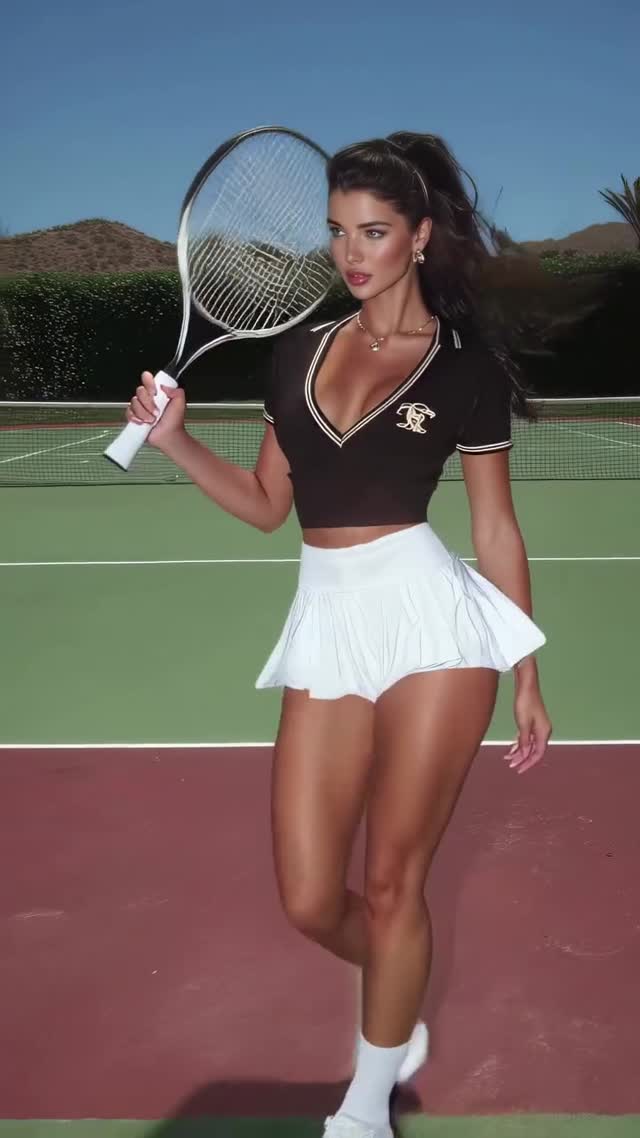
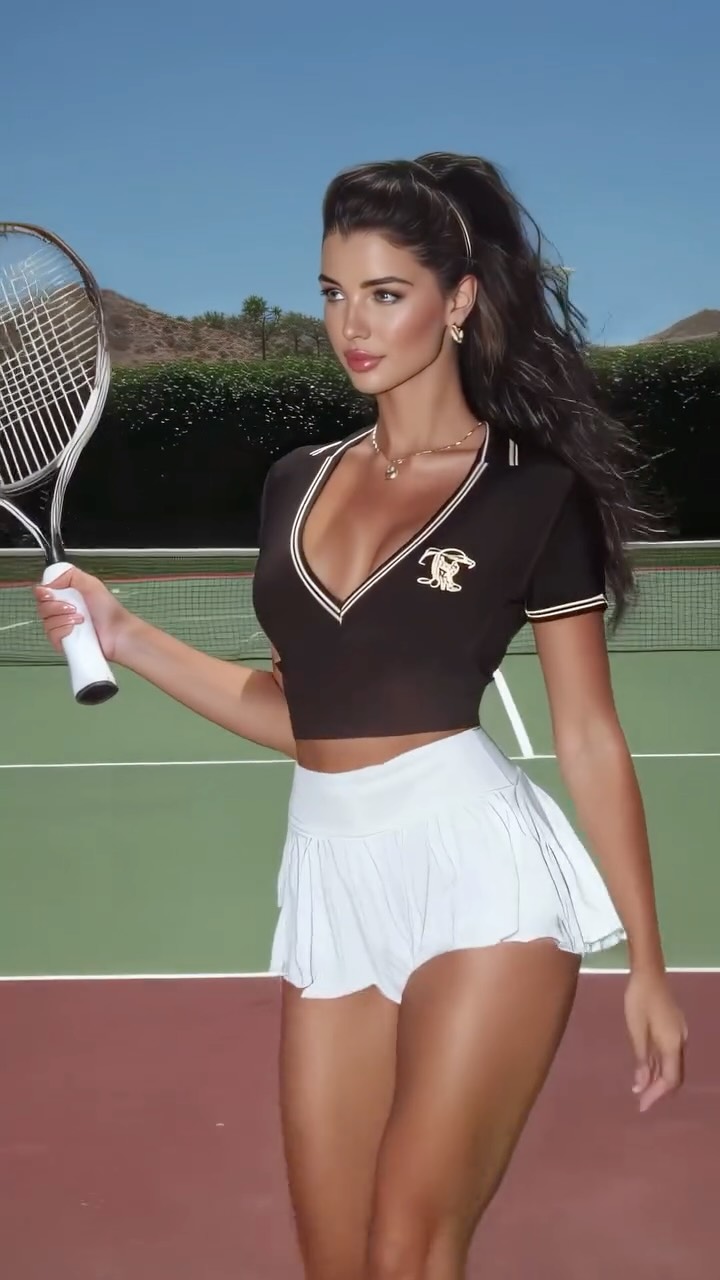
This image combines two high-performing content lanes: sport identity and fashion polish. Viewers instantly recognize tennis through the racket and court, but the pose and wardrobe styling push it into editorial territory. That hybrid is powerful because it attracts both performance-minded and aesthetic-minded audiences.
For creators, this is a repeatable format when you want a premium look without a complex set: one prop, one clear location, one high-contrast outfit.
Why It Works in Feed
The first mechanism is category clarity. You know the niche in one second: tennis. The second mechanism is silhouette quality. The racket, ponytail, and pleated skirt generate a recognizable shape even in thumbnail view. The third mechanism is tonal contrast: bright subject against darker hedges and dusk sky gives immediate separation.
| Signal |
Evidence (from this image) |
Mechanism |
Replication Action |
| Niche clarity |
Racket + marked tennis court + net |
Fast category recognition boosts stop-rate |
Always include one unmistakable sport prop and location marker |
| Editorial silhouette |
Cross-leg pose, raised racket, high ponytail |
Creates memorable outline in mobile scroll |
Direct pose with one diagonal prop line and one asymmetrical leg line |
| Color-block contrast |
Black/white outfit over green/red court |
Visual hierarchy stays clean and premium |
Use a two-color outfit against a multi-tone environment |
| Controlled polish |
Frontal fill on subject, subdued background |
Looks professional while remaining relatable |
Expose subject one stop above background in twilight conditions |
Where This Style Fits and How to Reuse It
Best-fit scenarios
- Sport-fashion creator profiles: Ideal for positioning identity between athlete and style curator.
- Racket sport campaigns: Works for tennis, padel, and pickleball adaptation.
- Seasonal fitness lookbooks: One-frame outfit storytelling with location authenticity.
- Brand partnership teasers: Clean enough for product tagging without visual clutter.
Not ideal
- Technique tutorials: Static pose does not show movement mechanics clearly.
- Indoor gym promotions: Outdoor court language may conflict with brand context.
- Team roster posts: Single-subject format lacks group narrative.
Transfers (exactly 3)
-
Padel adaptation
Keep: one-subject editorial pose, clean two-tone outfit, dusk lighting balance.
Change: tennis racket to padel racket, court texture to cage court.
Slot template (EN): {athlete model} on {racket-sport court}, one prop raised, editorial stance, twilight + frontal fill
-
Urban street sport version
Keep: silhouette-first composition and controlled contrast.
Change: court to rooftop or city mural wall, racket to skateboard/ball.
Slot template (EN): {single subject} with {sport prop}, clean vertical fashion composition, high subject separation
-
Morning training variant
Keep: one clear prop and static confidence pose.
Change: evening grade to cool morning light, outfit to soft neutrals.
Slot template (EN): {training portrait} at {location}, minimal palette, clear niche prop, natural soft daylight
Aesthetic Read: What Gives It Premium Energy
The image succeeds through layered simplicity. The wardrobe is high-contrast and graphic. The prop is singular and unmistakable. The location is specific but not cluttered. Every major visual element serves one role, so nothing competes with the main identity statement.
Another strong choice is the light strategy: background stays slightly darker, while subject skin and clothing remain bright and crisp. This creates a luxury editorial feel without needing complex post-production effects.
The pose also matters. A static but dynamic stance communicates control and confidence, which often outperforms chaotic action frames when the post objective is profile branding rather than match documentation.
| Observed |
Recreate |
| One clear sport prop |
Use a single racket as role marker near shoulder or torso line |
| Two-tone outfit against colored court |
Lock black/white wardrobe and keep environment colors natural |
| Subject-background separation |
Expose subject brighter than background by about one stop |
| Leg-cross editorial pose |
Use asymmetrical stance to avoid flat sports catalog posture |
| Twilight clean sky |
Shoot near dusk with low cloudless/soft-sky conditions |
Prompt Technique Breakdown
| Prompt chunk |
What it controls |
Swap ideas (EN, 2-3 options) |
| Identity chunk |
Niche recognition |
"tennis fashion portrait", "padel lifestyle athlete", "racket-sport model" |
| Wardrobe chunk |
Aesthetic positioning |
"black cropped polo + white pleated skirt", "minimal monochrome set", "retro varsity tennis look" |
| Pose chunk |
Energy and body line |
"cross-leg stance", "shoulder-held racket", "hip-shift editorial pose" |
| Lighting chunk |
Polish level |
"twilight ambient + fill", "golden-hour side light", "overcast clean daylight" |
| Environment chunk |
Credibility of scene |
"empty tennis court", "club court with hedges", "resort hardcourt backdrop" |
| Lens/composition chunk |
Feed readability |
"full-body 9:16", "medium-long portrait", "subject-dominant vertical frame" |
Remix Steps (Converge Fast)
Baseline lock
- Lock one sport prop + one static editorial pose.
- Lock subject brighter than background.
- Lock high-contrast wardrobe before experimenting with environment.
One-change rule
Change one variable at a time. If you test a new court background, keep pose and outfit fixed. If you test a new outfit, keep camera angle and light ratio fixed.
4-step iteration sequence
- Run 1: Nail court realism and prop placement.
- Run 2: Tune wardrobe detail and fabric fold accuracy.
- Run 3: Adjust lighting separation and skin highlight softness.
- Run 4: Final polish on pose elegance and background cleanup.