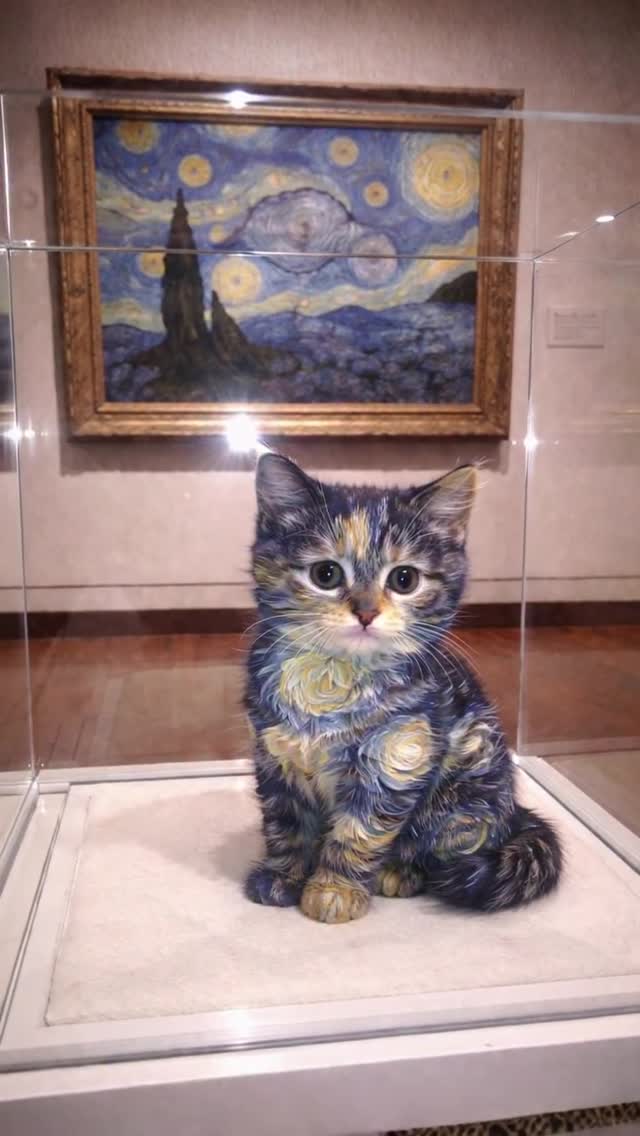
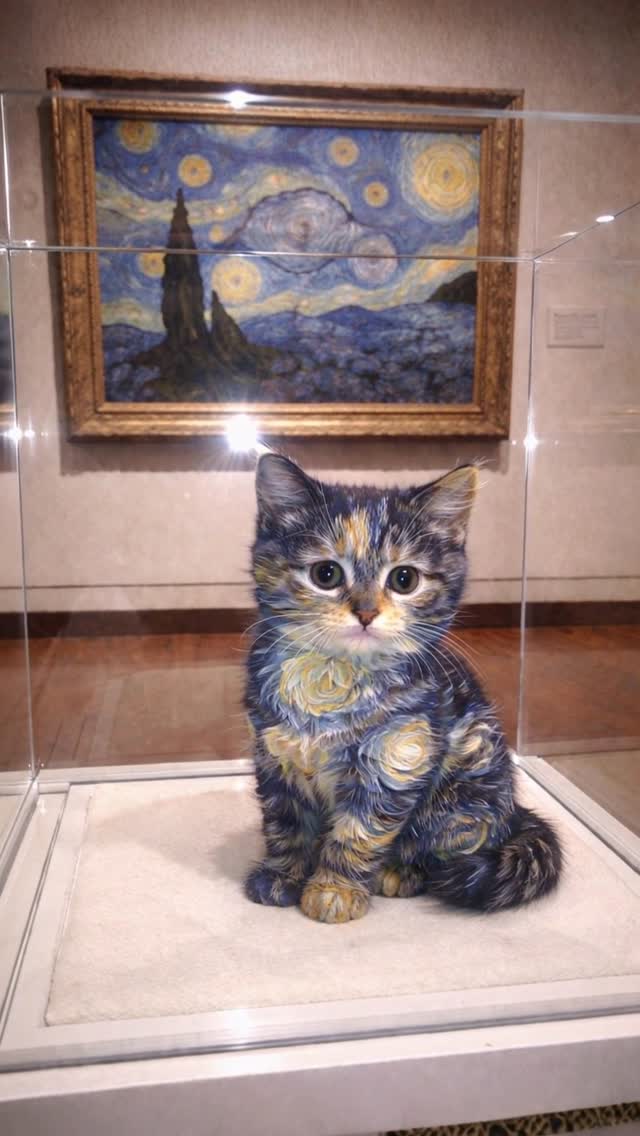
Starry Night Cat 🐾💫 #cat #kitten #starrynight
Starry Night Cat 🐾💫 #cat #kitten #starrynight
This image combines two high-performing attention systems: familiar art history and universal cuteness. The brain recognizes the Starry Night visual language immediately, but then notices it has been transferred onto a kitten inside a museum-like display. That mismatch creates a strong pause moment.
For creators, this is a practical format because it does not depend on complex storytelling. The concept is the hook. Viewers can understand the joke in one second, then spend extra seconds inspecting details (fur textures, reflections, painting reference), which improves retention and share probability.
The composition supports the idea cleanly. One subject, one background reference, one display frame. No clutter. When novelty is already high, simplicity is what prevents confusion and keeps engagement quality high.
| Signal | Evidence (from this image) | Mechanism | Replication Action |
|---|---|---|---|
| Reference familiarity | Starry-night palette and swirl motifs in both subject and backdrop | Recognition lowers entry friction, making people stop faster | Borrow one iconic art language and keep it visually obvious |
| Cuteness core | Centered kitten with large eyes and soft posture | Emotional warmth increases saves and shares | Use one high-empathy subject and avoid competing elements |
| Concept clarity | Single display case + single framed painting | Fast comprehension boosts watch-through in feed | Constrain scene to one hero object and one context anchor |
| Inspectability | Texture detail and glass reflections invite zooming | Micro-details increase dwell and replay behavior | Add one texture layer and one reflective layer intentionally |
Transfer Recipe 1: Classic Painting Pet Series
Keep: one pet, one art reference, one clean gallery context.
Change: painting style family (Impressionist, Cubist, Surrealist).
Slot template: {pet_subject} styled in {art_movement} textures inside {exhibit_scene}
Transfer Recipe 2: Object Instead of Pet
Keep: museum display framing and iconic style cues.
Change: hero subject (toy, fruit, sculpture).
Slot template: {object_subject} with {iconic_style} surface, gallery lighting, framed reference behind
Transfer Recipe 3: Reel Cover Variant
Keep: centered hero + clear background reference.
Change: add one short title line in safe top area.
Slot template: {style_transfer_subject} in {display_box}, {reference_art}, cover text: {3_word_hook}
The strongest aesthetic decision is controlled echoing. The background painting and the kitten fur share similar swirl logic, so the image feels intentional rather than random. Echoing motifs across layers is a reliable way to make AI-heavy visuals look curated.
The transparent case also adds credibility. Without it, the scene could read as a plain portrait. With it, the image becomes an "exhibit," which upgrades perceived concept value. That framing can increase comments because viewers start discussing idea quality, not just subject cuteness.
Color is tightly managed: deep blues and yellows dominate while neutrals keep balance. This prevents oversaturation chaos and helps the eye stay on the face. For creators, this is a reminder that viral novelty still needs strong color discipline.
| Observed | Recreate evidence |
|---|---|
| One clear hero subject with eye contact | Center the kitten and keep eyes sharp with catchlight |
| Motif continuity between subject and backdrop | Repeat style cues (swirls/colors) in both foreground and background |
| Vitrine geometry creates exhibit narrative | Use transparent case edges to frame and contextualize the subject |
| Warm interior with controlled reflections | Add soft glare points, avoid extreme reflective clipping |
| Prompt chunk | What it controls | Swap ideas (EN, 2-3 options) |
|---|---|---|
| "single kitten, seated, direct gaze" | Emotional anchor and subject clarity | "puppy seated" / "owl perched" / "rabbit upright" |
| "starry-night swirl texture mapping on fur" | Style-transfer identity | "watercolor splashes" / "cubist planes" / "ink-wash brushwork" |
| "transparent display case on pedestal" | Curation narrative and geometry | "museum plinth" / "gallery vitrine" / "white cube pedestal" |
| "framed reference painting in background" | Context legibility | "abstract canvas" / "renaissance portrait" / "minimal color field" |
| "warm museum lighting, gentle reflections" | Mood realism and material depth | "cool gallery light" / "dramatic spotlight" / "soft daylight gallery" |
This sequence protects quality while still giving room for creative range.