If only the tarmac became a luxury fashion show Art/Prompts by @ifonly.ai AI-generated (@midjourney • @higgsfield.ai • @klingai_official)
If only the tarmac became a luxury fashion show Art/Prompts by @ifonly.ai AI-generated (@midjourney • @higgsfield.ai • @klingai_official)
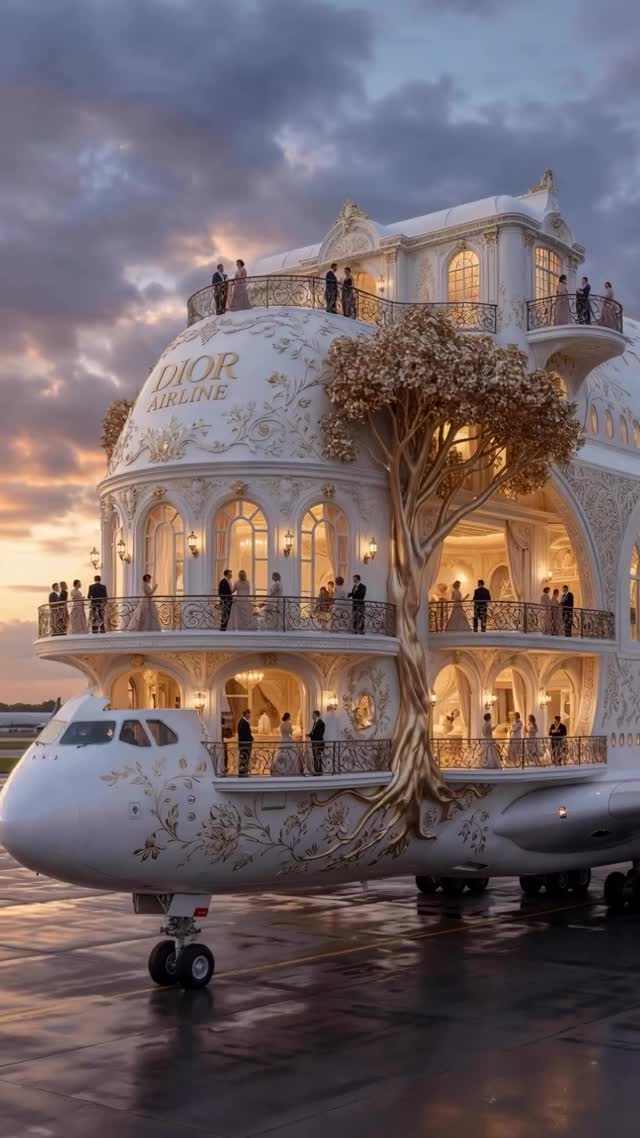
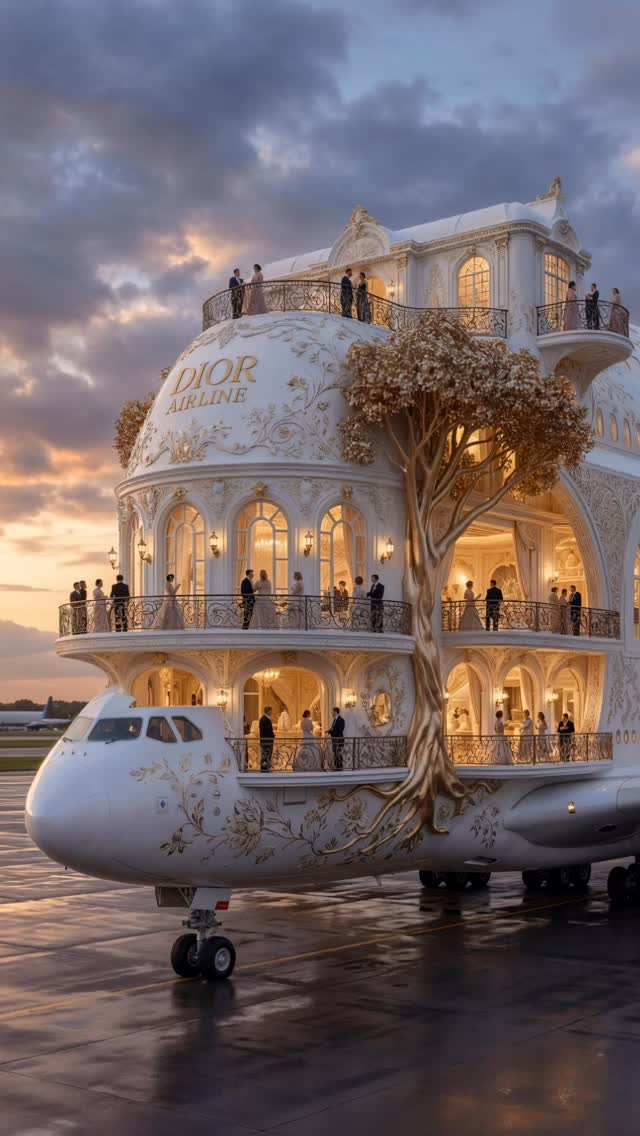
This frame is a perfect example of high-concept AI imagery that still performs like a social post. It is not “random fantasy.” It is a single, legible idea executed with extreme craft: turn a plane into a fashion venue. When the concept can be explained in one sentence, the image travels.
The hook is the contradiction: an aircraft (pure function) redesigned as architecture (pure ceremony). Your brain recognizes the plane instantly, then gets caught on the impossible details: multiple balcony levels, arched windows, warm interiors, and a literal tree grafted into the fuselage. That gap between “recognizable” and “impossible” is where curiosity lives.
Brand-coded ornamentation is the second engine. Gold filigree on ivory white and the “DIOR AIRLINE” wordmark anchor the fantasy in a real-world luxury language. Even if someone does not care about fashion, they understand the signal: premium, editorial, campaign-level execution. That makes the post feel worth sharing.
| Signal | Evidence (from this image) | Mechanism | Replication Action |
|---|---|---|---|
| One-sentence concept | Plane turned into a multi-story fashion building | Easy to explain, easy to repost | Design images that can be summarized in one line |
| Recognizable base object | Clear airplane nose, landing gear, tarmac context | Recognition creates instant entry | Start with a universally recognizable object (plane, train, hotel, mall) |
| Impossible detail density | Arches, balconies, warm interiors, many tiny guests | Detail creates dwell time and saves | Add 3–5 “scan zones” (windows, railings, crowds) that reward zoom |
| Luxury code | Gold filigree + ivory palette + editorial lighting | Signals premium taste and craft | Lock palette (ivory + gold) and lighting (dusk + warm practicals) |
The image sells because it keeps the physics consistent. The tarmac is wet, so it reflects. The sky is overcast, so the light is soft. Interiors glow warmly, so the arches feel inhabited. Believability is not realism; it is coherence.
The tree is the best detail because it is both symbolic and structural. It breaks the symmetry and gives the viewer a single “signature” to remember. If you want your images to spread, you need one signature element that people can point to when they share.
| Observed | Recreate | Why it matters |
|---|---|---|
| Recognizable airplane silhouette | Keep nose, landing gear, and fuselage proportions | Maintains instant recognition |
| Warm interiors inside arches | Add interior practical lights behind windows | Makes the venue feel alive |
| Wet ground reflections | Specify rain-slick tarmac and reflective sheen | Boosts cinematic depth |
| One signature anchor | Integrate one impossible element (tree, waterfall, staircase) | Improves memorability |
| Prompt chunk | What it controls | Swap ideas (EN, 2–3 options) |
|---|---|---|
| base object | Instant recognition | airplane; cruise ship; subway train |
| architectural cutaway | “Venue” readability | multi-level balconies; arched windows; terraces |
| ornamentation language | Luxury signal | gold filigree; embossed patterns; gilded trim |
| signature anchor | Memorability | integrated tree; waterfall; giant staircase |
| cinematic conditions | Believability and mood | dusk clouds; wet reflections; warm interior glow |
Baseline Lock: (1) base object silhouette (airplane), (2) cutaway architecture (arches + balconies), (3) dusk + wet tarmac lighting.
One-change rule: change only 1–2 knobs per run. Example sequence: