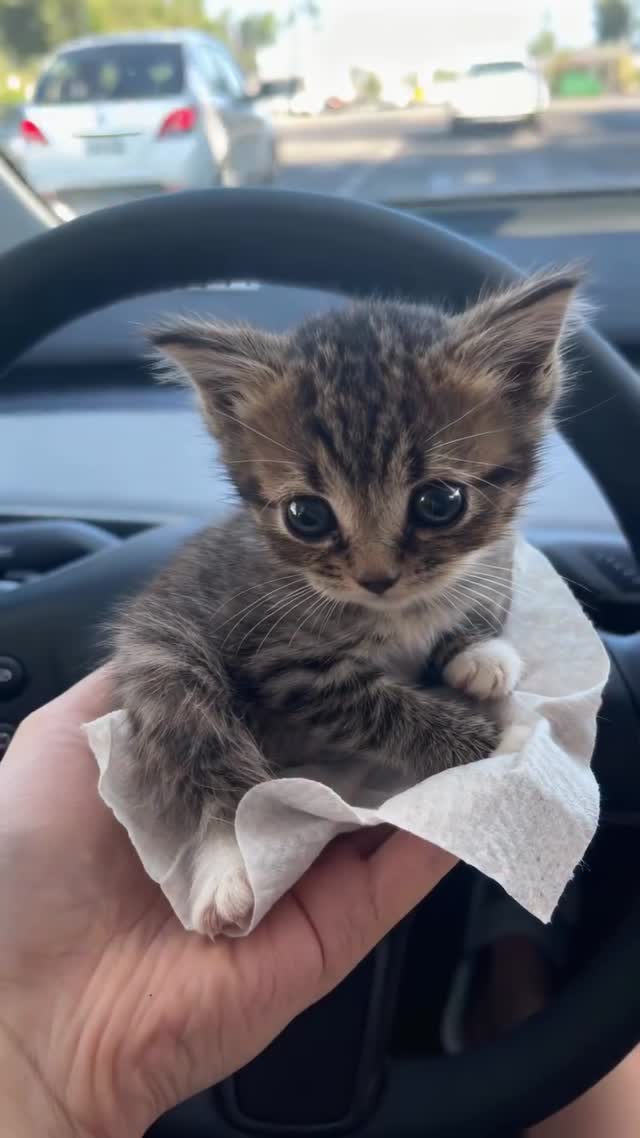
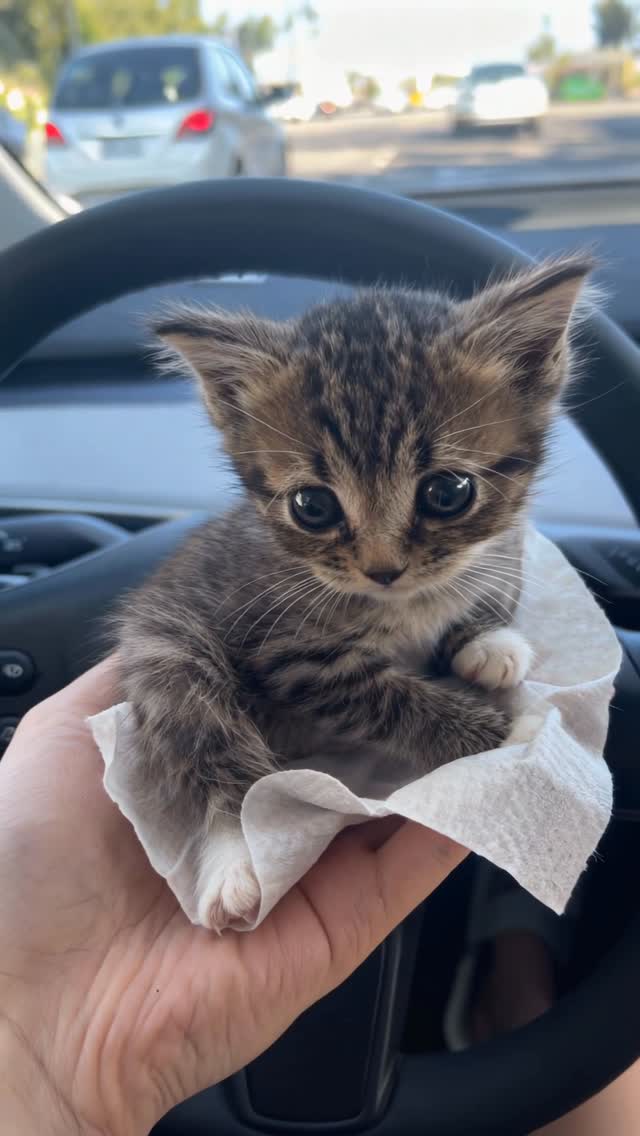
I hired a new navigator but he fell asleep 5 minutes into the trip 🚗💤.
He demands 5 stars for the ride or he screams. 0/10 map skills, 100/10 cuteness. Driving this tiny potato home is my new favorite hobby 🥔🥺.
Welcome to the family, little hitchhiker! 😹
#kitten #kittenrescue #navigator #cutecat #tinycat
Why cat_vlog365's Kitten Navigator Went Viral and the Formula Behind It
This image performs for a straightforward reason: emotional immediacy. The kitten’s eyes dominate the frame, and the hand scale instantly communicates how small and vulnerable the animal is. That combination triggers protective, affectionate reactions that drive shares and saves.
The second growth mechanism is context realism. This is not a studio pet portrait. The steering wheel and blurred street tell a real-life moment story, which makes the post feel authentic rather than manufactured. Authenticity is a major multiplier in pet content.
Finally, the composition is efficient. One subject, one support hand, one recognizable environment cue. Viewers process everything in under a second, which is exactly how high-performing feed content behaves.
Signal Table
Signal
Evidence (from this image)
Mechanism
Replication Action
Baby-scale contrast
Kitten fits fully in one hand
Amplifies emotional response and share intent
Include a familiar scale reference (hand, cup, blanket fold)
Direct eye lock
Kitten looks straight into camera
Creates immediate connection with viewer
Capture at eye level and wait for eye-contact moment
Real-world context cue
Steering wheel and windshield scene visible
Builds authenticity and narrative
Keep one environmental marker that explains the moment
Low-clutter framing
Tight crop and soft background blur
Focus stays on emotional subject details
Use close framing and shallow background focus
Use Cases & Transfers
Pet rescue storytelling: Strong fit for before/after narratives. Change: add follow-up healthy-progress frame.
Daily pet diary accounts: Perfect for short emotional updates. Change: keep same framing style for series consistency.
Brand-safe wholesome content: Works for community engagement campaigns. Change: pair with simple caption CTA (“name ideas?”).
UGC for pet products: Good for trust-building intros. Change: add one subtle product only in next slide, not hero frame.
Multi-pet behavior analysis: Single subject setup limits interaction context.
Landscape/travel storytelling: Tight crop prioritizes subject over location.
Three Transfer Recipes
Keep: Hand-scale reference + direct eye contact. Change: Pet type (puppy, rabbit, hedgehog). Template:{tiny pet in hand} {close eye-level shot} {one real-life context cue}
Keep: Tight center crop and soft background blur. Change: Setting cue (car, couch, vet room). Template:{single subject close-up} {recognizable environment marker} {natural daylight}
The aesthetic strength is micro-emotion detail: large eyes, tiny paws, soft fur texture, and gentle hand support. The steering wheel arc acts as a visual frame behind the kitten, helping center attention without adding distraction. Background blur keeps the scene readable but secondary. This is a high-performing pet format because it feels accidental in the best way: real, brief, and emotionally clear.
Observed
Recreate
Evidence cue
Subject fills most of frame
Crop tight around pet face and front paws
Immediate emotional read on mobile
Human-hand support visible
Include palm/fingers beneath pet safely
Scale and care narrative become obvious
Single context marker
Keep one recognizable object (steering wheel)
Authenticity without clutter
Soft natural light
Use window daylight, avoid direct flash
Fur texture and eye highlights remain gentle
Prompt Technique Breakdown
Prompt chunk
What it controls
Swap ideas (EN, 2-3 options)
“tiny tabby kitten with large eyes”
Core emotional subject identity
“tiny calico kitten”, “small black kitten”, “cream kitten”
“resting on human hand with tissue”
Scale cue and care narrative
“wrapped in towel”, “in palms with blanket”, “held in soft basket”