Title
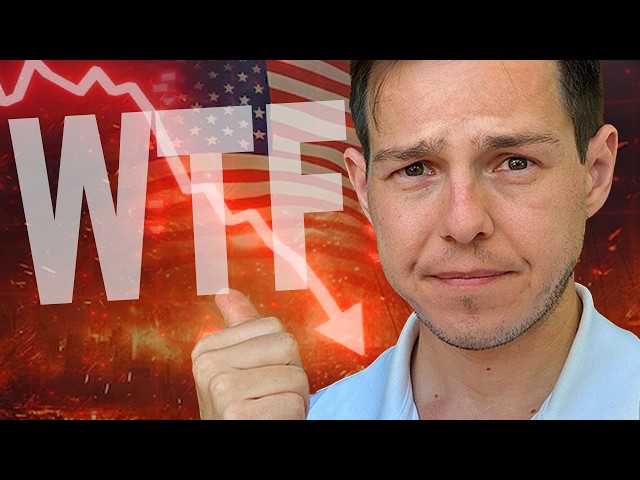
Trump Just Triggered A Market Selloff - WTF Is Happening To Greenland?!
Title Decode
Thumbnail X-Ray
Hero's Journey
Emotion Rollercoaster
Money Shots
Content Highlights
Full Article
A Breakdown of Graham Stephan's News-Jacking Structure
The Cold Open
The News Montage
The Setup
Stakes Escalation
Reason 1: Defense
Logic Breakdown
The Tech Angle
Tech & Economy Link
The Ultimatum
Conflict & Consequence
Gemini Integration
Monetization Spot
Market Outcomes
Investor Psychology
The Prediction
The Alpha / Insight
Conclusion
Reassurance & Outro
Emotion-Driven Narrative Analysis
Urgency
Panic Induced Hook
Curiosity
Contextual Bridge
Security
Monetization Flow
Empowerment
Pattern Recognition
What This Video Nailed for Monetization
Sponsor Magnetism
Product Placement Craft
Long-Term Value
What Could Sponsors Pay?
Trump Just Triggered A Market Selloff - WTF Is Happening To Greenland?!
Structure Breakdown
Psychological Triggers
Formula Recognition
SEO Potential
Visual Design Breakdown
Composition Analysis
Emotion Expression
Color Strategy
Text Strategy
Design Formula
Title-Thumbnail Synergy
Content Highlights
The 'News-Reel' Hook Authority
Contextual Bridging Technique
The 'Playbook' Framework
Solution-Based Sponsor Pivot
Introduction to Trump's Push for Greenland and Potential Trade War
President Trump is not backing down from his push to take over Greenland. 'We have to have it. They have to have this done. ' European countries are reportedly considering a trade bazooka against the US for threatening tariffs over Greenland. 'My sense is if they want to double and triple down, this president never backs off. ' Will the Europeans negotiate or retaliate? What's up, guys? It's Graham here. So, you better buckle up because time's running out. Starting February 1st, brand new tariffs are set to go into effect across Europe. All because the United States wants to acquire a country that most people didn't expect, Greenland. That's right. In a completely unprecedented turn of events, Greenland is quickly becoming one of the most strategic acquisitions of the 21st century. And despite the media covering this like crazy, most people are completely unaware of what's happening. How this is causing a rush into safe haven assets like gold and silver and how this is about to impact everything from the price of everyday items, the stock market, and even the value of the US dollar.
That's why we urgently need to discuss exactly what's going on, why Greenland is considered a national security issue, and how this could start the beginning of a much bigger trade war. Because the reality is this next week is going to decide whether or not the rest of the world plays along or strikes back.
Neutrality Disclaimer and Sponsor Mention
Although before we start, I just have to say that I do my best to keep these videos as neutral and factually accurate as possible without throwing politics into the mix. So, if you appreciate that, it would mean the world to me if you hit the like button or subscribed if you haven't done that already. That's all I ask for. And as a thank you for doing that, here's a picture of a chameleon. So, thanks so much. And also, big thank you to Gemini for sponsoring this video. But more on that later.
Strategic Importance of Greenland: National Security
All right, so first let's talk about buying Greenland. To start, let's just get this out of the way. I see this chart being posted non-stop. And even though there is truth to the fact that Greenland sits conveniently between the United States and Russia, that's not the full picture. So to get a full understanding of what's actually happening, let's begin with one, national security. As of now, Greenland is home to a major US defense installation with roughly 150 American troops stationed there. And it's considered a key early warning location for anything coming over the Arctic. However, Trump argues that this isn't enough and that if Russia or China ever tried to expand their influence on the region, the United States can't afford to be reacting after the fact. In his view, Greenland and Europe can't realistically defend it on its own without the help of the US government. So, the choice is simple. Either the US takes over control now or it risks watching rivals take over after the fact which leads us to two rare earth minerals.
Strategic Importance of Greenland: Rare Earth Minerals
The fact is Greenland currently holds one of the largest untapped reserves of rare earth minerals in the world and that's needed to make everything like electric vehicles, AI chips and advanced electronics. Now as of now, China largely dominates this sector and they've mostly controlled what goes in and out of their own country. But if Greenland is acquired, that would give the United States mineral independence almost instantaneously and would shift the power balance substantially. That also leads us to three, increased shipping routes.
Strategic Importance of Greenland: Shipping Routes and Current Status
The thinking here is that if the United States had complete control, Greenland could be used as a strategic checkpoint for trade and military movement, especially as new Arctic routes open up. However, there is a problem. Greenland is currently a semi-autonomous territory under Denmark. And while the US has had a lot of military presence there for a long time, obtaining ownership would be a historic shift in international law and global world order. So yeah, Greenland is strategic. But the way you get it is when everything begins to completely fall apart. And that is what leads me to the ultimatum.
Trump's Ultimatum and Tariff Plan
On January 17th, Trump accused European allies of sending their troops to Greenland for purposes unknown. And in response to that, Trump announced a brand new phase tariff plan that would go into effect February 1st. Not against our enemies, but against our European allies. Or in this case, he presented a 10% import tax that would soon be going into effect for Denmark, Norway, Sweden, France, Germany, the UK, the Netherlands, and Finland. Then from there, if an agreement isn't reached by June 1st for the acquisition or purchase of Greenland, the tariff would increase from 10% all the way to 25%. Why? Well, Trump argues that these countries benefit from US protection. And if they block a deal that is essential to national security, they should feel the consequences.
European Response to Tariff Threats
Of course, in response to this, European countries called it completely wrong and unacceptable and threatened retaliation of their own, known as a trade bazooka. This could theoretically block some of America's access to European markets or impose export controls, saying that tariff threats undermine transatlantic relations and risk a dangerous downward spiral. Of course, Trump has more recently doubled down, saying that we have to have it. To which France's finance minister replied, 'We are living through uncharted territories. We've never seen this before. An ally, a friend of 250 years, is considering using tariffs as a geopolitical weapon. ' Even Germany went on record to say that a line had been crossed. You'll understand that today I'm not saying exactly what will happen, but one thing must be clear. Europe must be prepared.
Logistical Issues with Acquiring Greenland
Separate from that, logistically, there's also the issue of Greenland itself where even though it is technically under the control of Denmark, the Danish Constitution does not allow the sale of a territory without a referendum from Greenland's people. So even if Denmark agrees to sell Greenland to the United States, the people of Greenland also have to agree with it. This is why the markets are reacting like we're about to see another trade war. Stocks are declining. The dollar is selling off. Precious metals like gold and silver are skyrocketing to new highs. And if Europe actually fires back with that trade bazooka, what happens next isn't just a trade war. It's a global chain reaction that's about to affect prices, supply chains, and your investments faster than anyone could expect.
Personal Finance Advice and Gemini Sponsor Promotion
So, what would this mean for you, your money, and your portfolio? Although before we go into that, I just have to say that if you want to be smart with your money, today just really reinforces one thing. You cannot rely on the economy to come save you. Instead, it's going to take control, discipline, and consistency over what you're already spending. That's why I think one of the biggest optimizations you can make this year is to make sure you're getting rewarded for the money you're spending anyway. And one of the ways I'm doing that is with our sponsor, the Gemini credit card. For those unaware, this could earn Bitcoin back on every single purchase. Turning my everyday expenses into a potential investment, or in this case, you get to earn up to 4% back on transportation, 3% back on dining, 2% on groceries, and 1% on everything else with no annual fee. Plus, Bitcoin rewards earned and held in the Gemini credit card have appreciated 279% on average. This gives you exposure to assets that could be compounding over time versus traditional rewards which sound good on paper, but in practice, a huge percentage of those points are never redeemed efficiently, if at all. That's why this solves the problem entirely, and it comes in six unique stainless steel colors. You can get black, silver, rose gold, Bitcoin orange, XRP, or the brand new Salana edition. Not to mention, if Bitcoin isn't your thing, you can also select from more than 50 different cryptocurrencies that you could switch to at any time. Feel free to check out the description for more information on rates and fees and see if you're eligible with no impact to your credit score. So, if you'd like to instantly start earning Bitcoin or select from dozens of other options, get started today at gemini.
com/gra with the link down below in the description. And for a limited time, you could get $200 with the Bitcoin when you spend $3,000 in the first 90 days. So, check out the information down below. Thank you so much, and now let's get back to the video.
Market Reactions and Safe Haven Investing
All right. Now, in terms of what's happening in the markets and how this is realistically going to play out, let's talk about safe haven investing. At the time I'm filming this video, gold has jumped to an all-time high of more than $4,700 an ounce. Silver followed closely behind at nearly $100 an ounce. And here's the key point that everyone needs to be made aware of. When the world's largest economy threatens its own allies with the trade war, investors stop taking chances. They move their money out of the US dollar and the euro and they move into assets that historically have done well when everything starts cracking like precious metals. Basically, in this case, gold and silver trade like insurance. The market doesn't like a lot of uncertainty. And when you have a massive event like this that could potentially spark a downward spiral that gets worse and worse, investors hedge with a globally recognized store of value that they could trust. But coincidentally, that also leads to a sell-off in the stock market. In this case, once tariffs enter the equation, the stock market stops asking which companies are going to be growing the most and starts asking which companies are going to get hit first. The reality is when it comes to a trade war, there are always going to be winners and losers. And in this case, the biggest losers are going to be the companies who are most reliant on cheap imports, supply chains, and.
Market Impacts of Tariffs on International Customers
International customers. Why? Well, the second tariffs go into effect, costs go up. And as soon as those costs go up, companies either absorb the loss themselves or they pass it on to the customer. Either way, earnings usually take a hit and as a result of that, the stock price declines.
European Vulnerability and Cascading Market Effects
Now, in this specific case, Europe could remain incredibly vulnerable because if Europe retaliates, we could easily see costs increase across automakers, luxury goods, industrial manufacturing, and even pharmaceuticals. And once markets begin to sell, usually there is a cascading effect across everything, which leads to a downward cycle of a falling US dollar.
Uncertainty and Erosion of Confidence in the US Dollar
Look, in a normal market, anytime there's uncertainty, money flows into the US dollar as a safe store of value. But in this situation, investors are watching the United States threaten their own allies. So, they're starting to wonder if the US is willing to destabilize their relationship with Europe over Greenland, what happens in the future if the disagreement is even bigger. This is causing some trust and confidence in the United States to slowly chip away. Our dollar is purchasing less and less every year you hold on to it. And once people start losing faith in our entire system, money flows out into alternative assets or other countries who pick up where we left off.
Likelihood and Options for Acquiring Greenland
So with all of this going on, we have to ask ourselves, what is the realistic likelihood that Trump actually acquires Greenland? Well, when it comes to this, there are really just three options. The first one being the US purchases Greenland outright. In this scenario, the US pays Denmark, Denmark signs the deal, the deed gets transferred, and American flags go up. But again, like I said earlier, for this to be legally binding, the people of Greenland would need to agree, which is highly unlikely. And even though nothing is impossible, I would say realistically this probably isn't going to happen. Now, option two is that the United States gets to control Greenland without owning it. Here's the thing. Even though Trump says we have to have it, that doesn't necessarily imply ownership on paper. This could simply just mean he wants military expansion, mineral agreements, Arctic bases, strategic control, or a footprint that makes it US controlled in everything except for the ownership. To me, this is probably the most realistic of happening, especially if it comes with a security agreement or some sort of long-term protection. And I would say this could end up happening at some point in the future. Or we just have option three. nothing happens and within a few months everyone's forgotten about it and has moved on. As we've all seen time and time again, a lot of these have just turned into a negotiation tactic where Trump asks such a huge thing up front and then eventually compromises to something that he wanted from the very beginning.
The Trump Playbook
To me, all of this is just another line item in what's called the Trump playbook. Huge credit goes out to the Cobessie letter on Twitter for creating this. I'll link to their entire article down below in the description because it's just too good not to share. But they've pointed out that Trump's entire plan could be broken down into 13 steps that so far over the last year have been incredibly accurate. And if you're curious how it works, here you go. One, Trump posts a cryptic message signaling tariffs on a specific country or sector. Two, Trump then announces a large new tariff that catches people off guard. Three, over the weekend, Trump doubles down while the markets are closed. Four, over that same weekend, other countries respond or double down on their claim. Five, on Sunday night, stock market futures open lower. Six, when the market opens, Trump applies even more pressure, causing stocks to fall even further. Seven, after another few days, investors begin to buy the dip and the stock market begins to recover. Eight, on the following weekend, Trump posts that discussions are underway and that he's working towards a resolution. Nine, that Sunday evening, stock market futures open even higher as optimism begins to increase. 10.
The Trump administration then announces that a new agreement is in the works. 11. Over the next few weeks or months, more progress is made. 12. A trade deal or resolution is finally announced. And 13, the process is repeated again. Basically, I think this is pretty much what we could expect.
Historical US Interest in Greenland
Although, in terms of what this means for you, what you could do about this, and what this means for all of your investments and the US dollar, here's what you need to know. First of all, I think it's important to clarify that the interest in Greenland is really nothing new. Like even back in the 1860s, Andrew Johnson attempted to acquire it with the intention of encouraging Canada to also join the United States, but that failed. Then again, in World War II, the United States applied the Monroe Doctrine to be able to set up troops in Greenland during a time when Denmark was occupied by Germany. Shortly after, in 1946, President Truman reportedly offered $100 million of gold to purchase Greenland outright, but Denmark declined, probably because it was a bit of a lowball offer. But even after that, various presidents continued to create a stronger military infrastructure in Greenland. And in 2019, Trump expressed his interest to buy it as a real estate deal. But again, as you would expect, Denmark declined.
Past US Territorial Acquisitions
Now, even though this might sound outright crazy to be able to purchase a country, keep in mind back in 1803, Thomas Jefferson bought huge tracks of lands from France for $15 million in the Louisiana purchase. In 1867, Andrew Johnson paid $7. 2 million for Alaska from Russia. In 1917, Woodra Wilson bought the Danish West Indies for 25 million, renaming it the US Virgin Islands. But again, like I said, even if Denmark does agree to sell Greenland to the United States, the residents of Greenland would also have to agree to it, which I just believe is pretty unlikely of happening.
Negotiation Tactics and Likely Outcomes for Greenland
That's why I think all of this is purely just a negotiation tactic to eventually gain a little more control over Greenland for probably military expansion or to sign a land lease so that we get some sort of rights for x number of years for x number of dollars.
Investment Advice Amid Market Volatility
From my experience, usually the market freaks out for a couple days. Good investors keep buying the dip. they hold and long-term it usually is just worked out. Now, yes, I do worry about eroding confidence and trust in the United States and that people pull out their money from the US dollar because they deem us to be riskier. But again, if the past has shown us anything, it's that long-term it all just tends to work itself out. That's why I'm just staying the course. I keep buying the dip. I do not sell.
Call to Action
And no matter what, I hit the like button and I subscribe if you haven't done that already. Thanks so much for watching. Feel free to leave a comment down below. I am currently at my computer answering comments. So, if you want a reply from me, I will do my best.