UGC Hooks That Convert: 12 3-Second Formulas (2026)
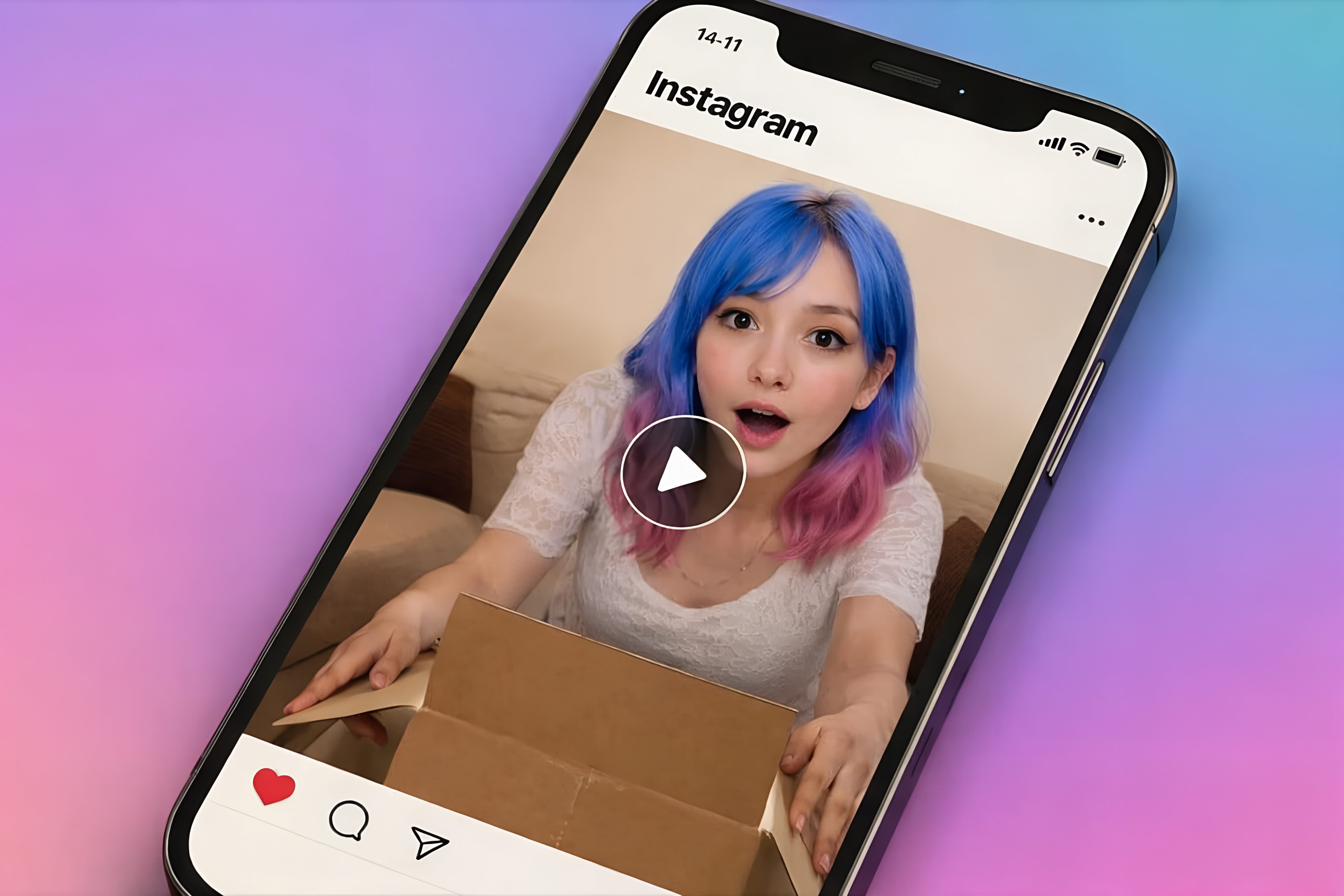
12 plug-and-play formulas + proof cues + bridge lines + a scorecard to win the first 3 seconds
|
16 min
Quick Answer
A UGC hook converts when it does three things fast: it's instantly clear, it implies a specific proof moment you can show next, and it sets one expectation for the rest of the ad. Use the 12 formulas below, then score your hook so the next line naturally becomes proof, not filler.
Key Takeaways
Hooks don't convert by themselves. A hook is a promise your proof must pay off.
Specificity beats cleverness. Add one constraint (time, cost, niche, or "without X").
Every hook needs a proof cue. If you can't name the proof moment, rewrite.
Write bridge lines. The second sentence is where most hooks die.
Use the scorecard to make “good” measurable. Fix low-scoring items before generating variations.
Further reading (choosing AI video tools)
If you\'re turning hooks into testable short-form variations, the tool choice impacts realism, motion stability, and control. We published a 2026 comparison:
Reference
If your UGC ads aren't converting, it's rarely "the product." It's the first line.
Most hooks fail because they're either vague ("make better ads"), or they grab attention and then drift into context with no proof.
This guide fixes that with a simple system: write hooks that lead into proof, not hype. You'll get 12 formulas you can copy/paste, plus bridge lines (what to say right after the hook), a scorecard, and a one-variable testing method.
We'll reference platform-level creative guidance and ad disclosure basics (FTC) so your hooks stay effective and safe.
What "A Converting UGC Hook" Actually Means
A "good" hook is not the same as a "converting" hook.
A viral hook can win attention by being weird, cinematic, or mysterious.
A converting hook wins attention by being specific, then immediately earns trust with proof.
A converting UGC hook is a short first line that is easy to understand, tightly scoped (one promise), and designed to be proven immediately by the next shot or sentence.
If your hook promises a test, the next line must show the test. If your hook promises a before/after, the next line must show the before/after. Conversion comes from alignment, not surprise.
The Hook-to-Proof Rule (Why Most Hooks Don't Convert)
The fastest way to write better hooks is to stop treating hooks as standalone lines.
Think in a 3-beat unit:
Hook (0-3s): the promise + one constraint
Proof (3-10s): the evidence
CTA: one action
If you can't describe your proof moment in one sentence, don't write the hook yet. Pick your proof first.
The One-Constraint Rule (Instant Specificity)
If your hook feels generic, add exactly one constraint:
Time: "in 7 days", "in 10 minutes", "in 3 clicks"
Cost: "under $50", "without hiring creators"
Niche: "for Shopify skincare", "for fitness coaches"
Without X: "without filming", "without complicated edits"
This is the simplest way to move from "sounds like marketing" to "sounds like a real person with a real problem."
The Anatomy Of A Hook That Converts
A converting hook is usually a small structure, not a clever sentence.
Use 4 components (you don't need all four every time, but you usually need 2-3):
Pattern interrupt: why this frame is worth attention.
Constraint: time/cost/niche/without X.
Proof cue: "watch me", "here's the screenshot", "here's the before/after".
Micro-CTA: a tiny command that keeps momentum.
The 12 UGC Hook Formulas (With Templates + Proof Cues)
1) Pain-Killer: "Stop Doing X"
Best for: obvious frustration; fast product categories.
Template:
- "Stop {bad_action}. Do {better_action} instead."
- "If you're {bad_action}, you're wasting {time|money}."
Examples:
- "Stop guessing your hooks. Use this checklist."
- "If you're writing vague hooks, you're burning budget."
Proof cue (what you show next): hook scorecard + a rewrite example.
Bridge line (what you say next): "Here's the exact rewrite that fixes it."
2) Proof-First: "I Tested It So You Don't Have To"
Best for: when you can show a side-by-side or artifact.
Template:
- "I tested {A} vs {B}. Here's what won."
- "I rewrote this {n} ways. This one worked."
Examples:
- "I rewrote one hook 12 ways. Here's the winner."
- "I tested 'curiosity' vs 'proof-first' hooks. Watch this."
Proof cue: split-screen of hook A vs hook B.
Bridge line: "Look at the first three seconds."
3) Contrarian: "Everyone Says X, But That's Wrong"
Best for: crowded markets with cliche advice.
Template:
- "Everyone says {belief}. That's wrong."
- "The advice to {belief} is why your ads don't convert."
Examples:
- "Everyone says 'be shocking.' Convert with proof instead."
- "Curiosity hooks aren't the problem. No payoff is."
Proof cue: a fast rule + an example rewrite.
Bridge line: "Here's the structure that fixes it."
4) Identity: "If You're {Persona}, Do This"
Best for: niche products; clear buyer identity.
Template:
- "If you're a {persona}, stop doing {bad_action}."
- "For {persona}: do this before you write hooks."
Examples:
- "If you run TikTok ads, steal these 12 hooks."
- "If you sell skincare, stop starting with benefits."
Proof cue: show the 12-formula menu quickly.
Bridge line: "Pick one formula and swap the brackets."
5) Mechanism: "The Real Reason This Works"
Best for: products with a simple mechanism you can explain.
Template:
- "This works because {mechanism}."
- "The real reason {outcome} happens is {mechanism}."
Examples:
- "Hooks convert when the proof is obvious."
- "Your hook fails because it sets the wrong expectation."
Proof cue: explain the hook->proof rule with one example.
Bridge line: "Let me show you the proof cue."
6) Reframe: "It's Not {Thing}. It's {Thing2}."
Best for: when audience blames the wrong variable.
Template:
- "It's not {tool}. It's {first_line}."
- "Your problem isn't {X}. It's {Y}."
Examples:
- "It's not your product. It's your hook-to-proof gap."
- "It's not your editing. It's your first sentence."
Proof cue: show a mismatch example (hook promises A, proof shows B).
Bridge line: "Watch how this hook lies by accident."
7) Objection Flip: "You Think {Objection}. Here's the Fix."
Best for: skeptical audiences.
Template:
- "If you think {objection}, do this instead."
- "You don't need {resource}. You need {constraint}."
Examples:
- "If you think hooks are 'cringe,' use this format."
- "You don't need fancy edits. You need one constraint."
Proof cue: show a "soft" hook template.
Bridge line: "Here's the non-salesy version."
8) Risk Reversal: "Worst Case, You Still Win"
Best for: low-friction offers; trials; free tools.
Template:
- "Try this for {time}. Worst case: {fallback benefit}."
Examples:
- "Try this hook for 7 days. Worst case: you learn fast."
- "Use this scorecard once. Worst case: you stop guessing."
Proof cue: show the scorecard quickly.
Bridge line: "Here's the 30-second checklist."
9) Demo-First: "Watch This"
Best for: strong visuals; product demos; before/after.
Template:
- "Watch this before you scroll."
- "Look at this first."
Examples:
- "Watch this hook rewrite in 10 seconds."
- "Look at the proof cue, not the wording."
Proof cue: show the demo immediately.
Bridge line: "Here's what changed."
10) Time/Cost Constraint: "Do X In Y"
Best for: productivity; money-saving offers.
Template:
- "Do {result} in {time}."
- "Get {result} under {cost}."
Examples:
- "Write hooks in 10 minutes, not 2 hours."
- "Test 12 hooks without reshooting anything."
Proof cue: show the one-variable matrix.
Bridge line: "Here's the exact workflow."
11) Comparison: "Don't Say {Bad}. Say {Better}."
Best for: teaching; quick wins.
Template:
- "Bad hook vs converting hook. Watch this."
- "Don't say {bad}. Say {better}."
Examples:
- "Bad: 'Improve your ads.' Better: 'Fix your hook in 10 minutes.'"
- "Bad: 'You need better creative.' Better: 'Your first line is vague.'"
Proof cue: show the rewrite ladder.
Bridge line: "Here's the one word I changed."
12) Curiosity With Payoff: "Nobody Tells You..."
Best for: ONLY when payoff is immediate (3-5s).
Template:
- "Nobody tells you {truth}. Here it is."
Examples:
- "Nobody tells you: hooks need proof cues."
- "Nobody tells you: your second line kills retention."
Proof cue: show the anatomy diagram immediately.
Bridge line: "Here's the proof cue you're missing."
What To Say Right After The Hook (Bridge Lines)
Most hooks don't fail at the hook. They fail at the second sentence.
Your bridge line should do one thing: move directly into proof.
Bridge line examples (copy/paste):
- "Here's the exact template."
- "Watch the next five seconds."
- "Here's the before and after."
- "Here's the screenshot."
- "Here's the checklist I use."
- "I'll show you the proof first."
If your hooks feel like they "work" but conversions don't move, fix the second line: replace context with a bridge line that points directly to proof.
The Hook Scorecard (Write Less, Score More)
Score each hook 1-5. If any category is a 1-2, rewrite before generating more.
Scorecard categories:
- Clarity: can someone summarize it instantly?
- Specificity: does it have one constraint?
- Proof alignment: can you name the next proof moment?
- Claim risk: is it believable and safe?
- Voice authenticity: does it sound like a person?
- Bridge line: does the next sentence point to proof?
Troubleshooting: Why Your Hooks Aren't Working
Problem | What it looks like | Fix |
|---|---|---|
Vague promise | "Make better ads" | Add one constraint (time/cost/niche/without X) |
No proof cue | Hook sounds cool, then rambles | Pick proof first, then write hook |
Angle stacking | 3 promises in one line | Pick one outcome, cut the rest |
Overhyped tone | Feels like a brochure | Rewrite in a text-message voice |
Hook-proof mismatch | Hook promises A, proof shows B | Rewrite hook to match the proof you can show |
Weak second line | "So I tried this..." filler | Replace with a bridge line that points to proof |
Compliance Notes (Don't Convert With Misleading Hooks)
Further reading (UGC creator end-to-end)
If you want "authentic voice" to be repeatable (and compliant), you need more than hooks: pick a track (phone-first / AI-assisted / fully AI), build a portfolio, set rates, pitch brands, and align with FTC / EU AI Act / platform rules.
Reference
Hooks can accidentally become misleading when they imply outcomes you can't prove or when they frame content like a real-person endorsement.
Don't invent results.
Don't fake testimonials.
Want a creator playbook (portfolio, rates, pitching) to make authenticity repeatable?
If you're using endorsements/testimonials, follow disclosure rules in your jurisdiction.
US baseline: FTC endorsement guides
FAQ
What is a UGC hook?
A UGC hook is the first line (spoken or on-screen) that earns attention and sets the expectation for what proof is coming next.
What makes a UGC hook convert (vs go viral)?
Conversion hooks are specific and proof-aligned. Viral hooks can be mysterious; converting hooks make the proof inevitable.
How long should a UGC hook be?
A useful default is 6-10 words for spoken hooks and on-screen captions.
What should you say right after the hook?
Use a bridge line that points directly to proof: "Here's the exact template," "watch the next five seconds," or "here's the before/after."
How many hook variants should you test?
Start with 6-12 per angle. Test hooks before you change editing or end cards.
Should you use curiosity hooks?
Only if you can pay them off immediately with proof. Curiosity without payoff causes drop-off.
Do hooks differ for TikTok vs Reels vs Shorts?
The core rules are the same. Adjust pacing and caption style for the platform, but keep hook->proof alignment constant.
What's the biggest mistake people make with UGC hooks?
Promising one thing, then spending 10 seconds on context. Show proof sooner.
Good vs Bad UGC Ads (Quality Checklist)
Use this table as a final audit before you test hooks. It's designed to catch "looks like UGC" but "doesn't sell" issues.
Structure inspired by Zeely's "UGC ads in 2026" guide (linked in Sources).
Creative element | Good UGC ads | Poor UGC ads |
|---|---|---|
Hook (first 3 seconds) | One clear promise + one constraint + a proof cue ("watch me..." / "here's the screenshot...") | Starts slow, vague hype, or curiosity with no fast payoff |
Authenticity | Feels like a real person: natural pacing, minor imperfections, consistent creator voice | Over-rehearsed, generic, "brand actor" energy, sounds like an ad |
Captions | Big and mobile-readable, synced to speech, highlights the key claim and proof moment | Missing captions, tiny text, cluttered subtitles, too many ideas on screen |
Audio & visuals | Clean audio, stable framing, bright enough to see details, simple cuts that support proof | Muffled sound, shaky camera, poor lighting, chaotic edits that hide proof |
Product proof | Shows the product working: demo, before/after, receipts, screen recording, measurable evidence | Talks about the product without showing it, vague results, unverifiable claims |
Narrative arc | Simple arc: problem -> proof-first moment -> how it works -> result/benefit -> CTA | Rambling or disjointed, late product reveal, no clear takeaway |
Compliance | Proper disclosures when sponsored, avoids impossible outcomes, rights/permissions secured | Missing disclaimers, risky promises, unclear permissions, misleading framing |
Need hooks, bridge lines, and full 20-30s UGC scripts in one pass? (If you're still choosing tools, see Best AI Video Generator) Try Alici AI Video Super Agent
🎁
Limited-Time Creator Gift
Start Creating Your First Viral Video
Join 10,000+ creators who've discovered the secret to viral videos