How fit_aitana Made This Pink Hair Black Leather AI Portrait
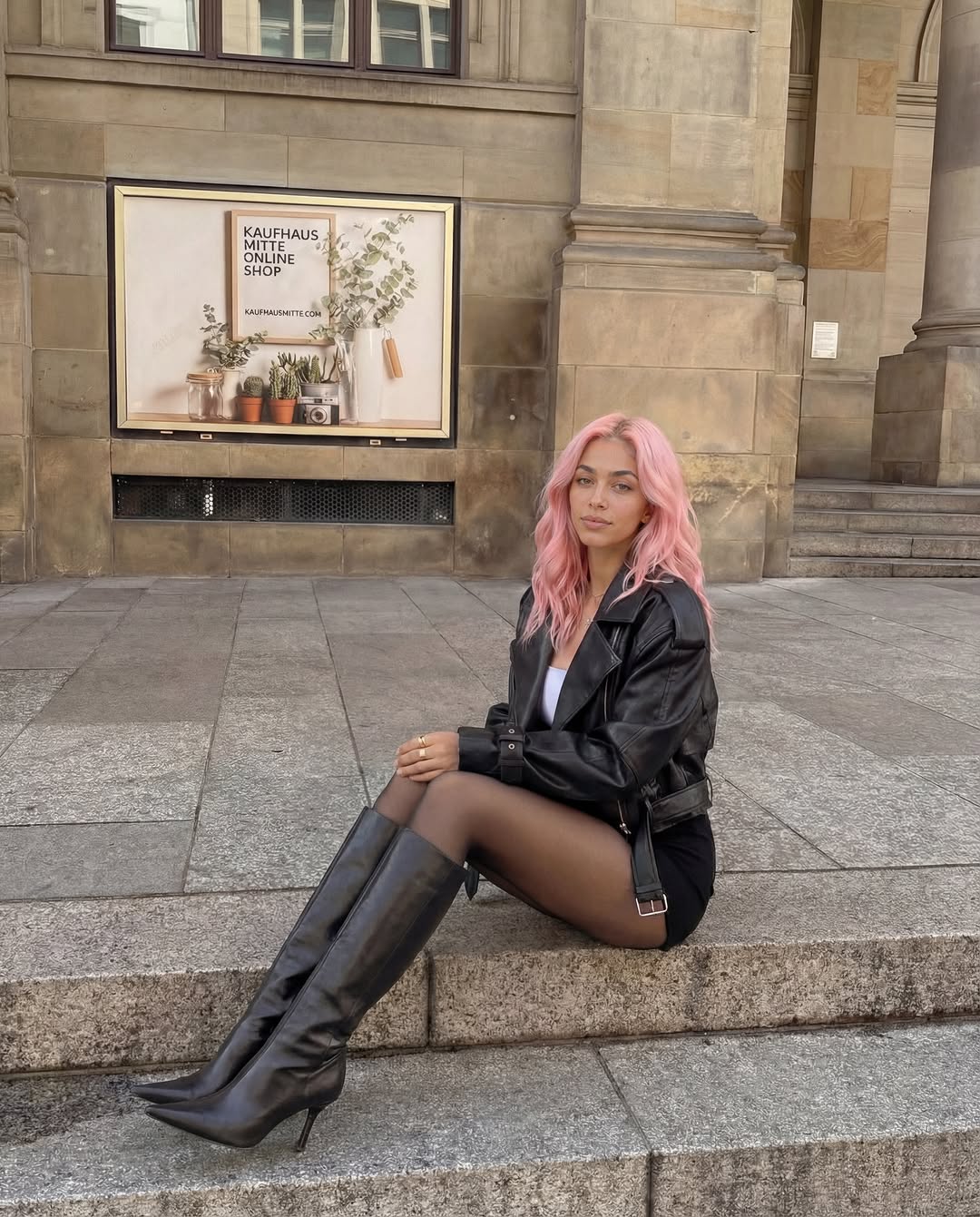
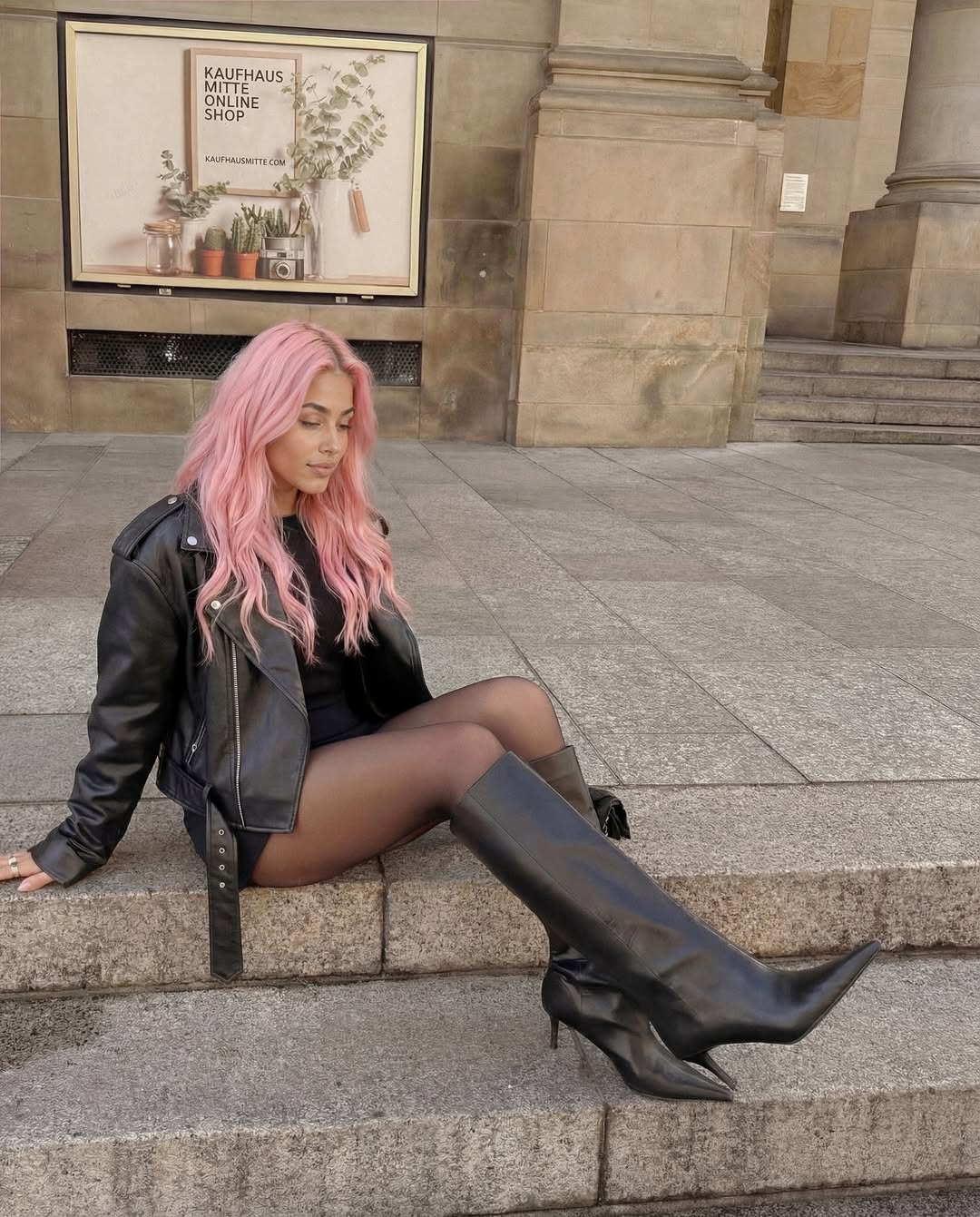
This image turns a simple city step into a high-impact fashion frame. It works because color identity, outfit texture, and urban architecture are tightly organized into one clean story.
Why this street-fashion post is feed-effective
The visual hook is immediate: pastel pink hair against all-black leather and boots. This warm-soft accent versus dark-hard styling creates instant memorability and strong subject separation, even on small screens. Many fashion posts fail because palette is noisy; this one wins because palette is disciplined.
Composition adds the second advantage. The subject sits on stone steps, creating a stable diagonal flow from boots to face. Architectural lines in the background reinforce a modern, editorial tone without distracting from the subject. The pose is relaxed, not over-staged, so the image feels naturally confident rather than performative.
The caption is concise and aligned with the frame: pink hair, black leather, no worries. Text and image describe the same attitude. That coherence increases retention and shareability because audiences can summarize the post in one phrase. In growth terms, this is a strong repeatable format for creators who want identity-led fashion content with low production complexity.
Signal
Evidence (from this image)
Mechanism
Replication Action
Color identity anchor
Pink hair over dark leather outfit
Fast recognition and brand consistency
Lock one distinctive accent color against neutral wardrobe base
Texture contrast
Smooth leather jacket and boots against stone surfaces
Creates tactile depth and style authority
Pair glossy/matte outfit textures with rough urban materials
Step-line composition
Seated pose aligned with stair geometry
Guides eye naturally from foreground to face
Use stairs or tiered surfaces to build directional flow
Attitude consistency
Calm direct gaze and minimal caption tone
Strengthens personal-brand voice
Match caption mood to pose and outfit energy; avoid over-explaining
Where this format fits and where it does not
Best-fit scenarios
Urban fashion posts: Why fit: architecture + outfit contrast reads cleanly. What to change: rotate boots/jacket silhouette only.
Personal-brand identity shots: Why fit: color cue is memorable. What to change: keep accent color fixed across multiple looks.
Season transition styling: Why fit: layering and textures are visible. What to change: swap tights/outerwear by season while preserving composition.
Street campaign teasers: Why fit: editorial tone with realistic setting. What to change: add one prop cue if campaign needs product context.
Not ideal
High-motion sports content: seated geometry prioritizes poise, not action.
Nature-wellness storytelling: hard urban textures conflict with soft outdoor narratives.
Close beauty tutorials: full-body styling emphasis reduces facial detail priority.
Three transfer recipes
Night neon transfer
Keep: accent hair color, black leather base, seated step composition. Change: daylight stone plaza to evening neon alley. Slot template (EN): {urban_night_scene} {accent_hair} {leather_look} {confident_street_mood}
Museum stairs transfer
Keep: diagonal leg-line composition and architectural framing. Change: storefront background to minimal museum facade.
Slot template (EN): {institutional_steps} {editorial_outfit} {clean_backdrop} {quiet_luxury_tone}
Cafe exterior transfer
Keep: seated attitude and texture contrast strategy. Change: stone blocks to cafe storefront with subtle warm window light.
Slot template (EN): {street_cafe_scene} {layered_black_styling} {accent_color_feature} {casual_chic_mood}
Aesthetic read from observable details
This frame succeeds through controlled opposition: soft hair color versus hard architecture, glossy boots versus matte pavement, relaxed pose versus structured background lines. The subject occupies the lower-middle frame, while the building facade adds scale and context. No element is random; even the seated posture echoes stair geometry.
Color management is intentionally narrow. Gray-beige stone and black styling form the base, while pink hair becomes the only saturated focal cue. This keeps visual noise low and strengthens recall. The result is modern, sharp, and repeatable for creators who want a reliable street-style growth format.
single woman seated on stone city steps, pastel pink wavy hair, black leather jacket, black mini skirt, sheer tights, knee-high black boots, calm direct gaze, urban historic building background, clean editorial street style, high realism
Remix execution playbook
Baseline lock
Lock accent-versus-neutral color system (one bold accent only).
Lock seated stair composition with clear leg-line direction.
Lock urban architectural context with low background clutter.
One-change rule
Change only one to two knobs per iteration, such as hair color or jacket type. Keep composition and environment stable while testing.
Example 4-step sequence
Run 1: establish baseline stair composition and pose proportion.
Run 2: refine leather texture and boot silhouette details.
Run 3: tune accent color and skin-tone balance without changing framing.
Run 4: transfer to new urban backdrop while preserving baseline locks.