How fantasoner Made This Chainsaw Man Power Dark Forest AI Portrait -- and How to Recreate It
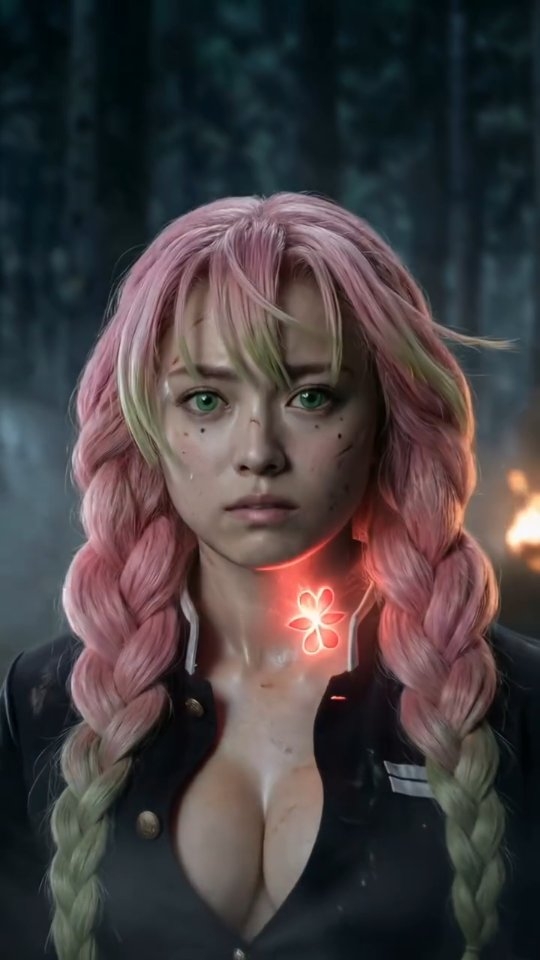
Dark forest portraits work best when the prompt is built around emotional focus rather than environmental complexity. In this image, the strongest decisions are not about spectacle. They are about control. The character stands in a cold, shadowy woodland at night, yet the composition does not let the background dominate. Instead, every major prompt choice serves one core goal: make the viewer lock onto the face, then discover the supernatural neck mark, and only afterward register the hostile atmosphere around her. That hierarchy is why the image feels cinematic rather than messy.
The portrait centers on a Power-inspired female character with long braided hair split between pale blonde and pink tones, pale skin, vivid green eyes, and an expression that feels calm but faintly dangerous. A glowing red sigil near her neck introduces the supernatural idea in a compact, readable way. She wears a dark fitted jacket with restrained trim, which gives the styling enough structure to feel intentional without distracting from the head-and-shoulders framing. The result sits in a useful middle ground between adaptation realism, horror-fantasy poster design, and fan-casting concept art.
What makes this setup especially valuable for prompt writing is how clearly it demonstrates visual priority. The image does not try to tell six stories at once. It tells one story with layered emphasis. First comes the direct eye contact. Second comes the distinctive two-tone braid silhouette. Third comes the glowing red symbol that hints at danger or possession. Only then does the forest atmosphere widen the emotional context. When a prompt respects that kind of ordering, models usually respond with cleaner and more readable results.
Start With the Character Read, Not the Location
Many weak prompts begin with the environment and let the character become incidental. That usually creates a pretty background with an underdeveloped subject. A better method is to define the character in emotionally useful terms first. Here, the subject is not merely a woman in the woods. She is a still, centered, live-action anime adaptation figure with an unreadable stare, braided hair that acts like a frame around the face, and one supernatural detail that breaks realism just enough to shift the image into genre territory.
The phrase live-action anime adaptation matters because it establishes a tonal bridge. It tells the model to preserve stylized identity cues without abandoning human realism. That means skin texture should feel believable, the face should feel physically grounded, and the costume should look wearable, but the color design and symbolic elements can still carry a heightened, fandom-ready visual language. This is especially useful when the goal is to create adaptation posters, casting concepts, cinematic fan art, or realism-forward character studies based on stylized source material.
Hair is doing unusually important work in this image. The braids are not incidental styling. They create shape, rhythm, and recognition. They also soften the frame while still keeping the portrait severe. The pink and pale blonde palette gives the character a distinct identity before the viewer even reads the glow of the neck mark. If you are trying to build strong character prompts, this is a lesson worth copying: use one hairstyle or color split as a major visual anchor, not just a decorative add-on.
| Character element | Function in the image | Why it matters |
|---|---|---|
| Two-tone braided hair | Creates recognizable silhouette and face framing | Gives the portrait immediate identity from a distance |
| Direct eye contact | Establishes confrontation and emotional tension | Keeps the viewer anchored to the face |
| Glowing neck sigil | Introduces supernatural narrative with a single compact cue | Adds story without requiring cluttered effects |
| Dark fitted jacket | Supports a grounded adaptation aesthetic | Prevents the design from drifting into costume noise |
Use the Environment as Emotional Pressure
The forest in this image is useful because it behaves like pressure rather than scenery. It is dark, misty, and slightly blurred. The trunks create vertical rhythm, the depth stays soft, and one distant warm light source sits far behind the subject. None of these elements compete for dominance. They only reinforce the mood around the face. This is a strong strategy for portrait prompts: let the environment intensify the subject instead of demanding separate attention.
That distant fire cue is particularly smart. Without it, the scene might feel generically cold. With it, the world gains tension and implied activity. Maybe something is burning in the distance. Maybe danger is nearby. Maybe the character has emerged from violence or ritual. The image does not explain. It only suggests. Suggestion is usually more powerful than over-explanation in atmospheric prompts because it gives the viewer space to project narrative into the scene.
The mist also matters because it turns empty space into mood. A completely clean woodland background might read too neutral. Gentle haze lowers clarity at the edges, deepens separation between subject and environment, and gives the lighting something to move through. When used with restraint, haze makes realism feel more cinematic. The key word is restraint. Too much mist would flatten the image and dissolve the subject. Here it is used just enough to preserve legibility while enriching depth.
Prompt writers often overload dark fantasy settings with ruins, skulls, floating particles, ravens, red moons, and heavy visual symbolism. That approach can work, but it often weakens portraits. This image demonstrates the opposite principle. The forest is sparse. The background is quiet. The single supernatural accent lives on the character, not everywhere around her. That concentration is why the result feels controlled.
Lighting: Keep the Mood Low-Key but Readable
Low-key lighting is essential here, but it is not the same thing as underexposure. The face remains readable. The eyes remain clear. The hair texture holds up. The jacket keeps some edge definition. What changes is the emotional grade. Cool blue-gray ambient shadow defines the forest, while warm orange-red energy appears only in small places, such as the glowing mark and the distant fire source. That split between cold atmosphere and warm threat is one of the strongest color structures for supernatural portrait work.
The important lesson is to localize warmth. If the whole frame becomes warm, the sigil loses importance. If the whole frame becomes icy, the image can feel dead. By reserving warm light for the magical cue, the prompt makes that element feel narratively meaningful. This is useful for any prompt that includes a magic symbol, rune, curse mark, branded ornament, or energy source. The more you isolate it chromatically, the more story weight it gains.
Frontal illumination is also handled well. The face does not appear studio-lit, but it does receive enough controlled light to preserve expression. This matters because moody portraits fail when the mood destroys facial readability. A strong prompt does not simply ask for darkness. It asks for shaped darkness. That means preserving eye detail, preserving skin planes, and making sure the viewer can still read the emotional state of the subject.
| Lighting choice | Visual effect | Prompt takeaway |
|---|---|---|
| Cool ambient forest shadows | Builds isolation and unease | Use cool tones to control environment mood |
| Localized warm glow at the neck | Makes the sigil feel magical and dangerous | Reserve warmth for the story-critical element |
| Soft facial illumination | Preserves realism and expression | Never sacrifice the face for atmosphere |
| Distant background fire | Adds depth and implied off-screen action | One far accent can do more than many foreground effects |
Composition: Why Centered Framing Works Here
The chest-up centered portrait is not a neutral choice. It is the reason the image reads like a character poster instead of a cinematic still. Centered framing makes the gaze feel confrontational. It also gives the hair equal weight on both sides, which strengthens the face-framing effect of the braids. If the character were pushed too far off-center, the environmental storytelling might become more important than the portrait psychology. In this case, that would weaken the concept.
Eye-level framing is equally important. Shooting from above would reduce authority. Shooting from below might make the image feel more overtly aggressive or heroic than intended. Eye-level keeps the exchange direct. The viewer is not looking up at a conqueror or down at a victim. The viewer is meeting someone whose stillness is what creates the threat. That is a subtler and often more effective approach for dark character prompts.
The depth of field also deserves attention. The background falls soft enough that the vertical tree pattern becomes textural rather than descriptive. This keeps the image from splitting into a portrait plus separate landscape. Everything behind the subject exists to support the face and sigil. That is a key principle for prompt writers: if the scene is not the point, soften it until it becomes emotional architecture rather than independent content.
Another strength is negative space management. There is enough darkness around the head and shoulders that the silhouette remains clear. The braids do not merge into busy foliage, and the jacket does not disappear into a noisy background. This is why minimal environmental prompts often outperform highly detailed ones in portrait work. Clean separation creates authority.
Why the Neck Sigil Is Better Than Large-Scale Effects
The glowing sigil is the smartest narrative device in the image because it is compact, legible, and easy to prioritize. Instead of flooding the frame with energy ribbons or giant magical phenomena, the prompt uses one symbol to imply an entire supernatural backstory. That keeps the image elegant. It also gives the viewer a concrete focal point after the face. This is exactly how fantasy details should behave in strong portrait prompts: concentrated, not scattered.
Small supernatural cues are usually more reusable across variations too. If you later want to create alternate versions of the same character, you can keep the sigil as a persistent identity marker while changing the hairstyle, the coat, the setting, or the expression. That kind of modular design is extremely useful for creators building character packs, poster series, visual development studies, or social content batches around a single recurring subject.
Because the sigil sits close to the face, it also reinforces the portrait instead of pulling away from it. Large magical effects often drag the viewer into the corners of the composition. A compact glow near the neck makes the viewer bounce between eyes, braids, and symbol in a tight loop. That loop is what gives the image its cohesion.
| Effect approach | Outcome | Best use case |
|---|---|---|
| Compact neck sigil | Focused supernatural tension | Character posters and adaptation portraits |
| Large energy field | High spectacle but weaker facial priority | Action scenes and combat key art |
| Multiple glowing props | Richer lore but more visual competition | Worldbuilding illustrations and ensemble concepts |
How to Adapt This Prompt for Variations
If you want alternate outputs without losing the core identity, the most reliable control points are expression, setting subtype, and costume emphasis. For example, changing the expression from blank intensity to sly confidence or exhausted stillness will shift the narrative without requiring a full redesign. Swapping the forest for shrine ruins, graveyard fog, or a torchlit alley will preserve the horror-fantasy tone while refreshing the environment. Changing the jacket from fitted uniform trim to heavier leather, ceremonial cloth, or tactical outerwear will shift the adaptation register.
The important thing is to keep the hierarchy constant. If the eyes, braids, and glowing mark are the identity structure, do not let a variation bury them. Many prompt variants fail because the writer changes too many primary elements at once. The result is no longer a variation; it is a different concept. To keep continuity, maintain one or two dominant identity anchors while experimenting with everything else.
This method also works well for social content. A creator can produce a mini-series of dark fantasy portraits where the expression, color grade, setting, and costume evolve, but the character remains recognizable because the hair split and sigil stay stable. That kind of consistency is useful for personal branding, fan art accounts, visual storytelling threads, and adaptation concept collections.
Final Prompt Lessons
The reason this portrait succeeds is that it understands restraint. It does not rely on spectacle to feel powerful. It relies on a clear character hierarchy, disciplined environmental support, low-key but readable lighting, and one sharply defined supernatural cue. That is exactly how strong dark fantasy portrait prompts should work when the goal is to make the face unforgettable.
If you want to build similar images, remember the structure: define the character identity first, keep the environment sparse but loaded with mood, preserve facial readability inside low-key lighting, use one compact magical detail instead of many competing effects, and let the composition protect the face as the primary focal point. Once those elements are stable, variation becomes easy because the prompt has a strong backbone.
For creators, artists, and prompt writers, this image is a reminder that atmosphere is not something you pile on top of a portrait. Atmosphere is something you design around the portrait so every shadow, every accent light, and every environmental cue makes the subject feel more inevitable. When that happens, the result feels less like a generated image and more like a deliberate character poster with a world hidden behind it.