▶
@burberry ad test. Staring @iam_zlu Inspired by the best @young_emperors - - - - - - - #vfx #fashion #fashionweek #artdirector #ai
@burberry ad test. Staring @iam_zlu Inspired by the best @young_emperors - - - - - - - #vfx #fashion #fashionweek #artdirector #ai
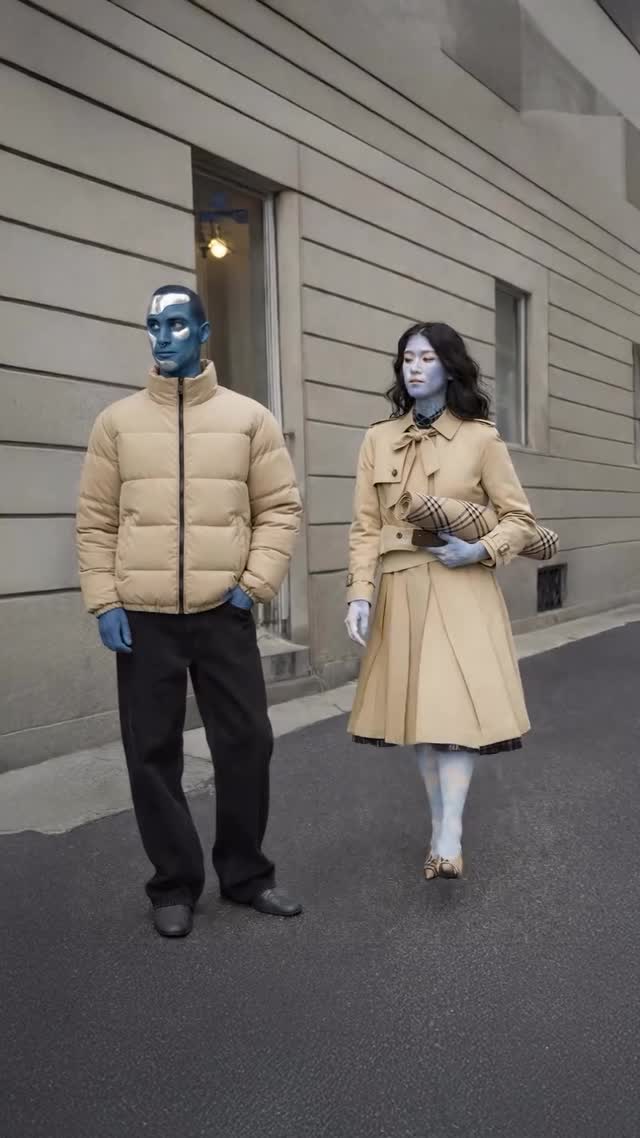
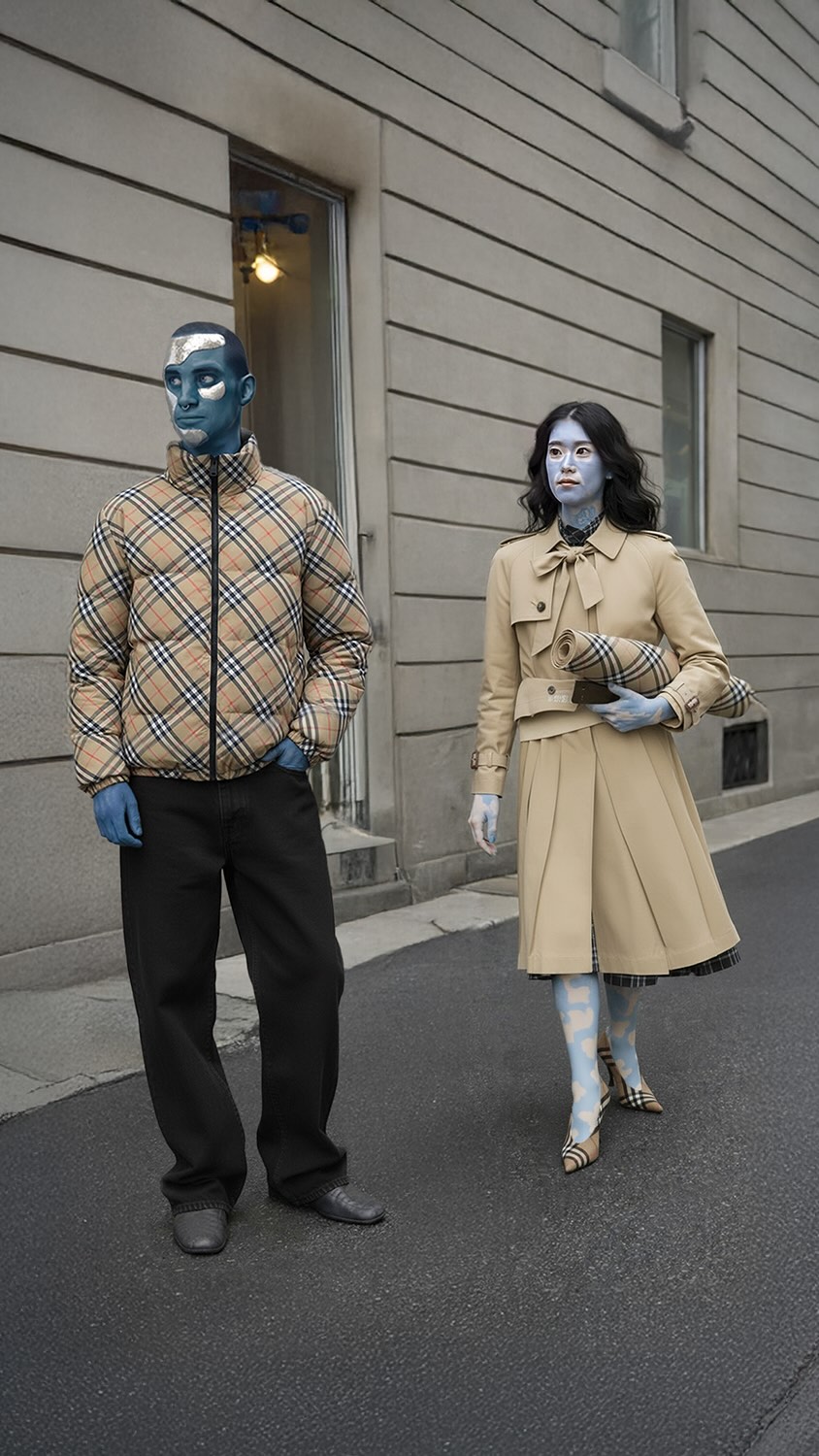
This reference is effective because it takes a classic luxury-fashion language, trench coats, plaid accessories, muted city architecture, and injects one surreal element that changes the whole image: metallic blue skin. That single choice turns a familiar heritage-brand visual into something futuristic and strange without breaking the elegance of the styling.
The restraint of the scene is important. The models are not walking a runway or acting out a story. They mostly stand, turn, and step with editorial control. That stillness makes the metallic faces feel more deliberate, almost like living statues or designer mannequins. For AI prompt design, this is a useful reminder that one strong surreal choice is often more powerful than layering several effects at once.
The clothes do most of the brand signaling. Camel outerwear, a plaid rolled accessory, clean tailoring, and a restrained neutral palette all point toward a Burberry-like luxury vocabulary even before the graphic horse emblem appears. When the white horse-and-rider illustration flashes on screen, it confirms the reference without needing a literal logo plastered everywhere.
The urban lane setting supports that luxury language well. It is understated and architectural, with just enough texture to frame the models without stealing attention. The scene feels expensive because it is so clean. This is often more effective than trying to build a maximalist campaign world around fashion pieces that already have strong identity.
The brief yellow line “I think something is missing...” adds a teaser quality. It suggests incompleteness or transformation, which pairs naturally with the surreal blue-skin treatment. It makes the ad feel like a conceptual prompt rather than a straightforward product showcase.
To recreate this style, start by locking the heritage-fashion codes: camel trench, plaid detail, city wall backdrop, minimal movement, editorial posture. Then introduce a single disruptive visual trait, in this case metallic blue skin and hands, and keep everything else controlled. That balance is what gives the clip its luxury-surreal feel.
It is also helpful to specify how brand iconography should appear. Here, the horse-and-rider graphic works best as a brief overlay rather than a constant logo. That keeps the ad elegant and avoids making it feel like a generic templated promo. In fashion prompts, subtle brand-coded references are often stronger than repetitive logo placement.
This format is useful for luxury AI fashion campaigns, heritage-brand reinterpretations, synthetic-model editorials, and surreal runway teasers. It shows how creators can modernize classic fashion codes without losing the clarity and restraint that make luxury visuals work.