If only art and landscape became one. Art/Prompts by @ifonly.ai AI-generated (@midjourney • @higgsfield.creators • @klingai_official)
If only art and landscape became one. Art/Prompts by @ifonly.ai AI-generated (@midjourney • @higgsfield.creators • @klingai_official)
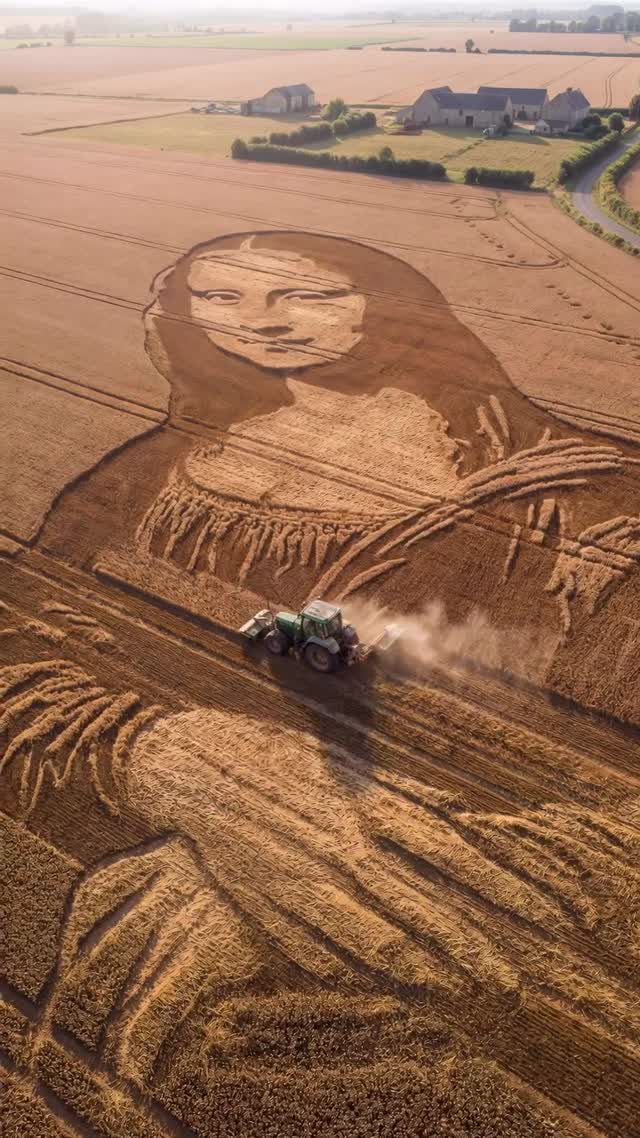
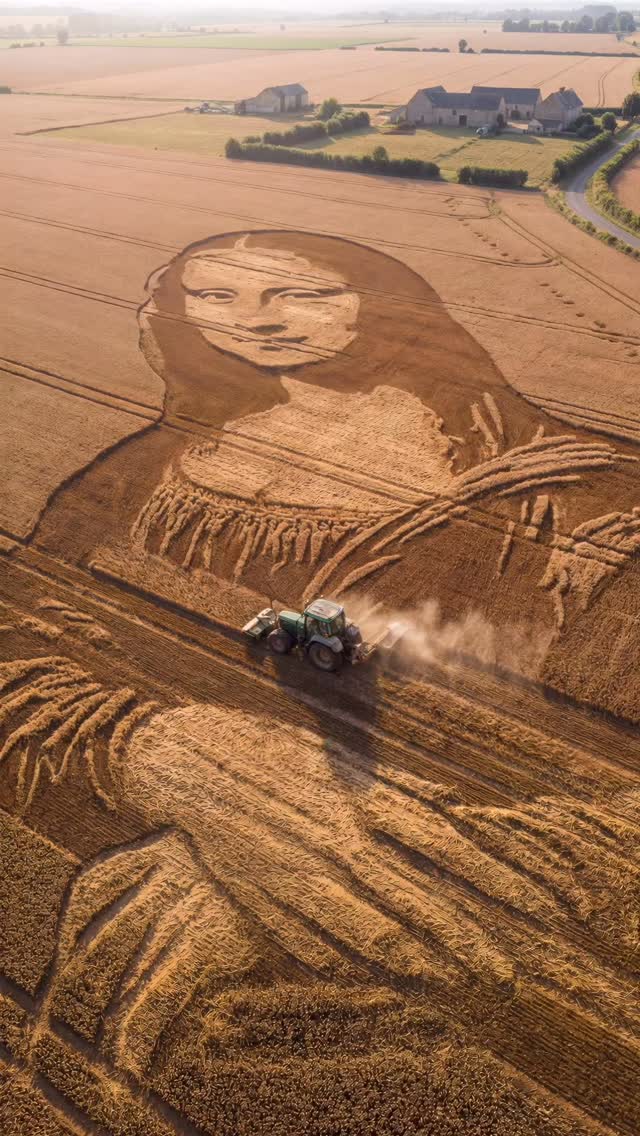
This image is the perfect blend of concept and evidence. The concept is obvious: art and landscape become one. The evidence is even stronger: you can see the tractor actively carving the portrait, with dust in the air. That single detail upgrades the post from “cool idea” to “this actually happened (or could happen).”
For creators, this is a high-leverage lesson: if you want a surreal idea to feel real, add one unmistakable process cue. Here, the process cue is the tractor and the tracks. It makes the scene believable, and believability is what earns shares.
Scale is a universal hook. A Mona Lisa portrait that spans an entire field triggers an instant “how big is that?” reaction. Then the viewer notices the tractor and the dust plume, which answers the next question: “how was it made?” That one-two sequence creates a natural attention loop.
Composition helps too. The portrait fills most of the frame, so the idea reads even at thumbnail size. The tractor sits near the lower third, acting like a “cursor” that guides the eye through the image. It’s a simple layout, but it feels like a cinematic establishing shot.
| Signal | Evidence (from this image) | Mechanism | Replication Action |
|---|---|---|---|
| Scale shock | Portrait fills an entire field | Instant “impossible size” curiosity | Use one giant subject that dominates the frame |
| Process proof | Tractor + tracks + dust plume | Believability increases shares and saves | Add one clear process cue (machine, tool, trail) in frame |
| Readable icon choice | Mona Lisa is recognizable even simplified | Familiar icon reduces confusion | Choose icons with strong silhouettes (Mona Lisa, Starry Night, etc.) |
| Cinematic light | Warm haze and golden-hour tone | Makes the scene feel like a film still | Lock time-of-day and use soft haze for atmosphere |
Recipe 1: Icon swap
Recipe 2: Terrain swap
Recipe 3: Proof cue swap
The portrait is the first read. The tractor is the second read. That ordering is why the image works in a feed. If the tractor were missing, the scene might look like a texture trick. If the portrait were smaller, the tractor would become noise. Together, they create hierarchy.
The warm haze is the finishing layer. It reduces harsh contrast and makes the whole landscape feel cohesive. In prompt terms, haze is a “smoothing” control knob for large-scale aerial shots.
| Prompt chunk | What it controls | Swap ideas (EN) |
|---|---|---|
| “high-altitude drone aerial, vertical framing” | Perspective and scale read | “wider panorama”, “lower altitude”, “more oblique angle” |
| “giant crop art portrait with tonal shading” | Recognizability of the artwork | “giant symbol”, “wordmark”, “geometric pattern” |
| “single tractor carving tracks, dust plume” | Process proof and dynamism | “combine harvester”, “snow plow”, “ATV trail” |
| “golden hour haze, warm cinematic grade” | Film-like atmosphere | “cool morning fog”, “stormy overcast”, “twilight” |
| “distant farm buildings and hedgerows” | World context and realism | “mountain ridge background”, “coastal horizon”, “desert road” |
Photoreal high-altitude drone aerial shot of a vast golden wheat field featuring a gigantic Mona Lisa portrait created as crop art using alternating flattened vs standing wheat for tonal shading and carved lines for drapery folds. A single tractor works near the lower-center of the portrait, carving tracks and leaving a light dust plume trailing behind. Rural farmland context with hedgerows and a cluster of farm buildings near the top of frame, soft atmospheric haze. Vertical framing, slight oblique drone angle, warm golden-hour sunlight, gentle long shadows, cinematic color grading, crisp field texture, high resolution.