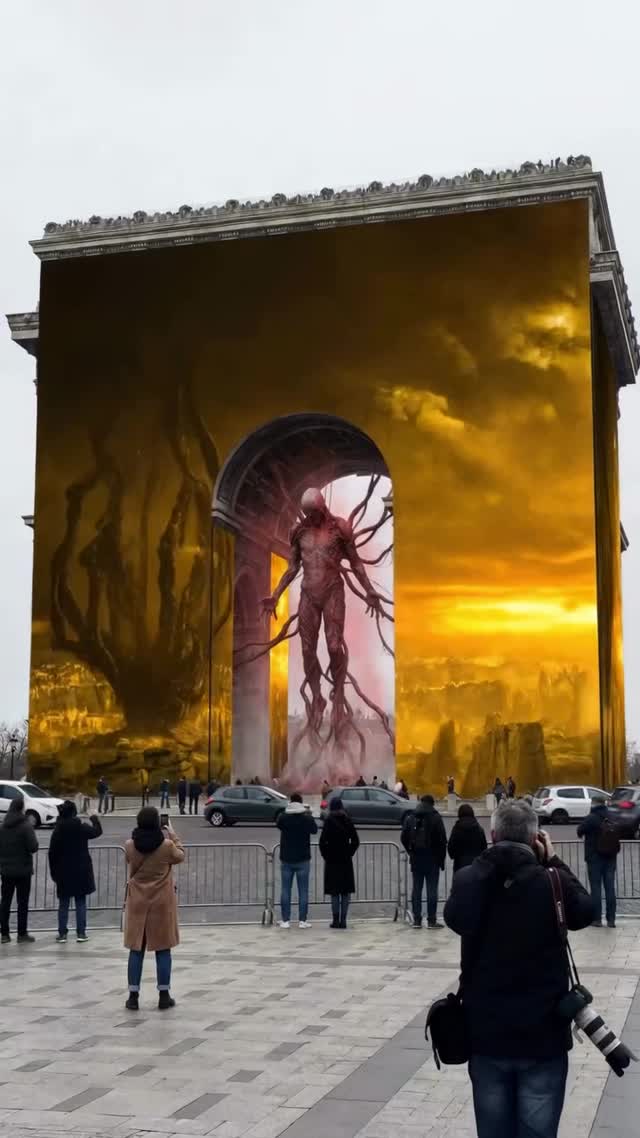
▶
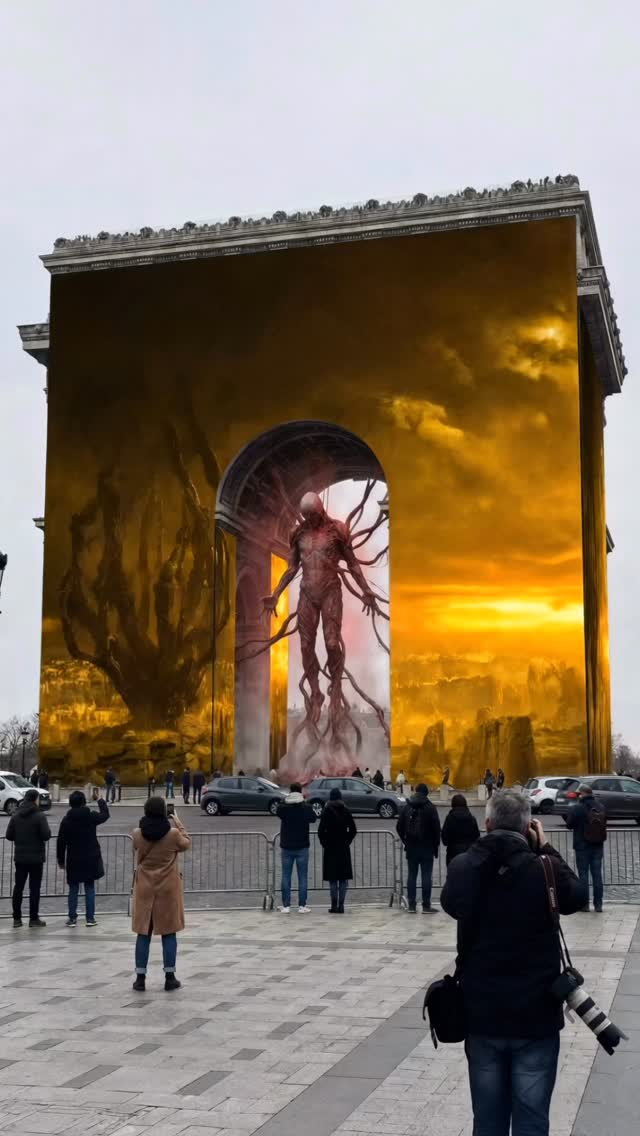
If only the Stranger Things finale was a marketing spectacle. Art/Prompts by @ifonly.ai AI-generated (@midjourney • @higgsfield.ai • @klingai_official • @topazlabs)
If only the Stranger Things finale was a marketing spectacle. Art/Prompts by @ifonly.ai AI-generated (@midjourney • @higgsfield.ai • @klingai_official • @topazlabs)
This viral masterpiece by @ifonly.ai reimagines the Stranger Things series finale as a massive, city-wide marketing takeover in Paris. Using a blend of high-end AI tools (Midjourney, Higgsfield, Kling, and Topaz Labs), the creator transforms iconic landmarks like the Arc de Triomphe and the Louvre into portals to the "Upside Down." The aesthetic is a perfect marriage of cinematic CGI and realistic UGC (User-Generated Content), making the impossible look like a tourist's smartphone recording. With over 47k likes, it taps into the "Fake Out of Home" (FOOH) advertising trend, leveraging high-stakes IP (Intellectual Property) and world-class travel destinations to command attention.
The video is a montage of five distinct "spectacles" set across Paris. Each shot features a crowd of onlookers, grounding the supernatural elements in reality. The color palette is dominated by the "Upside Down" signature: deep oranges, blood reds, and ominous blacks, contrasted against the neutral grays and blues of a cloudy Parisian day. The editing is rhythmic, cutting on the beat of a dark, synth-heavy soundtrack reminiscent of the show's theme.
| Time Range | Visual Content | Shot Language | Lighting & Tone | Viewer Intent |
|---|---|---|---|---|
| 0:00–0:04 | Arc de Triomphe transformed into a massive portal featuring Vecna. | Wide shot, slight handheld shake (UGC feel). | Golden hour glow vs. dark portal shadows. | The "Hook": Instant recognition of a landmark + famous villain. |
| 0:04–0:07 | Louvre Pyramid containing a Demogorgon with red lightning. | Medium-wide, eye-level. | Cold exterior vs. intense red internal flashes. | Reinforce scale: Showing another iconic spot maintains momentum. |
| 0:07–0:10 | Paris Metro station with "Upside Down" vines and red smoke. | Low-angle, tracking the train. | Fluorescent station lights vs. eerie red atmospheric haze. | Immersive detail: Moving the "threat" into everyday public spaces. |
| 0:10–0:13 | Eiffel Tower background with a giant billboard of the Mind Flayer. | Static wide shot, silhouettes in foreground. | Dusk/Overcast; high contrast red billboard. | The "Money Shot": The most famous landmark in the world. |
| 0:13–0:15 | Pont Alexandre III bridge with a swirling vortex banner. | Wide angle, river view. | Natural sunset light with a dark, swirling center. | Resolution: A final, haunting image to encourage a loop. |
This video succeeds primarily because it utilizes Fake Out of Home (FOOH) advertising. This trend exploits the "uncanny valley" of marketing—viewers aren't quite sure if what they're seeing is a real physical installation or CGI. By choosing Stranger Things, a show with a massive, dedicated fanbase, the creator ensures an immediate emotional connection. The "What If" factor—"What if Netflix actually did this?"—drives comments and shares as fans tag the official accounts.
From a platform perspective, the video is a "watch-time magnet." The 0–3 second hook (the Arc de Triomphe portal) is so visually jarring that it stops the scroll. The pacing is fast enough that the brain doesn't have time to debunk the CGI before the next shot appears. This creates a high-information density environment. Furthermore, the "travel aesthetic" of Paris appeals to a broad demographic beyond just sci-fi fans, increasing the likelihood of the video being pushed to the "Explore" page.
Option 1: The Hype Builder
If only the Stranger Things finale was actually this big. 🤯 Paris isn't ready for Vecna. Which landmark would you run from first? 👇 #StrangerThings #Paris #AIArt
Option 2: The "How-To" Tease
I spent 20 hours using AI to bring the Upside Down to the streets of Paris. 🇫🇷 From the Louvre to the Metro, nowhere is safe. Want to see the prompts? Let me know in the comments! ⚡️ #VFX #CreativeMarketing #Midjourney
A combination of Midjourney for the base and Kling AI or Luma Dream Machine for the realistic motion.
"Photorealistic," "UGC-style," and "Cinematic lighting."
Use a "Character Reference" (--cref) in Midjourney or maintain a very strict color palette description.
You likely lack "film grain" and "motion blur"; add these in post-production to ground the visuals.
Instagram Reels generally performs better for high-aesthetic "cinematic" AI content.
Use the platform's "AI-generated" label and mention the tools used in the caption to build creator authority.