
▶
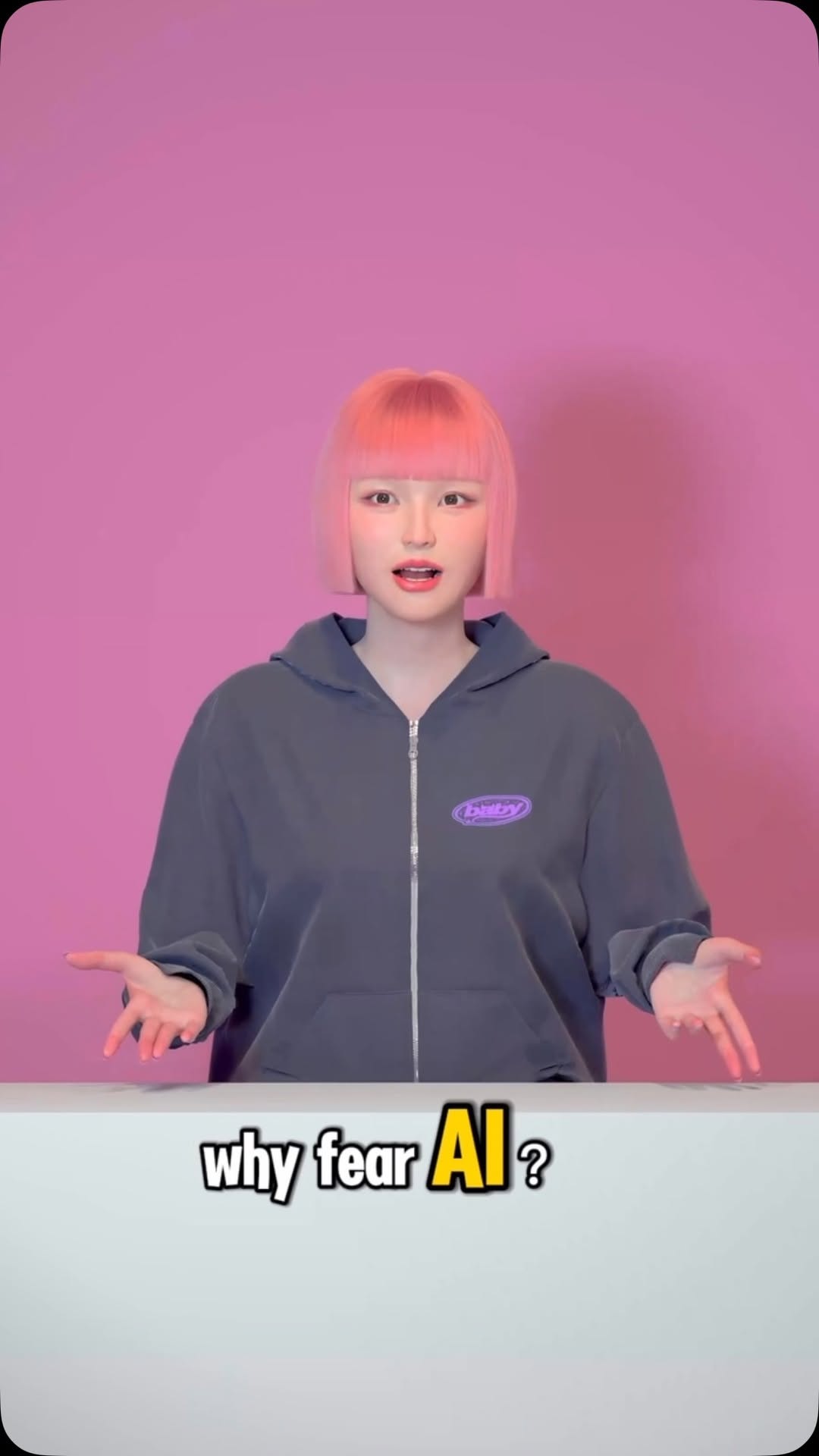
Why fear AI? Tell me!
Why fear AI? Tell me!
This clip is a useful reference for creators building AI spokesperson, virtual influencer, and synthetic presenter content because it proves that a simple setup can still feel sharp and scroll-stopping. The format is stripped down to its essentials: one avatar, one static camera, one bold background color, a table to anchor the frame, and a short punchline-based script. Nothing in the scene is accidental. Every visual choice supports clarity and delivery.
The strongest decision is the contrast between the polished digital human and the plain studio layout. The pink backdrop gives the video immediate identity, while the white tabletop creates a visual base that keeps the composition from floating. The charcoal jacket adds weight so the subject does not disappear into the bright set. Together, those elements make the frame easy to read on a phone screen in less than a second.
The spoken line carries the structure: a rhetorical setup, a reassuring middle beat, and a final ironic reversal. That pattern is common in short-form social content because it creates attention in three steps. First, a provocative question hooks the viewer. Second, a calm explanatory phrase lowers resistance. Third, the final oh wait flips the tone and gives the clip its meme energy. Even when the script is minimal, the rhythm is doing real work.
The avatar performance stays controlled. Instead of overacting, the speaker uses small hand motions, slight eyebrow emphasis, and a modest shift in facial tone. That restraint matters. AI-generated talking heads become less convincing when the body language is too broad for the framing. Here, the gestures stay inside the logic of a medium shot, so the performance feels natural for a studio explainer or satirical reel.
Subtitles also help the clip travel. The burned-in captions make the joke legible with sound off and reinforce the timing of each phrase. For creators making SEO landing pages or prompt libraries, this is important because many users will encounter the example in muted autoplay contexts. A prompt that includes subtitle placement, cadence, and a dry close-mic tone will usually recreate this format more reliably than a prompt that only describes the character.
To reproduce this style, start by locking the environment and presentation logic. Specify a vertical social-video frame, static eye-level camera, pink seamless background, white tabletop, and medium talking-head composition. Then define the speaker as a consistent digital human with precise hair shape, skin tone, wardrobe, and expression range. Those details keep identity stable across the whole clip.
Next, write the dialogue as timed performance beats rather than one generic line. In a clip like this, speech timing is part of the visual design. The first phrase should feel like a hook, the second like a relaxed explanation, and the last like a delayed punchline. Mention that lip sync must stay tight, subtitles should update phrase by phrase, and gestures should remain compact. Those instructions matter more than vague words like cinematic or viral.
This reference is also a reminder that color simplicity helps AI outputs. One saturated backdrop, one clear wardrobe silhouette, and one stable light source are easier for a generator to hold together than a busy set. If the goal is a believable presenter video, reducing visual noise usually improves realism. That is especially true for synthetic faces, where consistency in lighting and framing is more important than elaborate production design.
Creators can adapt this pattern for AI news intros, synthetic host explainers, satirical commentary clips, avatar brand spokespeople, and faceless social pages that still want a human-seeming presenter. The format is modular: change the backdrop color, rewrite the single-line script, and keep the same framing logic. Because it depends on timing and expression instead of elaborate worldbuilding, it is efficient to reproduce across multiple topics.
For SEO pages, this kind of example adds value because it teaches more than aesthetics. It shows how to structure a short speaking video, how to control an AI presenter without overloading the prompt, and how to align expression, subtitle timing, and punchline rhythm. That makes the page more useful to creators who are trying to generate repeatable, platform-native talking-head videos rather than just admire a finished output.