How Imma Turned This Why Fear AI Talking Head Into a Scroll-Stopping AI Portrait
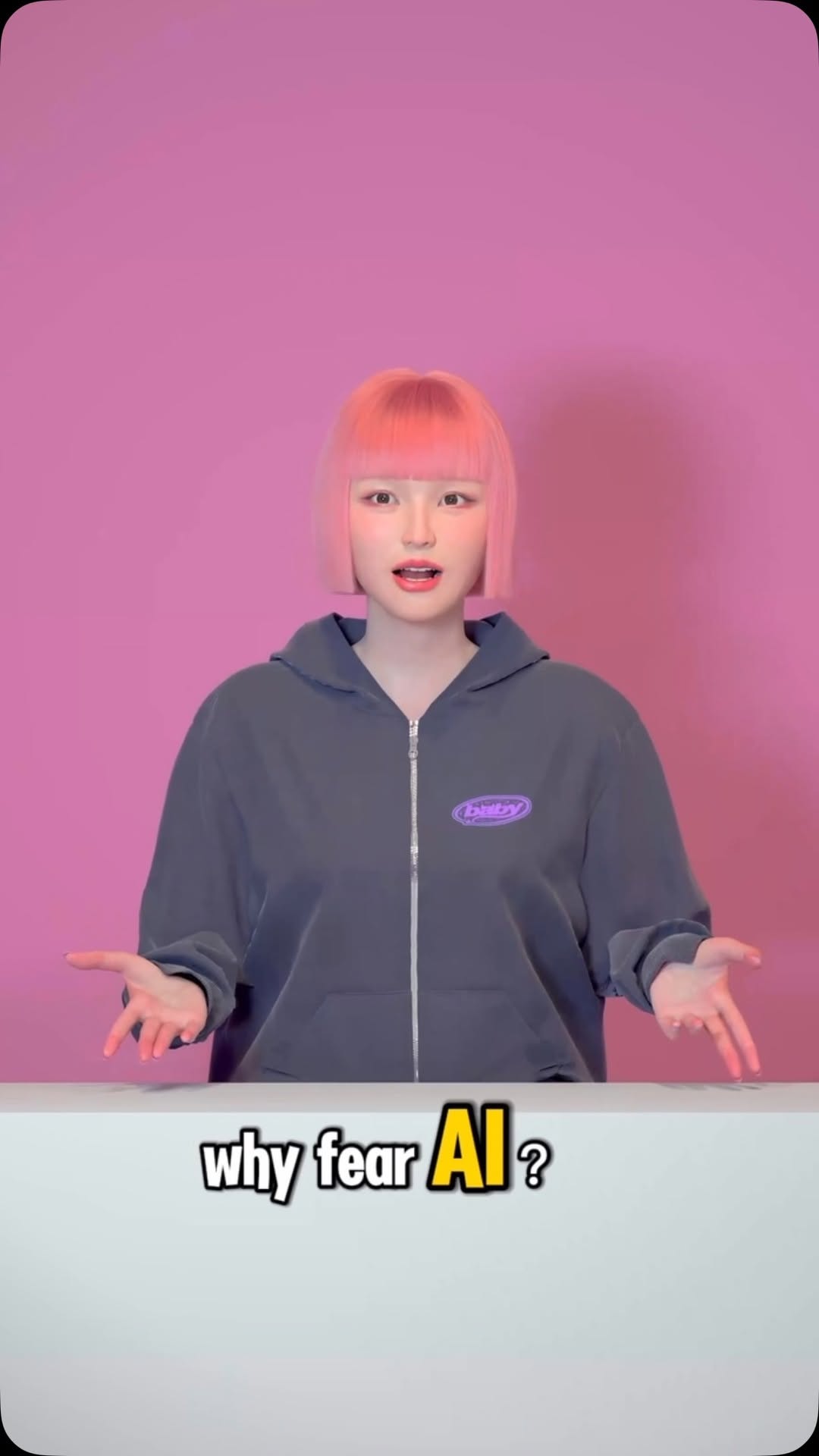
This visual works because it turns a complex topic into one clear human moment: a direct question, open palms, and zero visual noise. For creators, that structure is easy to replicate and hard to ignore.
Why this image has strong attention and comment potential
The first mechanism is rhetorical friction. “Why fear AI?” is not a statement; it is an invitation to disagree, agree, or explain. Question-driven frames naturally generate replies because viewers feel addressed.
The second mechanism is visual clarity under one second. Centered speaker, clean pink background, and one highlighted keyword make this instantly legible in feed motion. Fast readability improves hold rate.
The third mechanism is trust posture. Open hands and direct eye contact communicate “discussion” rather than “lecture.” This lowers audience defensiveness for polarizing topics and keeps tone conversational.
Signal Table
Signal
Evidence (from this image)
Mechanism
Replication Action
Question hook
Text reads “why fear AI?”
Prompts opinion responses
Use one clear question instead of a broad headline
Keyword emphasis
“AI” highlighted in yellow
Improves message scanning
Highlight one strategic word in subtitle color
Open-palms gesture
Hands visible in explanatory posture
Signals openness, reduces hostility
Shoot with welcoming hand language for debate topics
Minimal stage
Flat pink background, no clutter
Keeps cognitive load low
Remove all background distractions in talking-head clips
Best-fit scenarios and transfer options
Best-fit scenarios
Opinion-led short videos: Perfect for controversial or misunderstood topics.
Educational creator hooks: Works as first frame before explanation.
Podcast clips: Strong subtitle frame for social cutdowns.
AI literacy campaigns: Friendly framing lowers topic intimidation.
Q&A carousel openers: Useful as slide 1 to trigger swipes.
Not ideal scenarios
Product showcase posts: Topic and face dominate over product details.
Cinematic storytelling: Minimal talking-head style may feel too plain.
Data-heavy technical breakdowns: Requires follow-up slides for depth.
Transfer recipes (exactly three)
Recipe
Keep
Change
Slot template (EN)
Career topic variant
Centered speaking pose + keyword highlight
Change question topic
{speaker_pose} with caption “why fear {topic}?” on {clean_background}
Myth-busting variant
Open hands + subtitle strip
Swap question to “is {claim} true?”
{talking_head_frame} asking {myth_question} with {highlighted_term}
Bilingual explainer variant
Minimal background and readable lower-third
Add two-language caption stack
{centered_presenter} with {dual_language_question} and {accent_color_focus}
Aesthetic read: why this stays human despite a synthetic persona
The image balances synthetic polish with conversational body language. The visual style is clean and controlled, but the gesture and expression feel like a real dialogue moment.
Color psychology also supports the message. Pink background softens the topic’s perceived threat, while yellow text emphasis injects urgency into one key term.
Finally, symmetry makes the message authoritative without becoming aggressive. Center framing plus eye contact gives confidence, while open palms preserve approachability.
Observed cue
Why it matters
Recreate action
Centered presenter
Fast trust and clarity
Keep speaker aligned to center axis
Single bright background color
High legibility
Choose one flat backdrop with no props
Highlighted keyword in subtitle
Message prioritization
Color one key word only
Open-mouth speaking frame
Feels active and timely
Capture mid-sentence instead of static pose
Open-hand gesture
Reduces ideological friction
Use explanatory hand language in contentious topics