Anime glasses are a thing ?
I did a collaboration with @nrvss.ingot and got to learn about his concepts and sustainable process.
Comment what anime he should collaborate with next? 😎
アニメからインスパイアされている@nrvss.ingot とコラボして、一緒にメガネを出した時の話🧠
次はどんなメガネを作って欲しい?😎
Case Snapshot
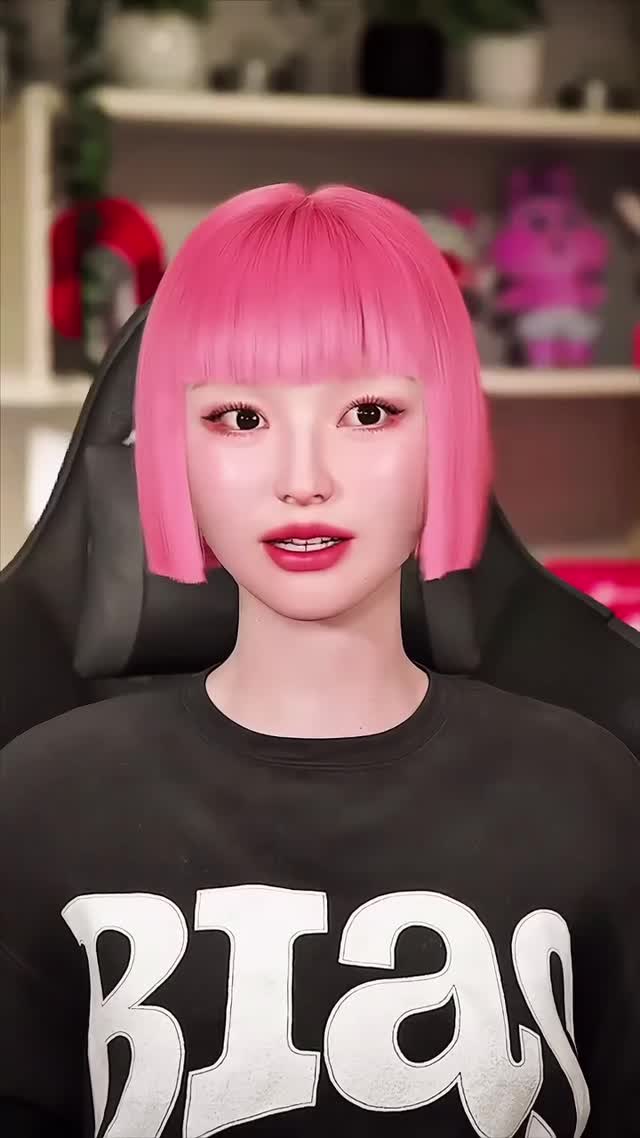
This vertical Instagram-style explainer works because it turns a niche design story into an easy-to-watch talking-head reel. The host is a pink-bob virtual influencer seated in a warm room, wearing a black sweatshirt with oversized white lettering, and she speaks straight to camera for almost the entire 57-second clip. That alone gives the video stability. Then the editor layers in just enough proof: anime references, a logo insert, a product-style frame visual, and a red-lit group photo. The result feels like a creator recommendation, a fashion reference post, and a mini design breakdown at the same time. The subtitles do a lot of the heavy lifting. Large English captions with yellow-highlighted keywords make each claim immediately scannable, while the smaller Japanese line adds cross-cultural texture and reinforces that the subject is a Japanese designer. For indie creators, this is a strong case study in how to package a niche product story without needing a huge set, expensive cinematography, or constant scene changes. The hook is not spectacle. The hook is clarity: one memorable face, one clear topic, one stream of concrete details, and one closing question that converts passive viewers into commenters.
What You're Seeing
The anchor shot is doing almost all of the retention work
Most of the reel is a locked medium close-up of the same pink-haired avatar in the same chair and the same room. That visual consistency lowers cognitive load. Viewers do not have to re-orient every two seconds, so they can focus on the story about the brand and the designer.
The room is soft, warm, and intentionally non-distracting
The background shelves stay blurred, but they still offer enough detail to feel lived in: warm practical light, red objects, and a pink toy figure. This makes the host feel like a creator with a personal space rather than a faceless AI render dropped onto a generic backdrop.
The wardrobe supports the direct-to-camera format
The black sweatshirt with oversized white text creates strong contrast against the host's pale skin and bright pink hair. That contrast helps the face read clearly on mobile and keeps the frame bold even when nothing dramatic is happening in the background.
The inserts are short, functional, and tied to specific claims
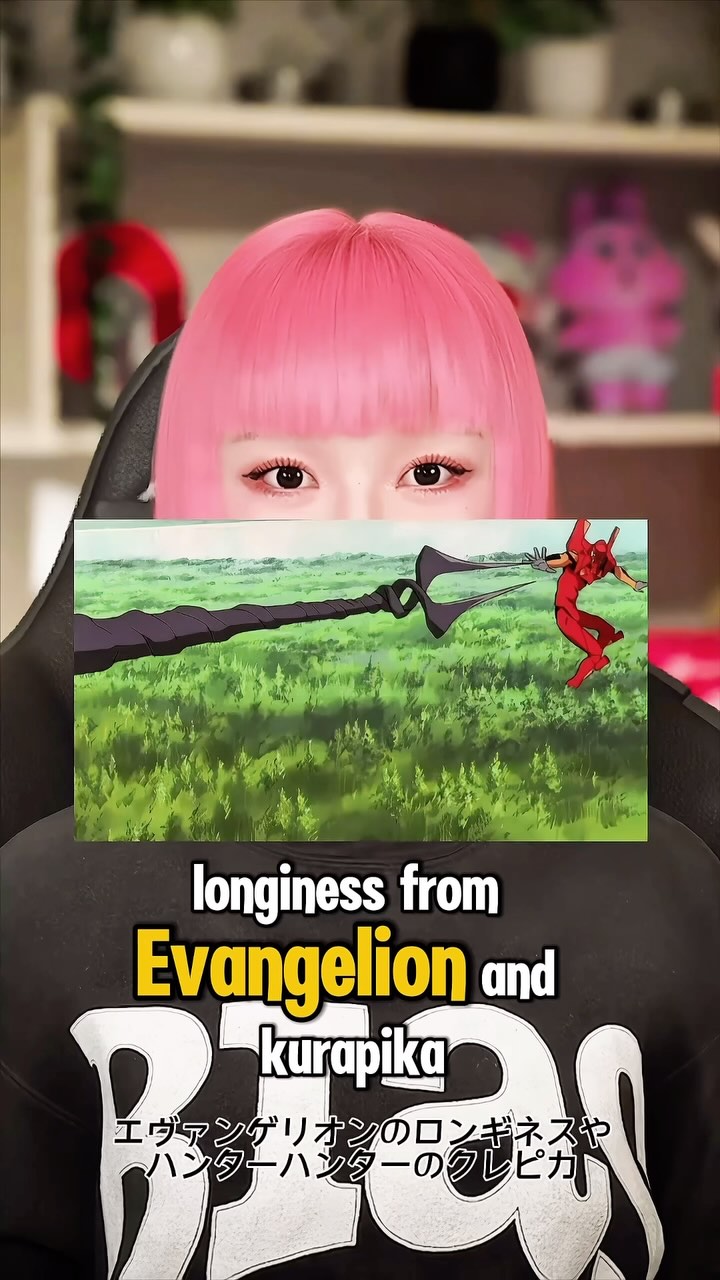
Instead of random B-roll, the clip uses inserts only when the speaker names something concrete: anime inspiration, the brand logo, the material story, and the social proof moment. Every cutaway answers a question the viewer would naturally have: What kind of inspiration? What logo? What does the work look like in context?
The subtitle system is a major part of the creative
The English captions are large and bold, with a few yellow-highlighted words per sentence. That means even silent viewers can catch the nouns that matter: the brand name, Japanese designer, anime references, handmade process, and collaboration question. The smaller Japanese subtitles underneath make the reel feel more specific, not more cluttered.
The pacing stays educational rather than hyperactive
This reel does not depend on fast cuts every second. It uses a steady, speech-led rhythm. That is important. The value comes from stacking details in a clear order: brand, designer, inspiration, materials, recycled frames, proof, then audience question.
Shot-by-shot breakdown
Time range
Visual content
Shot language
Lighting & color tone
Viewer intent
00:00-00:11 (estimated)
Pink-haired virtual host introduces the brand and designer.
Locked medium close-up, eye-level, phone-lens feel, no camera movement.
Warm indoor light, soft background blur, pink hair as the main color accent.
Hook the viewer with a clear topic and a recognizable face.
00:11-00:21 (estimated)
Host explains anime inspiration; visual references appear over the frame.
Talking head interrupted by graphic overlays and a reference insert.
Host frame stays warm; insert art adds brighter, more metallic color contrast.
Turn a niche claim into something specific and memorable.
00:21-00:27 (estimated)
Logo-related insert appears while the host explains the design origin.
Convert viewers into commenters with a specific question.
Why It Went Viral
The topic combines design, anime, and creator personality
This is not just “look at this cool product.” The reel connects multiple interest clusters at once: virtual influencer fans, anime culture, eyewear and fashion lovers, design process nerds, and people who enjoy creator recommendation content. The evidence is in the script itself. The host moves from the brand name to Japanese authorship, then straight into specific references like Evangelion and Hunter x Hunter, then into materials and recycled frames. That stacking gives different audience types different reasons to stay.
The video rewards curiosity with specifics instead of vague hype
Many short reels lose momentum because they only say the product is “so cool” or “so unique.” This one keeps adding observable details: the designer works with 3D, anime influences shaped the designs, one piece is tied to the brand logo, every item is handmade, and some frames are recycled from deadstock. Each detail is concrete enough to feel useful, which increases save value.
The host identity makes the information easier to consume
The same pink-haired avatar remains on screen for most of the video, which creates continuity and a recognizable persona. Because the face is stable and centered, the viewer can process the subtitles quickly. That matters on Instagram Reels and TikTok, where many people watch with sound low or off during the first seconds.
The insert moments are timed like proof, not decoration
The anime image, logo visual, and group photo are not filler. They arrive exactly when the speaker makes a claim that benefits from proof. That makes the clip feel trustworthy. A creator who says “inspired by anime” and then immediately shows the reference reduces skepticism and increases retention.
The ending turns taste into participation
The closing question is not generic. It asks who the creator should work with next and which anime collaboration viewers want to see. That is a better comment trigger than “What do you think?” because it gives the audience a clear lane to answer in. Fans can name franchises, characters, or designers, which makes the comment section more active and more relevant to the post topic.
Platform view: why the format is friendly to distribution
From a platform perspective, this reel has a strong first three seconds, low explanation cost, and late-stage engagement bait. The clear face hook supports watch time, the bold subtitles support silent viewing, and the closing collab question supports comments and shares. The shift to the red group photo also adds a pattern break late in the timeline, which can help keep completion rates from dropping.
Five testable viral hypotheses
Observed evidence: the reel opens with one stable close-up face and a direct brand statement. Mechanism: viewers understand the topic instantly. How to replicate it: start with the face and the product category in the first sentence.
Observed evidence: specific anime references appear on screen when mentioned. Mechanism: named references trigger fandom recognition and reduce abstraction. How to replicate it: pair every cultural reference with a visible insert within one second.
Observed evidence: subtitles highlight only a few words in yellow. Mechanism: viewers skim the sentence faster and remember the nouns. How to replicate it: emphasize brand, niche, material, and CTA words instead of coloring entire sentences.
Observed evidence: the material story includes handmade stainless steel and recycled deadstock frames. Mechanism: craftsmanship plus sustainability increases save and share value. How to replicate it: include one tactile proof point and one ethical proof point in the middle of the reel.
Observed evidence: the final line asks for the next anime collab. Mechanism: viewers can contribute ideas without needing expertise. How to replicate it: close with a constrained question tied to the niche, not a generic engagement ask.
How to Recreate It
1. Pick a niche where the object carries cultural meaning
This format works best when the product is not only visual but referential. Eyewear inspired by anime is strong because fans already bring context. You can swap in sneakers, nails, room decor, jewelry, or 3D prints, but the item needs a story.
2. Lock one host identity before you generate anything else
The reel works because the same pink-bob avatar stays consistent for almost a full minute. Build a character sheet first: hair color, haircut, skin tone, makeup level, sweatshirt, room setup, chair, and camera angle. If the host drifts across shots, the reel will feel cheaper immediately.
3. Use one talking-head master shot as the backbone
Do not overcomplicate the base footage. A locked medium close-up with steady eye contact is enough. Generate or film the host first, then decide where inserts are truly necessary.
4. Write your script as a ladder of concrete details
Follow the same sequence used here: what it is, who made it, what inspired it, what it is made from, why that matters, then what viewers should answer. If every line adds a new fact, retention stays healthier.
5. Build inserts only for proof moments
Notice that the reel does not cut away randomly. It uses inserts to prove anime inspiration, logo origin, and real-world results. Limit yourself to three or four inserts, and make each one answer a real viewer question.
6. Design subtitles for skimming, not decoration
The bold English line with yellow keywords is doing conversion work. Keep subtitle blocks short, emphasize only the important nouns, and leave enough empty space so the face still dominates the frame.
7. Treat the middle of the reel like a trust-building section
The handmade stainless steel point and the recycled deadstock point are not random facts. They tell the viewer the brand has process, taste, and values. In your own version, put the strongest proof points in the middle third of the video.
8. Add one late pattern break before the ending
The red group photo appears late and wakes the reel back up. Use a late-stage proof shot, BTS still, customer reaction, or result image around the final quarter of the timeline.
9. End with a narrow question that matches the topic
“Which anime should I collab with next?” is strong because the viewer knows exactly how to respond. Use a similarly narrow prompt: which colorway, which franchise, which city, which style, or which material.
10. Package the cover and title around the strongest noun pair
For this case, the best noun pair is something like “anime eyewear” or “virtual influencer x designer glasses.” Keep the cover short and visually bold. If the title tries to summarize everything, it gets weaker.
11. Prompt starter for the visual generation
Use a master prompt that locks the host identity, room, sweatshirt, and subtitle treatment, then add a short timeline for the insert moments. The key is not only “pretty avatar,” but “same avatar in the same room for the full reel.”
12. Publish it where subtitles and comments both matter
This format is native to Instagram Reels, TikTok, and YouTube Shorts. Start with the platform where your audience already reacts to recommendation-style posts, then adapt the caption and hashtags for each channel instead of posting one identical version everywhere.
HowTo checklist
Choose a product or creator story with built-in subculture references.
Create a fixed host character sheet and room setup.
Write a 45-60 second script with one new fact per beat.
Generate or film the talking-head anchor shot first.
Collect 3-4 inserts that prove your main claims.
Add mobile-readable subtitles with highlighted keywords.
Edit for steady speech rhythm rather than constant jump cuts.
Add a late-stage proof shot to refresh attention.
Close with a constrained audience question.
Publish with a cover that leads with the strongest searchable phrase.
Growth Playbook
Three opening hook lines
This Japanese designer makes anime-inspired glasses and the details are wild.
I found a brand turning anime references into real eyewear, and the craftsmanship is the part that got me.
If you like niche fashion design, this creator built glasses from anime ideas, stainless steel, and recycled frames.
Four caption templates
Hook: I love when a product actually has a story. Value: This reel breaks down a Japanese designer's anime-inspired eyewear, from the reference points to the handmade materials. Question: Which anime universe would make the best collab? CTA: Drop one franchise below.
Hook: Not all design reels need flashy edits. Value: One stable host shot plus a few proof inserts was enough to make this concept feel premium and memorable. Question: Do you prefer fashion reels that explain the process or just show the result? CTA: Tell me in the comments.
Hook: This is how you make a niche product feel mainstream. Value: Clear subtitles, specific references, and one sharp CTA turned a design post into a conversation starter. Question: Which detail sold you first: anime references, handmade steel, or recycled frames? CTA: Comment your pick.
Hook: Virtual influencer content works best when the information is concrete. Value: This reel keeps the avatar consistent, adds proof at the right moments, and finishes with a question people actually want to answer. Question: What other product categories should use this format? CTA: Save this as a reference.
Hashtag strategy
Use broad tags to enter the main recommendation pools, mid-tier tags to reach fashion and creator audiences, and niche tags to catch people specifically searching for anime-inspired design.