Guyyyys we’re SO close! After months of “almost done,” the @pynkynk house/shop/community is getting its final touches. Messy, weird, and feeling so good! Get ready 🐽 #johnpork #pynkynk
Guyyyys we’re SO close! After months of “almost done,” the @pynkynk house/shop/community is getting its final touches. Messy, weird, and feeling so good! Get ready 🐽 #johnpork #pynkynk
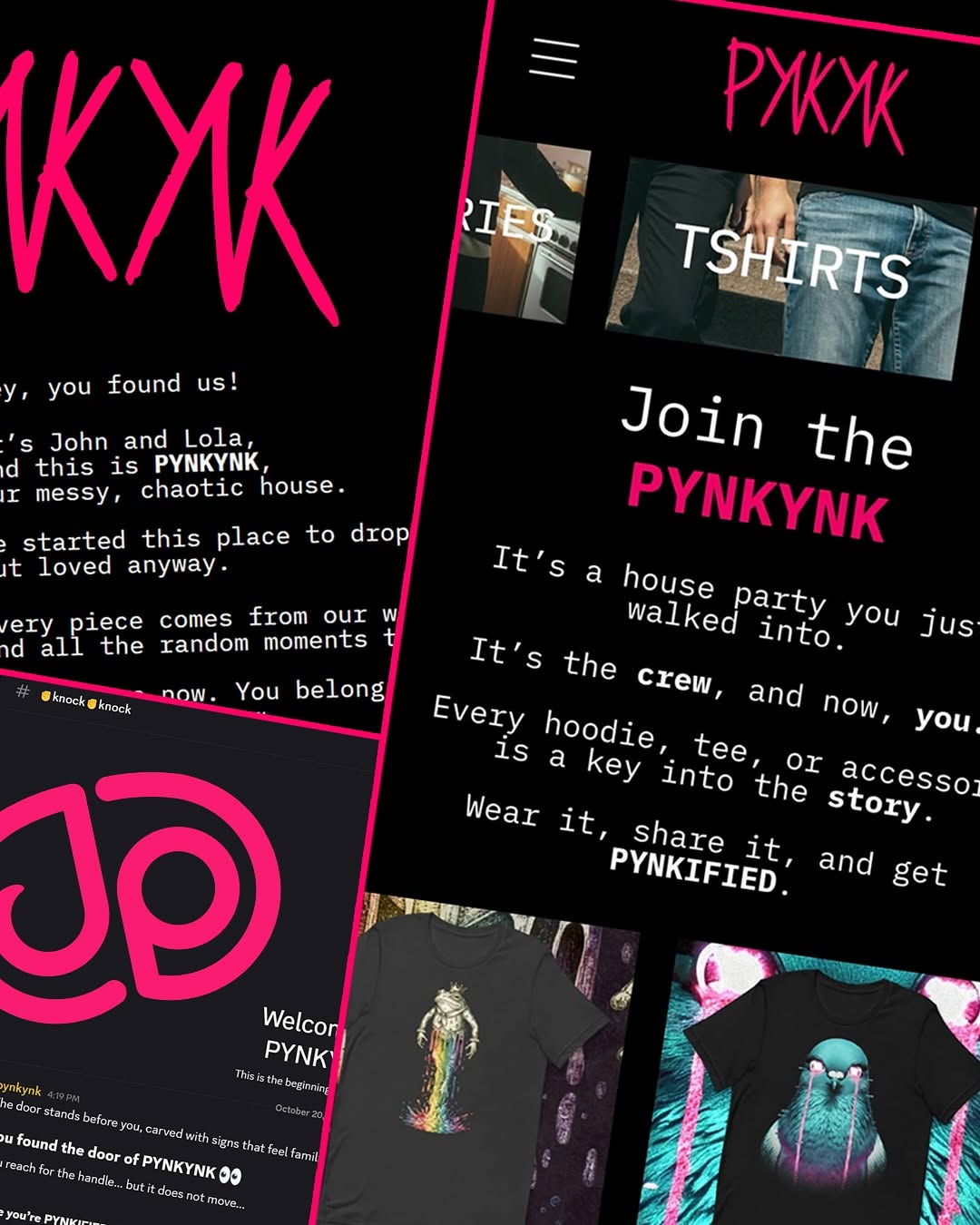
This image is a launch moodboard, not a clean storefront. Overlapping panels, cropped copy, pink logo noise, and product snippets all communicate one message: this is a living community project, not a polished corporate release.
That framing is important for creator-led brands. When people feel they are entering a scene rather than buying from a catalog, engagement often deepens.
The visual uses controlled chaos to signal authenticity. Perfect layouts can look finished and distant. This one looks in-progress, human, and culturally active. That “unfinished but intentional” energy invites participation.
Pink-on-black contrast also gives instant recognition in feed thumbnails. Even when text is partially cropped, the brand signature remains visible and memorable.
| Signal | Evidence (from this image) | Mechanism | Replication Action |
|---|---|---|---|
| Controlled chaos | Overlapped tilted panels and cropped manifesto text | Feels active and community-led | Use multi-panel montage instead of one static screenshot |
| Strong brand lockup | Repeated hot-pink wordmark style on black | Repetition improves visual memory | Repeat logo color system across every panel |
| Product proof included | Visible t-shirt thumbnails in lower section | Moves post from vibe to tangible offer | Always include at least one product evidence strip |
The strongest aesthetic move here is deliberate imperfection. Panels are tilted, text is partially clipped, and products appear as fragments rather than polished cards. This creates urgency and cultural texture. The hot pink accent acts as a stable DNA thread that prevents the collage from collapsing into noise. For creator brands, this is a practical middle ground between pure moodboard and hard commerce.
| Observed | Recreate | Why it matters |
|---|---|---|
| Multi-panel overlap | Stack 3-6 cropped screen sections with angle variation | Signals movement and process |
| Single-color brand anchor | Repeat one neon accent across headings and borders | Maintains cohesion in chaos |
| Manifesto + product pairing | Place emotional copy and product proof in same frame | Builds both identity and conversion intent |
| Prompt chunk | What it controls | Swap ideas (EN, 2-3 options) |
|---|---|---|
| panel density | Energy and information load | "3-panel clean chaos" / "5-panel dense" / "2-panel teaser" |
| brand accent color | Recognition system | "hot pink" / "acid green" / "electric blue" |
| copy legibility ratio | Mystery vs clarity | "40% readable" / "60% readable" / "headline-only readable" |
| product evidence blocks | Commerce signal strength | "tee strip" / "hoodie cards" / "accessory tiles" |
Baseline lock: lock panel overlap structure, black/pink palette, and one clear CTA line.
One-change rule: adjust one variable per post and track saves/comments/profile visits.