~ 連鎖する転回 ~
カオスの中で断片が結び直され、転回は次への合図となる。終わりに見えた地点は通過点へ変わり、同じ構造をなぞりながらも形を変え、進行は何度も更新されていく。
~ Chain of Turns ~
Within chaos, fragments reconnect, and every turn becomes a signal to move on. What once seemed like an ending shifts into a passage, repeating familiar patterns while constantly transforming, as momentum renews itself again and again.
#KakuDrop #カクウドロップ
#midjourney #klingai #nanobanana
How kakudrop Made This Chain of Turns Subway AI Portrait — and How to Recreate It
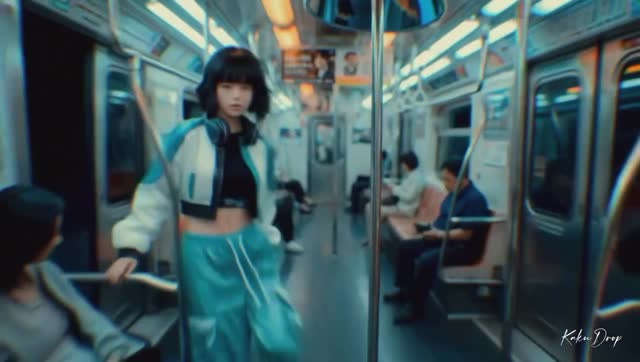
This image performs because it turns a routine location into a stylized narrative stage. A subway car is familiar, but the framing, wardrobe, and color grade recast it as a scene from a music video. That contrast between ordinary place and elevated mood is a reliable attention trigger in short-form feeds.
The second strength is directional composition. Metal poles, ceiling rails, and aisle lines all push the eye toward the subject. Even with slight blur, the hierarchy remains clear: subject first, environment second, crowd third. This keeps the frame readable while preserving atmosphere.
Motion softness is also doing strategic work. It prevents the image from feeling like a static portrait and implies in-between movement, as if this is one frame from an ongoing story. That implied continuity increases curiosity and helps carousel/reel transitions feel natural.
Signal Table
Signal
Evidence (from this image)
Mechanism
Replication Action
Ordinary-place reframe
Subway carriage styled like fashion-film set
Surprise from context upgrade boosts stop rate
Shoot in everyday transit spaces but style wardrobe intentionally
Lead-line control
Pole and aisle geometry converges behind subject
Directs viewer focus without heavy edits
Position subject on aisle axis and use architecture as composition tool
Atmospheric blur
Slight motion/diffusion softness over full frame
Adds narrative motion and mood continuity
Introduce controlled softness in capture or grade, avoid over-sharpening
Color identity
Teal wardrobe echoes cool train lighting
Creates cohesive visual language
Align outfit palette with ambient lighting color family
Best-Fit Scenarios
Music visual teasers: Great fit because frame already feels like a moving sequence. What to change: sync first beat cut to subject motion.
Streetwear storytelling: Strong for outfit-led narratives in urban settings. What to change: vary one statement item while keeping transit location constant.
Character intro reels: Works as “arrival” or “night city” opener. What to change: add one short caption line in post text, not on image.
Moodboard content: Useful for creators building a cyber-urban visual identity. What to change: keep grade and geometry consistent across posts.
Not Ideal
Product detail campaigns: Motion softness can hide fine product features.
Bright lifestyle branding: Cool moody palette may conflict with warm family-friendly tone.
Transfer Recipes
Keep: Transit geometry and aisle perspective. Change: Swap wardrobe color family (teal to red or monochrome). Template:{subway interior} {single foreground subject} {cohesive color grade} {cinematic slight blur}
Keep: Subject + commuters depth layering. Change: Move from subway to bus or tram interior. Template:{public transit cabin} {fashion stance} {background passengers soft} {story-frame atmosphere}
Keep: 16:9 filmic crop and cool practical lighting. Change: Shift expression from neutral to subtle smile for softer tone. Template:{urban commute scene} {controlled expression} {leading lines} {music-video realism}
Aesthetic Read
The aesthetic impact comes from synchronized elements rather than one standout object. Teal clothing mirrors environmental light, so the subject feels embedded in place rather than pasted over it. The short bob haircut and cropped silhouette read sharply even in soft focus, preserving character clarity. Stainless poles and repeating seat geometry add rhythm and depth. Minor blur reduces literalness and pushes mood forward. Together these choices create a frame that feels lived-in, urban, and editorial at the same time.
Observed
Recreate
Evidence cue
Foreground subject with deep aisle
Place model in front third and keep carriage depth visible
Strong tunnel perspective behind subject
Cool cyan/teal tonal family
Match wardrobe to ambient train lighting
Color coherence across subject and environment
Controlled softness
Use gentle diffusion instead of razor sharp clarity
Frame feels cinematic, not documentary-flat
Background human context
Keep a few passengers blurred in rear seats
Scene reads as real commute, not empty set
Prompt Technique Breakdown
Prompt chunk
What it controls
Swap ideas (EN, 2-3 options)
young woman with blunt black bob, neutral expression