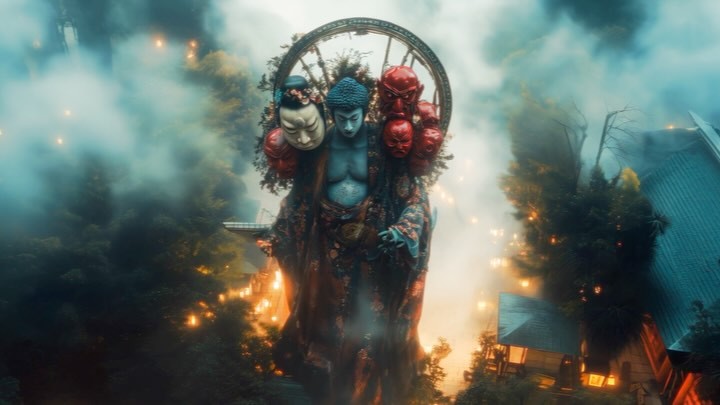
How liberxx0 Built This ARTECHOUSE NYC Fantasy Skeleton
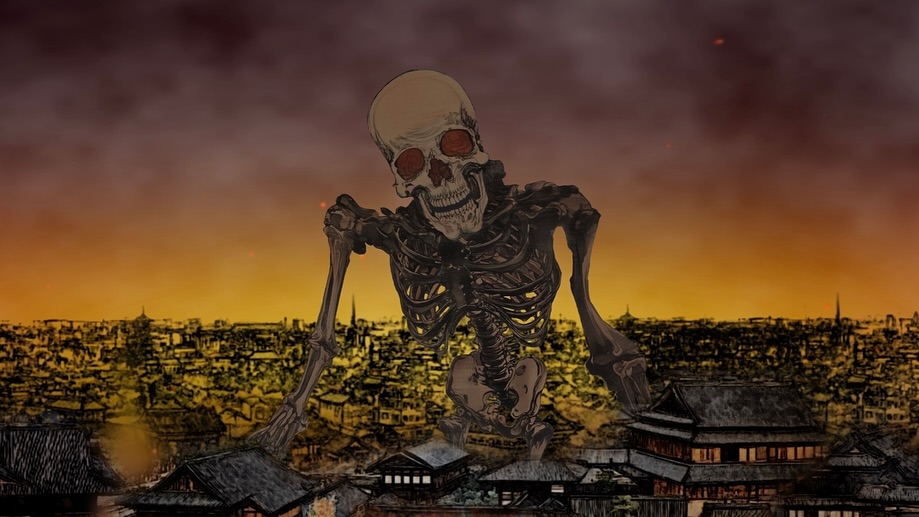
This image succeeds because it treats horror as atmosphere, not jump scare. The creature is terrifying, but the composition is elegant: central framing, controlled color contrast, and layered mist depth. That makes it suitable for both exhibition projection and social feed impact.
For AI artists, this is a strong example of cinematic scale with clean readability.
Why it performs
The first mechanism is focal hierarchy. Glowing eyes lock attention instantly, then the viewer moves to ribcage structure, then to world ambience. The second mechanism is color narrative: cool fog suggests distance and myth, while orange embers and magenta eyes inject danger and life-in-death tension.
| Signal |
Evidence (from this image) |
Mechanism |
Replication Action |
| Immediate focal lock |
Bright magenta eye glow in centered skull |
Anchors viewer within 1 second |
Design one luminous focal feature in creature portraits |
| Monumental scale cue |
Large foreground body with compressed hazy background |
Conveys epic presence without extra characters |
Use close monster framing plus distant atmospheric landmarks |
| Mood-consistent palette |
Cyan fog + ember orange + magenta highlights |
Keeps frame dramatic but legible |
Limit to one cool base and 1-2 high-energy accents |
Best-fit scenarios
- Immersive exhibition teasers: ideal for promoting experiential digital art shows.
- Fantasy concept portfolios: strong for demonstrating atmosphere and creature design skill.
- Music/film visual mood posts: useful for dark cinematic branding.
- AI art community challenges: works for high-impact prompt showcases.
Not ideal
- Lighthearted consumer brands with soft tone requirements.
- Educational posts that need calm neutral visual context.
- Small-thumbnail-first channels where dark detail may compress poorly.
Three transfer recipes
- Keep: centered creature + luminous eyes. Change: creature archetype. Template: "{mythic entity} {light-emitting focal feature} {fog depth}"
- Keep: cool atmospheric base. Change: accent color pair. Template: "{cyan mist world} {accent glow} {ember particles}"
- Keep: scale-forward composition. Change: environmental story hints. Template: "{giant foreground} {distant ruins/lights} {supernatural tone}"
Aesthetic read
The image feels strong because it avoids clutter. One creature, one palette system, one emotional axis: awe plus dread. Bone textures are rendered with enough realism to feel tactile, while fog diffusion keeps the image painterly at the macro level. This blend is ideal for social virality because it is both immediate and rewatchable.
| Observed |
Recreate |
Why it matters |
| Central confrontational framing |
Keep subject centered and facing viewer directly |
Maximizes impact and tension |
| Volumetric atmosphere |
Add layered mist with light shafts and depth fade |
Creates cinematic scale |
| Luminous color anchor |
Use one glowing organ/feature as visual core |
Improves focus and memorability |
Prompt technique breakdown
| Prompt chunk |
What it controls |
Swap ideas (EN, 2-3 options) |
| creature focal feature |
Instant attention hook |
"glowing eyes" / "glowing chest core" / "halo horns" |
| environment haze |
Depth and mystery |
"dense fog" / "smoke cloud" / "volumetric dust" |
| material realism |
Believability |
"weathered bone" / "charred armor" / "wet stone skin" |
| accent particles |
Energy and motion hint |
"embers" / "ash sparks" / "arcane particles" |
Remix steps
Baseline lock: lock giant centered silhouette, glowing eye focal point, and cool fog world.
One-change rule: change one dramatic variable per iteration and compare saves/comments.
- Run 1: baseline undead titan composition.
- Run 2: keep composition, change only accent glow color.
- Run 3: keep best color, change only particle density.
- Run 4: keep winners, test one alternate creature material while preserving framing.