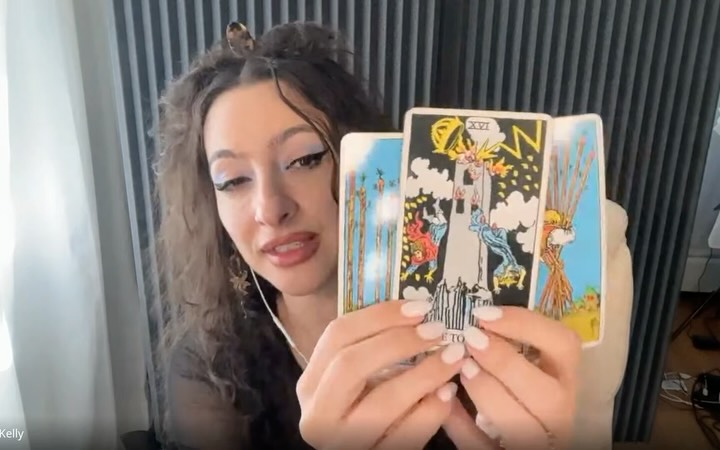
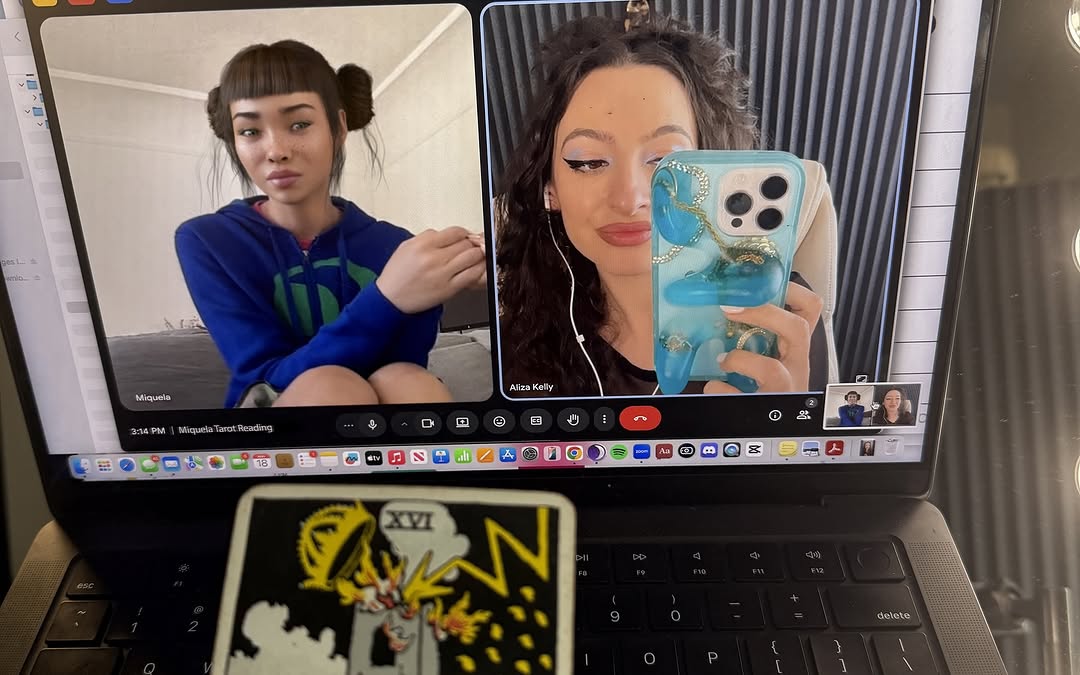
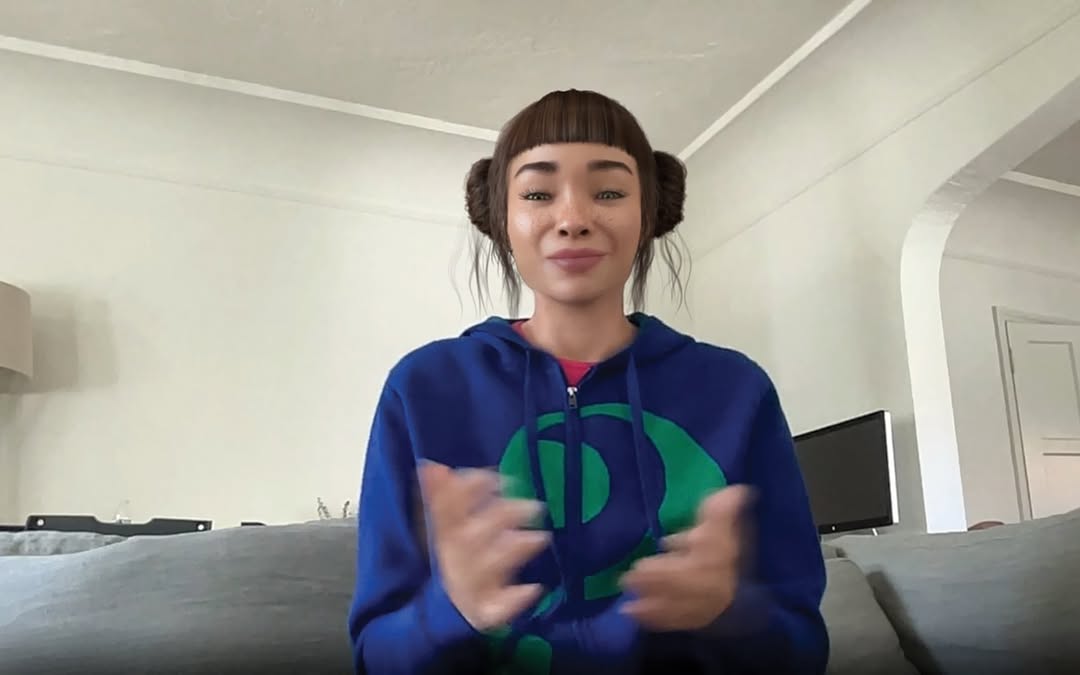
tower card was NOT on my 2025 bucket list fml 💀😵💫 when i spiral i run to @alizakelly bc as a taurus girlie 🐂💅 i only trust the cosmos ✨🌙 stars say: if i’m doing music again, it’s gotta be different this time
tower card was NOT on my 2025 bucket list fml 💀😵💫 when i spiral i run to @alizakelly bc as a taurus girlie 🐂💅 i only trust the cosmos ✨🌙 stars say: if i’m doing music again, it’s gotta be different this time
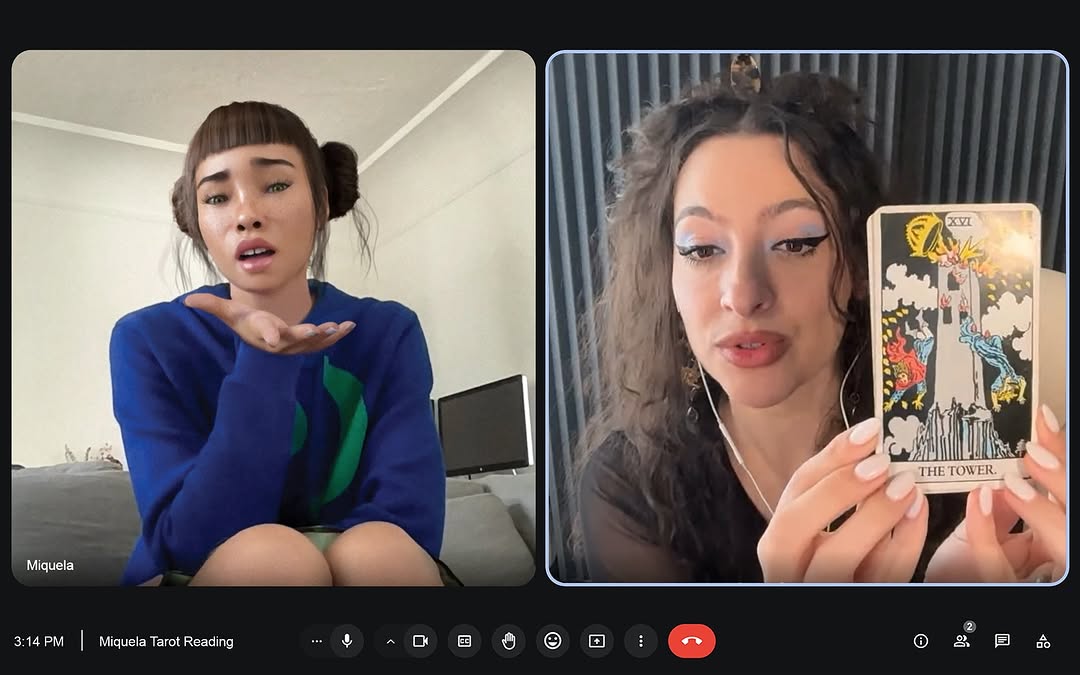
This frame works because it combines intimacy and narrative suspense in a familiar interface. Viewers instantly recognize the video-call layout, then focus on the dramatic object: The Tower card. Familiar UI lowers friction; symbolic content raises curiosity. That pairing is a strong engagement formula.
The left participant’s expression is also essential. Her puzzled hand gesture mirrors what the audience feels while reading “The Tower,” which turns the viewer into a third participant in the conversation. That emotional mirroring drives comments and reactions.
| Signal | Evidence (from this image) | Mechanism | Replication Action |
|---|---|---|---|
| Interface familiarity | Recognizable two-person video call UI with control bar | Fast context recognition increases retention | Use native communication interface language for social storytelling |
| Symbolic hook object | Tarot card “THE TOWER” held close to camera | Strong symbolic cue triggers interpretation behavior | Feature one readable symbolic object as focal point |
| Reaction contrast | One person explains, one person reacts | Role contrast creates mini-drama in a static image | Capture both narrator and receiver in the same frame |
| Contextual metadata | Time and session title shown at bottom | Adds realism and story credibility | Keep one timestamp/session label visible in communication screenshots |
Not ideal:
{video_call_split}, {expert_panel_with_object}, {reacting_panel}, {session_label}{conversation_UI}, {listener_reaction}, {guide_object}, subtle metadata bar{left_creator_response}, {right_presenter_showing_asset}, virtual meeting screenshotThe image avoids overdesign by keeping the call interface intact. The UI chrome, slightly uneven room lighting, and casual framing all signal this is a real interaction moment. That authenticity makes symbolic content (like The Tower card) feel more impactful.
| Observed detail | How to recreate |
|---|---|
| Balanced two-panel composition | Maintain equal visual weight for both participants |
| Close object reveal in one panel | Bring symbolic item close enough to be legible on mobile |
| Reaction face in opposite panel | Capture responsive expression to support narrative tension |
| Visible call controls | Keep bottom UI bar for platform-native realism |
| Prompt chunk | What it controls | Swap ideas (EN) |
|---|---|---|
| Interface block | Context speed | "split-screen video call", "meeting app UI", "virtual chat screenshot" |
| Object reveal block | Narrative hook | "THE TOWER tarot card", "symbolic card reveal", "close-up guidance object" |
| Reaction block | Emotional engagement | "confused gesture", "surprised look", "curious listening face" |
| Metadata block | Credibility | "time label", "session title", "call control icons" |
| Lighting contrast block | Naturalism | "left bright room, right dim room", "mixed home lighting" |
| Tone block | Audience interpretation | "intimate digital moment", "virtual advice session", "modern social confession" |
Baseline lock: (1) two-person split-call layout, (2) one symbolic reveal object, (3) one visible reaction counterpart.
For screenshot storytelling, legibility is everything. If object text and expression are not readable, performance drops quickly.